Choosing the right college for a chemistry degree is a pivotal decision that shapes your scientific career, research opportunities, and professional network. The best colleges for chemistry degrees offer more than just rigorous coursework, they provide access to cutting-edge laboratories, renowned faculty mentors, and pathways to groundbreaking discovery. Whether your goal is to develop new pharmaceuticals, create sustainable materials, or advance fundamental scientific knowledge, the institution you select serves as the foundation for your future. This guide explores the key factors that distinguish elite chemistry schools and highlights programs that consistently produce the next generation of leading chemists.
What Defines a Top-Tier Chemistry Program?
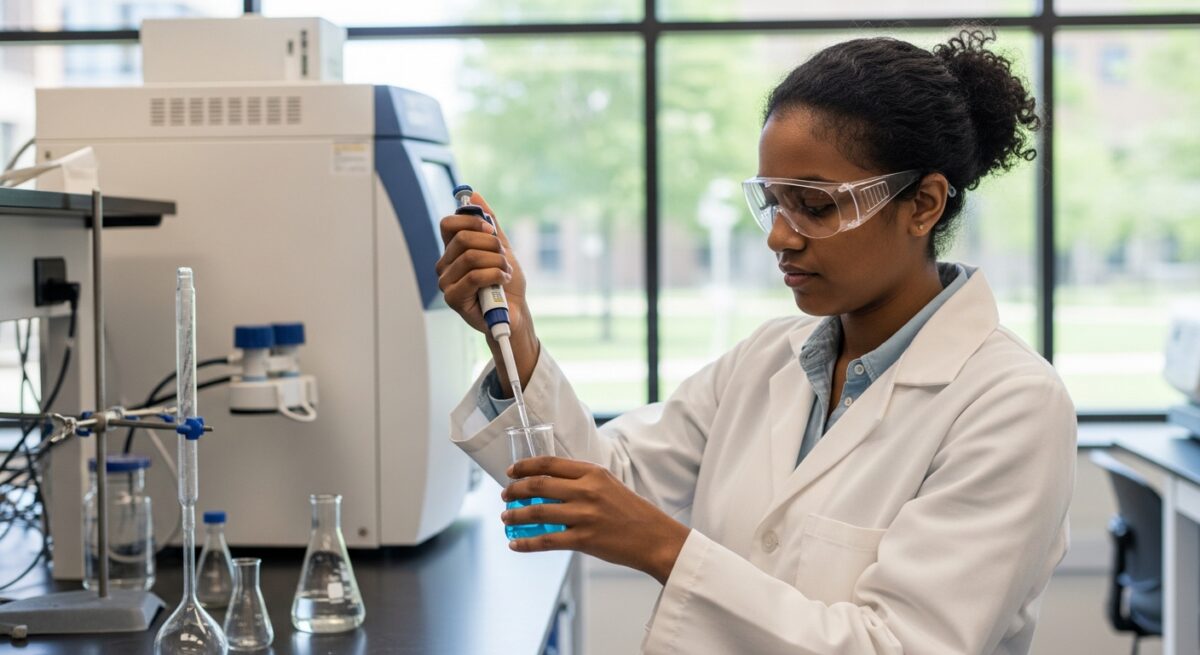
Not all chemistry departments are created equal. The best colleges for chemistry degrees share several critical attributes that contribute to exceptional student outcomes. First and foremost is faculty distinction. Programs with Nobel laureates, National Academy of Sciences members, and pioneering researchers on staff offer unparalleled mentorship and often allow undergraduates to participate in meaningful research. This direct involvement in discovery is a hallmark of premier chemistry schools. Secondly, facility quality is non-negotiable. Modern instrumentation, such as NMR spectrometers, mass spectrometers, and X-ray crystallography equipment, must be accessible for student training and research. A department’s investment in its physical resources directly correlates with the hands-on experience students receive.
Another defining characteristic is the depth and breadth of the curriculum. While a strong core in organic, inorganic, physical, and analytical chemistry is standard, leading programs offer specialized tracks in emerging fields like chemical biology, materials chemistry, environmental chemistry, and computational chemistry. These pathways allow students to tailor their education to specific career aspirations. Furthermore, the best programs boast strong connections to industry and graduate institutions, facilitating internships, co-op placements, and seamless transitions to advanced study or employment. A robust alumni network in pharmaceutical companies, national labs, and academia is a significant indicator of a program’s long-term value. When evaluating potential schools, prospective students should also consider the department’s culture and support systems, including dedicated academic advising, tutoring centers, and opportunities for presenting research at national conferences.
Leading National Universities for Chemistry Majors
Several institutions have built enduring reputations for excellence in chemical education and research. These universities typically feature large, well-funded departments with extensive graduate programs that enhance the undergraduate experience through teaching assistantships and collaborative research environments.
The Massachusetts Institute of Technology (MIT) consistently ranks at the pinnacle for chemistry. Its Department of Chemistry is renowned for a curriculum that emphasizes solving real-world problems through molecular innovation. Undergraduates are integrated into research labs from their first year, working on projects ranging from battery technology to synthetic biology. Similarly, the California Institute of Technology (Caltech) offers an intensive, research-focused program with a remarkably low student-to-faculty ratio, ensuring personalized guidance in both coursework and laboratory investigation.
Harvard University’s chemistry program provides exceptional flexibility, allowing students to pursue a standard A.B. degree or a more intensive S.B. degree with a significant research thesis. Its proximity to other world-class institutions and hospitals creates unique interdisciplinary opportunities in biochemistry and chemical medicine. Stanford University leverages its Silicon Valley location to foster innovation at the intersection of chemistry, engineering, and entrepreneurship, with particular strengths in catalysis and sustainable chemistry.
Public universities also offer standout programs that combine scale with quality. The University of California, Berkeley is famous for its College of Chemistry, a distinct academic unit dedicated solely to chemical sciences, offering unparalleled depth. The University of Illinois Urbana-Champaign boasts one of the largest and most cited chemistry faculties in the world, with legendary strengths in organic synthesis and materials. For students seeking a balance between a collaborative undergraduate focus and graduate-level research resources, these public flagships represent exceptional value.
Exceptional Liberal Arts and Specialized College Programs
For students who thrive in a smaller, teaching-centered environment, many liberal arts colleges offer chemistry programs that rival those of large research universities. These institutions often feature higher faculty engagement, extensive undergraduate research participation, and impressive placement rates into top PhD programs and professional schools.
Harvey Mudd College, a member of the Claremont Colleges consortium, provides a unique engineering-focused chemistry curriculum that is both deep and broad. Its clinic program partners student teams with corporate sponsors to solve real chemical industry problems, providing exceptional pre-professional experience. Pomona College, another Claremont school, offers a rigorous chemistry major with access to sophisticated instrumentation typically reserved for graduate students, and its graduates are regularly accepted into the most selective doctoral programs.
Reed College in Portland, Oregon, requires a senior thesis involving original laboratory research, a capstone experience that prepares students exceptionally well for graduate study. Similarly, Grinnell College in Iowa emphasizes independent research and one-on-one mentorship, with a curriculum designed to develop strong theoretical understanding and practical skills. Williams College in Massachusetts offers a chemistry program notable for its close faculty-student collaboration and a curriculum that integrates research methodologies into upper-level courses. These colleges prove that the best chemistry education isn’t solely the domain of large universities, and for many students, this intimate academic setting is the ideal path to success. For broader context on how to evaluate different types of institutions, our guide on building a strong foundation for specialized degrees offers useful comparative frameworks.
Key Factors to Consider in Your Selection Process
Beyond prestige and rankings, choosing the right chemistry school requires a personalized evaluation of several practical factors. Your decision should align with your specific academic goals, learning style, and career aspirations.
First, assess the research alignment. Browse faculty research profiles on department websites. Are professors working on topics that genuinely excite you, such as drug discovery, nanotechnology, or renewable energy? The opportunity to contribute to meaningful research as an undergraduate is one of the most significant advantages a program can offer. Second, investigate instrumentation and facility access. Can undergraduates operate advanced equipment, or is it reserved for graduate students and post-docs? Hands-on experience with modern analytical tools is a critical resume builder.
Third, examine the curriculum structure and requirements. Some programs are highly structured, while others offer great flexibility for double majors or interdisciplinary study. Consider the following elements that differentiate strong programs:
- Availability of specialized tracks or concentrations (e.g., biochemistry, environmental, materials).
- Required capstone experiences like a senior thesis or comprehensive research project.
- Opportunities for certified degrees, such as American Chemical Society (ACS) certification.
- Support for presenting research at regional or national conferences.
- Strong record of placing graduates into PhD programs, medical schools, or industry positions.
Fourth, consider financial investment and return. Evaluate scholarship opportunities, the availability of paid research positions, and the typical starting salaries or graduate school funding packages for alumni. Finally, visit campuses if possible, or attend virtual information sessions. Speak with current chemistry majors to get an unfiltered perspective on workload, faculty accessibility, and the overall community. The right fit is where your intellectual curiosity will be nurtured and your professional potential maximized. For comprehensive college degree information that can aid in this complex decision-making process, dedicated educational resources are invaluable.
Career Pathways and Outcomes for Chemistry Graduates
A degree from one of the best colleges for chemistry opens a diverse array of career doors. The analytical, problem-solving, and technical skills developed are highly transferable and in demand across multiple sectors. Understanding these potential outcomes can help you select a program with the appropriate resources and networks for your chosen path.
The most traditional pathway is direct entry into the chemical industry. Graduates find roles in research and development, quality control, process chemistry, and technical sales at pharmaceutical companies (e.g., Pfizer, Merck), chemical manufacturers (e.g., Dow, DuPont), consumer goods companies (e.g., Procter & Gamble), and materials science firms. A bachelor’s degree is often sufficient for entry-level positions as a laboratory chemist or technician, with advancement frequently tied to experience or further education.
Many chemistry majors pursue advanced degrees. A Ph.D. in chemistry or a related field is essential for leading independent research in academia, government labs (like the NIH or NASA), or industrial R&D settings. Professional degrees are another common route. Chemistry is an excellent pre-medical, pre-dental, or pre-veterinary major due to its rigorous science curriculum. Furthermore, chemistry graduates are well-suited for law school, particularly for careers in patent or environmental law, where technical expertise is crucial. Other growing fields include forensic science, environmental consulting, science policy, and chemical education. The key is to choose an undergraduate program that provides advising, internship connections, and alumni networks aligned with your intended trajectory.
Frequently Asked Questions
Is an ACS-certified chemistry degree important?
An ACS-certified degree signifies that your program meets the rigorous standards set by the American Chemical Society, often involving more laboratory hours and a broader range of advanced coursework. It is highly regarded by employers and graduate schools, particularly for research-focused careers. However, many excellent non-certified programs exist, especially at liberal arts colleges. The importance depends on your career goals.
What is the difference between a BA and a BS in Chemistry?
A Bachelor of Science (BS) is typically more intensive, with greater requirements in chemistry, mathematics, and physics, and is designed for students planning to work as chemists or pursue a PhD. A Bachelor of Arts (BA) often requires fewer advanced chemistry credits and allows more room for humanities and social science courses, which can be ideal for students interested in fields like science writing, patent law, or secondary education. The “better” degree depends entirely on your objectives.
How crucial is undergraduate research for my future?
Extremely crucial. Research experience is arguably the most valuable component of your undergraduate education beyond the classroom. It develops technical skills, critical thinking, and perseverance. For graduate school applications (especially for PhD programs), substantial research experience is often a prerequisite. It also provides tangible accomplishments to discuss with potential employers.
Should I prioritize a school’s overall ranking or its chemistry department ranking?
For a specialized field like chemistry, the department’s strength and resources are usually more important than the university’s overall undergraduate ranking. A highly-ranked chemistry department at a large public university may offer better research facilities and faculty expertise than a more prestigious liberal arts college with a smaller department. Focus on the factors that directly impact the chemistry education: faculty, facilities, curriculum, and research opportunities.
What are the key questions to ask on a chemistry department tour?
Ask about average class sizes for upper-division labs and lectures, how students get matched with research mentors, what percentage of majors conduct research, what kinds of instruments undergraduates are trained to use, and what recent graduates are doing. Also, ask to speak with a current student without a faculty member present for candid insights.
Selecting the right college for your chemistry degree is a strategic investment in your future as a scientist or professional. The best programs are those that align with your personal ambitions, provide hands-on experience with modern science, and connect you to a network of successful alumni. By carefully weighing factors like research opportunities, faculty mentorship, and career support, you can identify the chemistry school that will best fuel your passion for discovery and set the stage for a rewarding and impactful career. Your journey in chemistry starts with this foundational choice, so take the time to research, reflect, and select the environment where you will thrive.