Choosing the right college for astrophysics and space science is a monumental decision that shapes your entire career trajectory. This field, dedicated to understanding the universe from planets and stars to galaxies and cosmology, demands rigorous training, access to cutting-edge research, and mentorship from leading scientists. The best astrophysics colleges for space science studies provide more than just a curriculum, they offer a gateway to observatories, space mission collaborations, and a community of passionate explorers. This guide delves into the key factors that define elite programs and highlights institutions that excel in preparing the next generation of astrophysicists and space scientists.
What Defines a Premier Astrophysics Program
Not all astrophysics programs are created equal. The top-tier institutions distinguish themselves through a combination of academic rigor, research opportunities, and resource allocation. A premier program is typically housed within a dedicated astronomy or astrophysics department, or a strong physics department with a defined astrophysics track. This structure ensures focused faculty attention and a curriculum designed specifically for the complexities of space science.
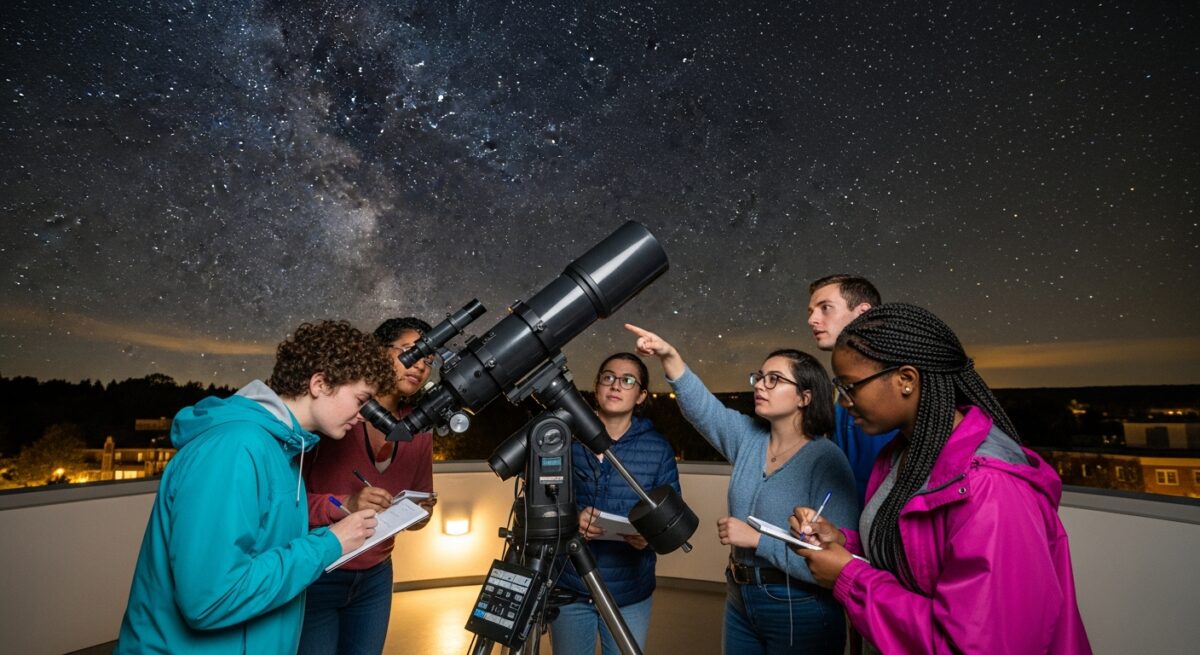
The cornerstone of any excellent program is its faculty. Look for departments where professors are actively engaged in groundbreaking research, whether that’s analyzing data from the James Webb Space Telescope, developing instrumentation for new observatories, or modeling cosmic phenomena. These professors bring real-world questions into the classroom and, crucially, they offer undergraduate and graduate students opportunities to contribute to meaningful projects. Furthermore, access to facilities is non-negotiable. Leading programs often have partnerships with major national observatories (like Kitt Peak or Cerro Tololo), radio telescopes, or even satellite missions. Some operate their own smaller observatories on or near campus, providing hands-on experience with data collection and analysis from day one.
Finally, consider the program’s outcomes. Strong departments have a history of placing graduates into prestigious PhD programs, research positions at national labs (like NASA Goddard or JPL), and roles in the growing private space industry. A robust alumni network in these areas can be an invaluable career resource. When evaluating your options for school-level degree guidance, it’s wise to research these outcomes directly on department websites. For comprehensive financial planning support to make these programs accessible, exploring resources for school‑level degree guidance is a critical step.
Key Factors to Evaluate in Your College Search
Beyond general prestige, prospective students should conduct a detailed evaluation based on their specific goals and learning style. A one-size-fits-all approach does not work in a specialized field like astrophysics. Your personal academic interests should guide your search. Are you fascinated by planetary geology, stellar evolution, cosmology, or astrobiology? Different schools have different strengths. A university heavily involved with a NASA planetary mission will offer a vastly different experience than one focused on theoretical cosmology.
The scale of the program also matters significantly. Large research universities offer vast resources, big-name researchers, and extensive course catalogs. However, smaller liberal arts colleges can provide intimate learning environments, closer mentorship, and earlier access to research projects for undergraduates. There is no right answer, only the right fit for the individual student. You must also assess the pathway from undergraduate to graduate studies. Some top astrophysics colleges for space science studies offer combined BS/MS programs, while others are renowned primarily for their doctoral research. Understanding where a school’s focus lies is key.
To systematically compare programs, focus on these concrete elements:
- Research Opportunities for Undergraduates: Is there a formal REU (Research Experience for Undergraduates) program or a culture of inviting undergrads into labs?
- Curriculum Specializations: Does the department offer focused tracks or clusters of courses in your area of interest?
- Instrumentation and Computing: What on-campus telescopes, labs, and high-performance computing resources are available for student use?
- Career and Graduate School Support: What is the department’s placement record? Is there dedicated advising for students aiming for PhD programs or industry jobs?
- Location and Linkages: Is the school near a major research center (e.g., Space Telescope Science Institute, Jet Propulsion Laboratory) that facilitates internships and collaborations?
Leading Institutions for Astrophysics and Space Science
While rankings fluctuate, a consistent group of universities is recognized globally for their contributions to astrophysics. These institutions set the standard for research output, education, and innovation in space science studies. It is important to note that this is not a exhaustive ranking, but a highlight of programs known for particular strengths.
The California Institute of Technology (Caltech) operates in partnership with the nearby Jet Propulsion Laboratory (JPL), effectively making it a nexus for planetary science and space mission design. Students have unparalleled access to mission data and engineers. Similarly, the Massachusetts Institute of Technology (MIT) boasts a world-class astrophysics program within its Physics Department and through the MIT Kavli Institute for Astrophysics and Space Research. Its strength lies in a blend of theoretical astrophysics, cutting-edge instrumentation development, and data science.
On the opposite coast, Princeton University’s Department of Astrophysical Sciences is legendary for its contributions to theoretical cosmology and stellar dynamics. Its small, focused graduate program is intensely research-oriented from the start. The University of California, Berkeley, offers a massive and diverse program through its Astronomy Department and the Space Sciences Laboratory, covering everything from exoplanets to gamma-ray bursts with a large, active faculty. The University of Arizona’s Steward Observatory is a powerhouse, especially in observational astronomy and telescope mirror design, giving students direct hands-on experience with some of the world’s best ground-based instruments.
Other notable mentions include Harvard University’s Center for Astrophysics (a collaboration between Harvard and the Smithsonian Astrophysical Observatory), Stanford University’s growing program with ties to SLAC National Accelerator Laboratory, and the University of Chicago’s long history of leadership in astrophysics and cosmology. For students seeking a top-tier undergraduate-focused experience, Williams College, Pomona College, and Swarthmore College have exceptional physics and astronomy departments with strong records of sending graduates to leading PhD programs.
Navigating Admissions and Preparing for Success
Gaining admission to competitive astrophysics programs requires strategic preparation from your high school or undergraduate years. Academically, a strong foundation is paramount. This means excelling in physics, mathematics (through calculus and differential equations), and computer science. Programming skills in Python, MATLAB, or similar languages are increasingly essential and will make you a more attractive candidate and a more effective researcher once enrolled.
Beyond grades and test scores, admissions committees for the best astrophysics colleges look for demonstrated passion and initiative. This can be shown through independent research projects, summer internships at science museums or local universities, or participation in astronomy clubs and science fairs. Any experience that shows you can work through the scientific process, analyze data, and communicate findings is invaluable. Your personal statement should articulate a clear, informed interest in specific areas of space science, reflecting your understanding of what the field entails beyond a general love of stars.
Once in a program, maximizing your experience involves proactive engagement. Seek out research opportunities early, even if they start as simple data analysis tasks. Attend department colloquia and seminars to learn about current research and network. Build relationships with professors and graduate students. Master the technical tools of the trade, from data analysis software to simulation packages. Remember, a degree in astrophysics develops profound problem-solving, computational, and analytical skills that are highly transferable to careers in finance, data science, engineering, and technology, providing a robust career safety net.
Frequently Asked Questions
What is the difference between astronomy, astrophysics, and space science?
Astronomy is the broader observational study of celestial objects. Astrophysics applies the laws of physics to understand their nature and behavior. Space science is an even wider umbrella that can include astrophysics, planetary science, heliophysics (study of the Sun), and Earth science from space. The terms are often used interchangeably in college program names.
Can I study astrophysics at a college without a dedicated astronomy department?
Yes, many excellent programs are housed within physics departments. The key is to examine the curriculum, faculty research interests, and available courses to ensure a strong astrophysics concentration exists.
How important is a PhD for a career in this field?
For most core research scientist positions at universities or government labs (like NASA), a PhD is required. However, a bachelor’s or master’s degree in astrophysics can lead to careers in science policy, journalism, instrumentation engineering, data analysis, software development, and planetarium or museum education.
Are there strong astrophysics programs outside the United States?
Absolutely. Institutions like the University of Cambridge (UK), University of Toronto (Canada), Australian National University, and ETH Zurich (Switzerland) have world-renowned programs. The search should be global if you are open to it.
What should I look for in a program if I’m interested in the commercial space industry?
Focus on programs with strengths in instrumentation, spacecraft engineering, or planetary science. Look for universities with historical ties to NASA or partnerships with private aerospace companies, and prioritize gaining practical engineering and programming skills alongside your astrophysics knowledge.
Selecting the right institution for your astrophysics education is a journey that balances passion with practical considerations. The best astrophysics colleges for space science studies are those that align with your specific intellectual curiosities, provide a supportive and challenging environment, and equip you with the tools to contribute to humanity’s understanding of the cosmos. By carefully evaluating faculty, research opportunities, and resources, you can find a program that will launch you toward a fulfilling career, whether your path leads to a research telescope, a mission control room, or a frontier defined by your own curiosity.