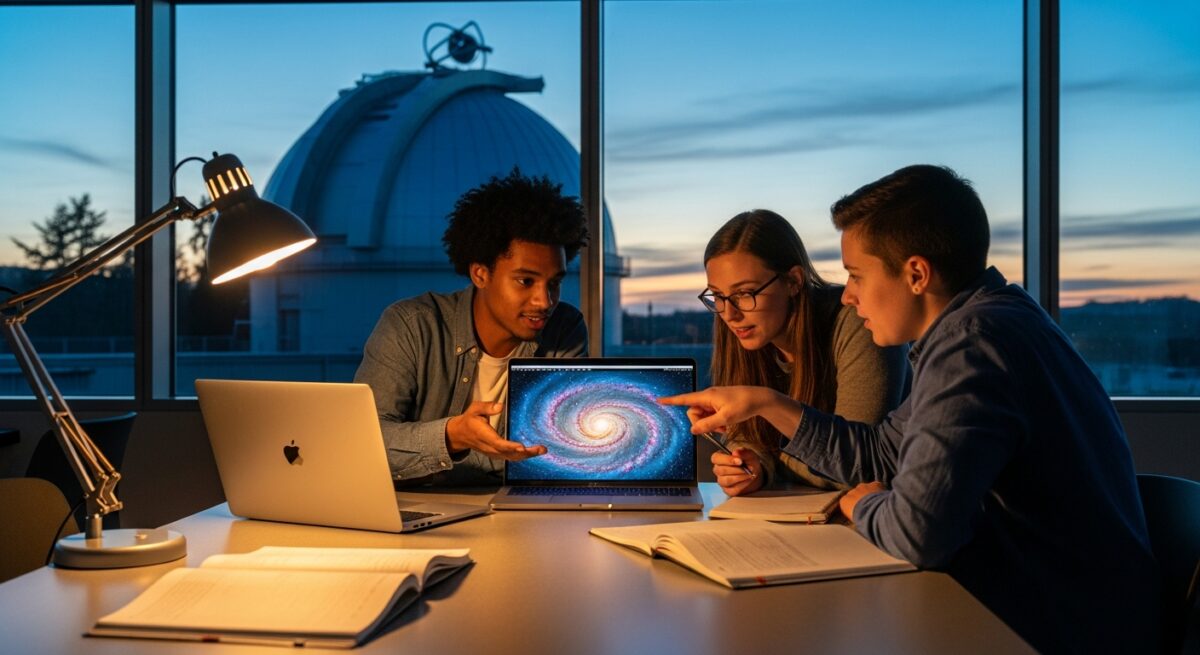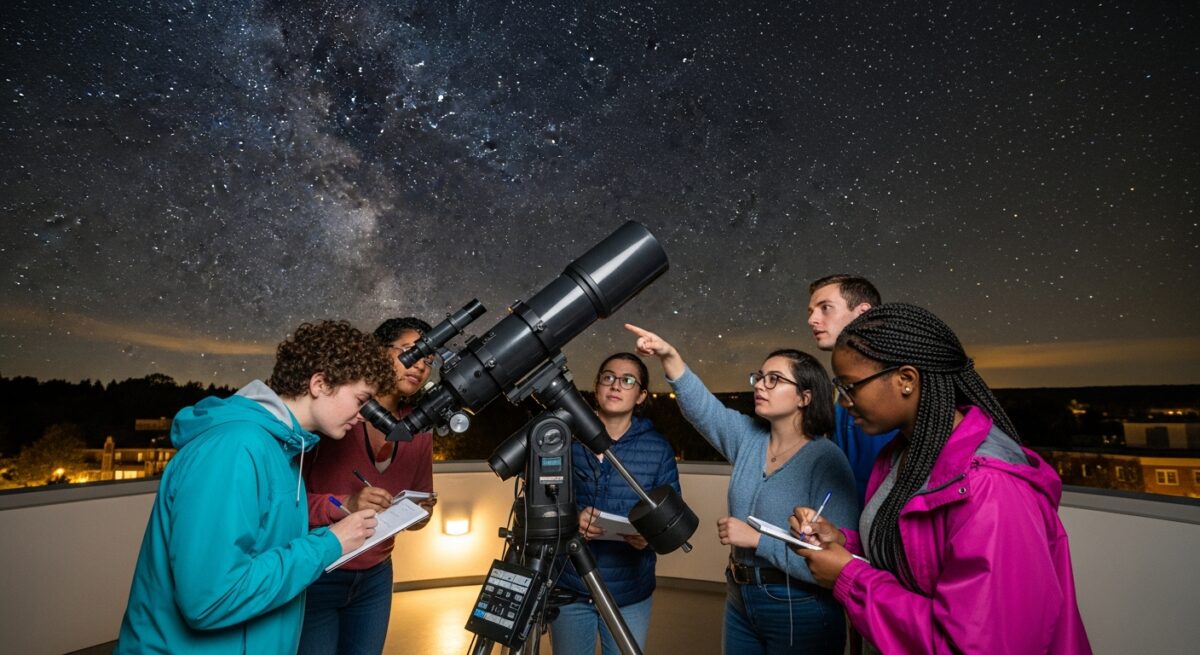
Choosing the right college for an astronomy degree is a pivotal decision that shapes your entire academic and professional trajectory. It is not merely about selecting a school with a strong reputation, but about finding an environment where your passion for the cosmos can be nurtured through cutting-edge research, access to powerful telescopes, and mentorship from leading scientists. The best colleges for astronomy degrees offer a unique blend of rigorous theoretical coursework, hands-on observational experience, and opportunities to contribute to genuine astronomical discovery from the undergraduate level. This guide will navigate the key factors that distinguish elite astronomy schools, from their research facilities and faculty expertise to their pathways for graduate study and careers in space science.
What Defines a Top-Tier Astronomy Program?
Not all astronomy departments are created equal. The premier institutions stand out through a combination of resources, culture, and outcomes that prepare students for success in a highly competitive field. At the core, a top program is defined by its research output and the involvement of undergraduates in that research. Schools with their own observatories, partnerships with major facilities like NASA or the National Radio Astronomy Observatory, and faculty who are actively publishing in journals like The Astrophysical Journal provide an immersive learning environment. Furthermore, the curriculum should offer a robust balance between core physics, computational methods, and specialized astronomy courses, often allowing for concentrations in areas like astrophysics, planetary science, or cosmology.
Another critical component is the pathway to advanced degrees and careers. The best colleges for astronomy serve as feeders to prestigious graduate programs. This is facilitated by strong letters of recommendation from well-known faculty, opportunities to present research at conferences, and a track record of alumni placement. When evaluating programs, prospective students should look beyond general rankings and examine specific departmental strengths, the accessibility of research mentors, and the availability of funding for student projects. For a broader understanding of how to evaluate academic institutions and their offerings, our resource on ranking the best colleges provides useful frameworks that can be applied to astronomy programs specifically.
Leading Institutions for Astronomy and Astrophysics
Several universities have consistently maintained their status as leaders in astronomical education and research. These institutions attract world-class faculty and offer unparalleled resources for students.
The University of Arizona’s Department of Astronomy and Steward Observatory is a powerhouse, largely due to its direct access to some of the world’s best observational facilities. Students can work with instruments on Kitt Peak, Mount Graham, and even participate in the development of new telescope technology. Similarly, the California Institute of Technology (Caltech) operates the Palomar Observatory and is a partner in the W. M. Keck Observatory, integrating students into frontier research from their first year. Massachusetts Institute of Technology (MIT) leverages its strength in physics and engineering to offer a uniquely interdisciplinary astrophysics program, with heavy emphasis on instrumentation, data analysis, and space mission design.
On the East Coast, Harvard University’s astronomy department, part of the Center for Astrophysics | Harvard & Smithsonian, offers an exceptional model. Students have access to the combined resources of Harvard College Observatory and the Smithsonian Astrophysical Observatory, creating a vast network of researchers and projects. Princeton University’s astrophysical sciences department is renowned for its theoretical strengths, particularly in cosmology and gravitational physics, offering a deeply quantitative approach. These programs, while highly selective, set the standard for comprehensive training in both the theoretical and observational aspects of modern astronomy.
Key Factors to Consider When Choosing a School
Selecting the right astronomy program is a personal decision that should align with your academic goals and learning style. A high-ranking department is meaningless if its resources are inaccessible to undergraduates. Therefore, a primary factor is the undergraduate research culture. Contact departments to ask what percentage of astronomy majors participate in research, how projects are assigned, and if funding is available for summer research. The presence of a dedicated undergraduate observatory, even a small one, is a strong indicator of a program committed to hands-on learning.
The curriculum structure is equally important. Some programs offer a Bachelor of Arts (B.A.) in Astronomy, which may require less advanced physics and mathematics, while a Bachelor of Science (B.S.) or a major in Astrophysics will be intensely focused on physics foundations. Consider which track aligns with your career aspirations, particularly if you aim for a PhD. Furthermore, examine the course offerings in adjacent fields like computer science, geology (for planetary science), and engineering. Modern astronomy is computationally driven, so strong programming and data science courses are a major advantage.
Location and facilities are practical considerations that impact your daily experience. A school in a remote area with dark skies may have an on-campus observatory, while an urban university might have stronger ties to aerospace companies or federal agencies. Consider the following key elements during your search:
- Research Opportunities: Availability of funded projects, faculty seeking undergraduate assistants, and presentation opportunities.
- Curriculum Depth: Range of upper-division electives, balance of observation/theory/computation, and honors thesis options.
- Facilities: Access to telescopes (optical, radio), planetariums, computational labs, and maker spaces for instrumentation.
- Faculty Accessibility: Student-to-faculty ratio within the major, mentorship programs, and office hour culture.
- Career Pathways: Alumni network, internship connections with observatories/NASA, and graduate school placement rates.
After evaluating these factors, it is wise to consult comprehensive college degree information to understand how a specific astronomy degree fits into the broader landscape of higher education and long-term career planning. This holistic view ensures your degree choice supports your ultimate professional objectives.
Beyond the Ivy League: Excellent Public and Specialized Programs
While private institutions often dominate headlines, numerous public universities and specialized colleges offer exceptional astronomy degrees that provide tremendous value and unique opportunities. The University of California, Berkeley’s Astronomy Department benefits from its leadership in major international projects like the search for exoplanets and the study of supernovae. Undergraduates are integrated into research groups at the Space Sciences Laboratory, a rare advantage. The University of Texas at Austin is home to the McDonald Observatory, one of the world’s premier astronomical research centers, offering students direct experience with large-scale telescopes.
For students interested in a more intimate learning environment, liberal arts colleges can be a perfect fit. Williams College, for instance, operates the Hopkins Observatory, the oldest extant observatory in the United States, and offers a close-knit department with a strong emphasis on undergraduate teaching and research. Similarly, Pomona College in California provides access to the telescopes at Table Mountain Observatory and emphasizes a broad physics and astronomy foundation that prepares students well for top graduate programs. These smaller programs often feature higher faculty interaction and earlier research involvement than might be possible at larger research universities.
Preparing for a Career in Astronomy
An astronomy degree opens doors to far more than just academic research. The analytical, computational, and problem-solving skills developed are highly valued in many sectors. Of course, for those pursuing the traditional path, a PhD is essential for becoming a research astronomer or university professor. The best undergraduate programs prepare you for this by emphasizing research experience, strong letters of recommendation, and success in advanced physics and math courses. Graduate school admissions are fiercely competitive, so building a compelling portfolio as an undergraduate is critical.
However, many graduates find rewarding careers outside academia. The aerospace and defense industries actively hire astronomy majors for roles in satellite operations, remote sensing, and systems engineering. The growing field of data science is a natural fit, as astronomers are trained to handle large, complex datasets. Other pathways include science policy, journalism, public outreach (such as working for a planetarium or science museum), and software development. The key is to strategically select electives and internships that build complementary skills, such as advanced programming, technical writing, or engineering fundamentals, to enhance your employability in your chosen niche.
Frequently Asked Questions
What is the difference between an Astronomy degree and an Astrophysics degree?
The terms are often used interchangeably, but there can be a subtle distinction. Astronomy degrees may place a slightly greater emphasis on observational techniques, celestial mechanics, and the descriptive study of objects. Astrophysics degrees are typically more focused on applying the laws of physics to understand the processes that govern celestial bodies and the universe. In practice, most modern astronomy degrees are highly physics-based, and the curriculum overlap is significant. It is best to examine the specific required courses for each program.
Do I need a PhD to work in astronomy?
A PhD is required for most pure research scientist positions at universities, government labs (like NASA), or observatories. However, many supporting roles in these environments, such as telescope operators, research technicians, data analysts, and software engineers, are available to those with a bachelor’s or master’s degree. Careers in adjacent fields like science education, journalism, and aerospace industry do not universally require a doctorate.
What high school preparation is best for an astronomy major?
Maximize your coursework in mathematics (through calculus, if possible) and physics. Chemistry and computer science are also highly valuable. Taking Advanced Placement (AP) or International Baccalaureate (IB) courses in these subjects can provide a strong foundation. Outside the classroom, involvement in astronomy clubs, independent projects, or attending summer science programs can demonstrate your passion.
Are there strong online astronomy degrees?
Fully online bachelor’s degrees in astronomy are rare due to the hands-on laboratory and observational requirements. However, some institutions offer online physics degrees with astronomy concentrations, or online master’s degrees in fields like space studies or astronomy education. For the undergraduate experience, in-person access to labs and telescopes is a crucial component of the best colleges for astronomy degrees.
How important is the location of the school for astronomy?
Location impacts access to dark skies for observational work and proximity to major research centers or industry hubs. A school with its own dark-sky observatory offers immediate practical experience. However, many top programs have remote telescope facilities or use satellite data, so a city location is not a disqualifier, especially if the university has strong partnerships with remote observatories or space agencies.
Embarking on a degree in astronomy is a journey to understand the universe and our place within it. The choice of where to undertake this journey is foundational. By prioritizing programs with active research cultures, accessible faculty mentors, and resources that match your interests, you can find a college that will not only teach you about the stars but also give you the tools to reach for them. The investment in finding the right fit among the best colleges for astronomy will pay dividends throughout your career, opening a universe of possibilities.