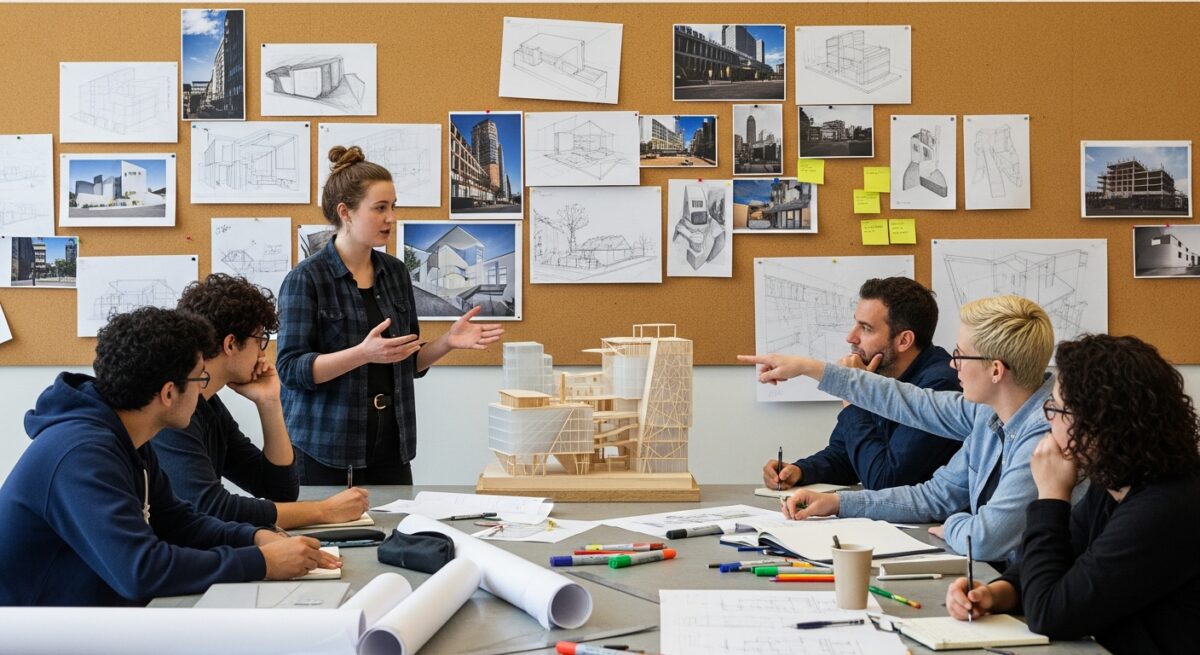
For aspiring architects whose passion lies in the conceptual, the innovative, and the artistic, choosing the right university is a foundational design decision in itself. The world’s best architecture universities for design students are not merely institutions that teach technical drafting, they are ecosystems that cultivate a unique design philosophy, foster creative experimentation, and connect aesthetic vision to tangible built form. This journey goes beyond rankings to identify programs where design thinking is the core curriculum, where studios are laboratories for the future, and where you are trained not just as a builder, but as a creator. The right program will challenge your perceptions, equip you with a sophisticated design toolkit, and position you at the forefront of architectural discourse.
Defining the Design-Centric Architecture Program
What separates a good architecture school from a great one for design-oriented minds? It begins with a pedagogical focus that prioritizes conceptual development and critical thinking over rote technical skill. In these elite programs, the studio is the undisputed heart of the educational experience. Here, students engage in long-form, project-based learning under the guidance of practicing architects and theorists who are often shaping the field themselves. The curriculum is typically less about prescribing a single correct solution and more about guiding students through a process of inquiry, iteration, and argumentation for their design choices.
The environment is equally crucial. These schools attract a certain type of student: one who is intellectually curious, visually literate, and unafraid of critique. The culture is one of intense collaboration and equally intense debate, where pin-up reviews become formative events. Furthermore, design-centric programs are almost always deeply interdisciplinary. They encourage cross-pollination with fine arts, graphic design, industrial design, environmental studies, and even philosophy. This broad exposure ensures that a student’s architectural thinking is informed by a wide range of influences, leading to more nuanced and innovative outcomes. Financial planning for such intensive programs is a key consideration, and prospective students should thoroughly research tuition, studio fees, and material costs. For comprehensive financial guidance and scholarship comparisons, valuable college degree information can be found through dedicated educational resources.
Leading Global Institutions for Architectural Design
While many universities offer strong architecture degrees, a handful consistently stand out for their unparalleled influence on design education and practice. These institutions have defined movements, produced generations of visionary architects, and continue to set the agenda for what architecture can be.
The Massachusetts Institute of Technology (MIT), Department of Architecture, operates at the nexus of design, technology, and research. Its approach is profoundly experimental, encouraging students to engage with advanced computation, material science, and robotics. Design here is a research-driven process aimed at solving complex global challenges, from urban housing to climate resilience. The Architectural Association (AA) School of Architecture in London is arguably the most famous independent architecture school in the world. Known for its unit system, where students select a distinct design agenda for the year, the AA fosters extreme specialization and avant-garde thinking. It is a hotbed of theoretical discourse and formal innovation, producing architects known for their strong, often provocative, design identities.
In Europe, the Delft University of Technology (TU Delft) in the Netherlands offers a powerful blend of rigorous technical training and human-centered design. Its methodology is deeply rooted in research and analysis, leading to designs that are both beautifully conceived and meticulously detailed. The ETH Zurich (Swiss Federal Institute of Technology) in Switzerland is renowned for its precision, structural intelligence, and seamless integration of digital fabrication into the design process. The school produces architects known for exceptionally clear and constructible design thinking.
For students seeking a program deeply connected to the arts, the Cooper Union’s Irwin S. Chanin School of Architecture in New York offers a legendary, tuition-free education focused on the architectural discipline as a cultural enterprise. Its intense, atelier-style program emphasizes drawing, materiality, and the poetic potential of space.
Critical Factors in Your Selection Process
Choosing among the best architecture colleges requires introspection and careful research. You must align a program’s strengths with your own emerging interests and career aspirations. The first factor is pedagogical emphasis. Does the program lean toward the artistic and theoretical, the technical and sustainable, or the digital and computational? Review student work portfolios, often available online, to see if the output resonates with your own design sensibilities. Look for a consistent school of thought or a diversity of approaches, depending on what you seek.
The faculty is your future network and mentorship pool. Investigate who teaches there. Are they architects you admire? Are they actively practicing and publishing? A faculty of engaged practitioners provides a direct link to the contemporary design world. Furthermore, consider the structure of the studio. Is it vertical (multiple year levels together) or horizontal (single year levels)? Vertical studios can foster rich peer-to-peer learning, while horizontal studios ensure a structured progression. Location is another classroom. Studying architecture in a historic European city offers a different daily education than studying in a rapidly developing urban hub or a rural campus. The local context will influence projects, internships, and your visual literacy.
To aid in this complex decision, here are key aspects to compare when evaluating top architecture universities:
- Studio Culture: Assess the workload, collaborative vs. competitive atmosphere, and the format of design critiques.
- Facilities & Resources: Evaluate access to workshops (wood, metal, digital fabrication), labs (lighting, materials), and advanced software/computing.
- Degree Path: Understand the structure (B.Arch, B.A./B.S. + M.Arch) and the time to completion, which impacts total cost.
- Career Trajectory: Research where graduates go. Do they join prestigious firms, start their own practices, or pivot to related design fields?
- Financial Reality: Calculate total cost, including often-overlooked studio supplies and model-making materials, and research scholarship and aid availability.
This analysis should move beyond prestige to find the program where you will thrive creatively and develop a robust, personal design methodology.
Beyond the Degree: Building a Design Career
Graduating from a leading design school opens doors, but a successful career requires proactive strategy. The first step is leveraging your university’s portfolio. The work you produce in school is your primary credential. Curate it to tell a compelling story about your design interests, process, and skills. Seek internships, not just at large corporate firms, but also at smaller, design-focused studios where you may gain more hands-on responsibility. Many of the best architecture universities for design students have strong career placement offices and alumni networks that can facilitate these connections.
Consider further specialization through postgraduate study. Many architects pursue a Master’s degree to deepen expertise in a specific area like urban design, sustainable design, or architectural theory. This can be especially valuable for students who completed a pre-professional undergraduate degree. Furthermore, engage with the broader design community. Attend lectures, enter competitions, and publish your work or writings. Architecture is a field where thought leadership is highly valued. Building a public profile through platforms that showcase your design philosophy can attract clients and collaborators. Remember, a design career is rarely a straight line. It may involve working in different firm types, engaging in teaching, or collaborating across disciplines. The intellectual flexibility and rigorous design training from a top program provide the foundation for all these paths.
Frequently Asked Questions
What is the difference between a B.Arch and a B.S. in Architecture?
A B.Arch (Bachelor of Architecture) is a professional, accredited degree, typically a 5-year program, that allows you to eventually become a licensed architect. A B.S. or B.A. in Architecture is usually a 4-year pre-professional degree that provides a foundation but requires a subsequent Master of Architecture (M.Arch) to pursue licensure.
How important is accreditation for a design-focused career?
If your goal is to become a licensed architect practicing independently, attending a program accredited by the National Architectural Accrediting Board (NAAB) in the U.S., or its equivalent elsewhere, is essential. If your interests lean more toward conceptual design, exhibition design, or set design, accreditation may be less critical than the program’s creative reputation.
Are portfolios required for undergraduate admission to top architecture schools?
Most, but not all, highly selective design-focused programs require a portfolio for undergraduate admission. This portfolio often does not need to contain architectural work, but should demonstrate artistic ability, spatial thinking, and creative process through drawings, paintings, photography, sculpture, or other media.
What are the key elements of a strong architecture school application portfolio?
A strong portfolio shows process (sketches, iterations), not just final products. It demonstrates a range of skills (hand drawing, digital work, 3D modeling), a clear point of view, and an ability to think through problems creatively. Quality of thought always trumps quantity of work.
Can I become a great designer without attending an elite, expensive school?
Absolutely. While elite schools provide remarkable resources and networks, passion, self-direction, and a strong work ethic are ultimately more important. Many renowned architects came from diverse educational backgrounds. The key is to seek out rigorous critique, immerse yourself in design culture, and build a compelling body of work, regardless of the institution’s name.
Selecting the right architecture university is a profound step in a designer’s journey. It is about finding the environment that will best nurture your unique voice, challenge your assumptions, and provide the tools to translate imagination into reality. By focusing on programs where design is the central language, you invest in more than an education, you invest in the development of your creative identity. The best architecture universities for design students are those that empower you to not only respond to the world as it is, but to envision and design the world as it could be.