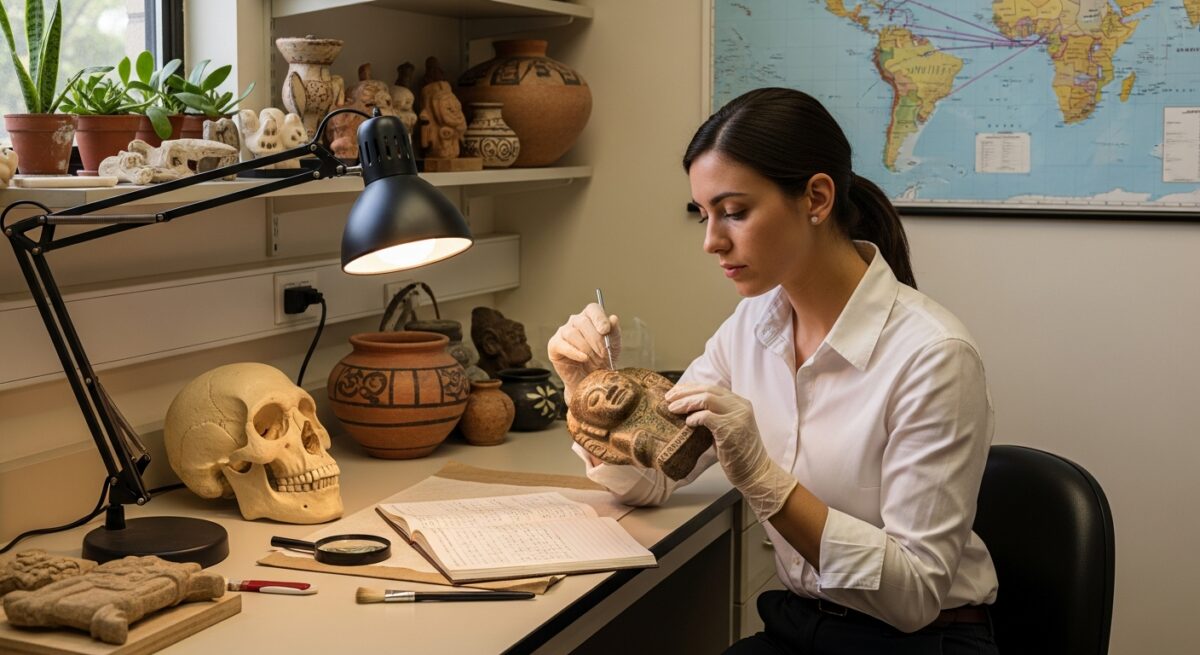
Choosing the right anthropology program is a pivotal decision that shapes your academic journey and future career. The field of anthropology, the holistic study of humanity across time and space, offers diverse specializations from archaeology and biological anthropology to cultural and linguistic studies. The best anthropology programs for students provide more than just a prestigious name, they offer a unique blend of rigorous theoretical training, hands-on field and laboratory opportunities, access to renowned faculty, and strong pathways to research or professional application. This guide will help you navigate the landscape of top-tier anthropology colleges and departments, focusing on the key elements that distinguish an exceptional program and how to find the one that aligns with your intellectual passions and professional goals.
Defining Excellence in Anthropology Education
What makes an anthropology program stand out as one of the best? It is rarely a single factor but rather a synergistic combination of resources, culture, and outcomes. At its core, a top program cultivates critical thinking, methodological rigor, and a deep understanding of human diversity. Faculty are a cornerstone, look for departments where professors are active researchers publishing in leading journals, conducting groundbreaking fieldwork, and securing grants. Their expertise should span the subfields, offering you a comprehensive education and potential mentorship in your niche interest, whether that is paleoanthropology, medical anthropology, or digital ethnography.
Furthermore, the best anthropology programs for students invest heavily in experiential learning. This includes dedicated laboratory spaces for archaeological analysis, fossil casting, or genetic research, curated museum collections for hands-on study, and established field school opportunities. A strong program will have institutional partnerships with museums, research institutes, and global field sites, facilitating student involvement from the undergraduate level. Support for student research is another critical marker, evidenced by dedicated undergraduate research funds, grants for graduate student fieldwork, and a culture where students present at conferences and co-author publications. When evaluating potential anthropology colleges, scrutinize their commitment to turning theory into practice.
Leading Anthropology Programs and Their Distinguishing Features
The following institutions are consistently recognized for their outstanding contributions to anthropological teaching and research. Each offers a distinct strength, and the “best” program is inherently subjective, dependent on your specific interests and career stage. For undergraduates, a broad, well-rounded department with opportunities for early involvement is key. For graduate students, the alignment of faculty research with your proposed focus becomes paramount.
University of Michigan, Ann Arbor: The Department of Anthropology here is notable for its four-field integration (archaeology, biological, cultural, and linguistic anthropology) and its immense scope of research. It boasts exceptional resources like the Museum of Anthropological Archaeology and provides students with unparalleled access to interdisciplinary programs. Its graduate programs are particularly strong, with a high level of support for doctoral research.
University of Chicago: Known for its deep theoretical tradition and emphasis on rigorous scholarly training, Chicago’s Department of Anthropology has profoundly influenced the discipline. It encourages a critical, intellectual approach and is ideal for students interested in the philosophical and historical dimensions of anthropological thought. The program fosters close mentorship between faculty and students.
University of California, Berkeley: UC Berkeley’s anthropology department is celebrated for its scholarly excellence and social engagement. It has historic strengths in cultural anthropology and archaeology, with faculty engaged in research across the globe. The program’s location provides rich opportunities, and its commitment to public anthropology is a significant draw for many students.
Harvard University: Harvard’s Department of Human Evolutionary Biology (which grew from its former anthropology department) offers a world-class, science-focused approach to understanding human origins and biology. It provides access to incredible resources like the Peabody Museum of Archaeology and Ethnology and the Harvard Museum of Natural History. For students focused on evolutionary anthropology, archaeology, or related sciences, it is a premier destination.
Arizona State University: ASU’s School of Human Evolution and Social Change represents a dynamic, innovative model. It is highly ranked for both graduate and undergraduate education, with a focus on solving contemporary global challenges. The school is a leader in digital anthropology, bioarchaeology, and global health, offering students a forward-looking, applied perspective on the discipline.
Key Factors to Evaluate Beyond Rankings
While national rankings offer a starting point, your personal evaluation should dig deeper. Consider the program’s culture and community, is it collaborative or intensely competitive? Review recent graduate placements, where do alumni go? Successful outcomes include tenure-track professorships, roles in cultural resource management (CRM), positions in public health, museum curation, tech (user experience research), and non-profit work. A department with a strong career placement record demonstrates its effectiveness in preparing students for the professional world.
Financial support is a non-negotiable factor for graduate studies. The best anthropology programs for graduate students typically offer full funding packages, including tuition waivers and a living stipend, often through teaching or research assistantships. For undergraduates, investigate the availability of scholarships, work-study positions in labs or museums, and funding for independent summer research projects. The financial aspect is a crucial part of your long-term planning, and resources like our guide on how FAFSA unlocks affordable college degrees can be a vital first step in understanding aid options. Furthermore, comprehensive school‑level degree guidance should include a clear analysis of tuition, hidden fees, and the true return on investment for your anthropological training.
Location can also be a strategic academic resource. Proximity to archaeological sites, diverse urban communities, specific ecosystems, or major museum collections can directly enhance your research opportunities. Conversely, a lower cost of living might make a lengthy graduate program more sustainable. Create a weighted list of what matters most to you, mentorship, funding, research facilities, geographic setting, and alumni network, to guide your decision.
Specialized Pathways and Emerging Trends
Anthropology is not a monolithic field, and many top programs develop areas of concentrated excellence. Some departments are powerhouses in archaeological science, leveraging cutting-edge technologies like LiDAR, isotopic analysis, and GIS. Others may lead in sociocultural anthropology, with famed faculty in areas such as political anthropology, the anthropology of religion, or economic anthropology. If you have a clear focus, seek out the departments that are seminal to that conversation.
Emerging interdisciplinary tracks are also reshaping the landscape. Programs increasingly offer, or connect to, specializations in:
- Medical Anthropology: Exploring health, illness, and healing across cultures, often linked with public health schools.
- Digital Anthropology: Studying the impact of technology and virtual communities on human society.
- Environmental Anthropology: Addressing human-environment interactions and climate change.
- Business Anthropology: Applying ethnographic methods to organizational culture, consumer behavior, and product design.
Investigate whether your target programs offer formal certificates, designated faculty, or related coursework in these growing areas. This foresight can make your degree more adaptable and relevant in a evolving job market.
Frequently Asked Questions
What is the difference between a BA and a BS in Anthropology?
A Bachelor of Arts (BA) typically requires more coursework in the humanities and social sciences, offering a broader liberal arts foundation. A Bachelor of Science (BS) often includes more rigorous requirements in quantitative methods, laboratory sciences, and statistics, preparing students for more technical research. The “best” choice depends on your career goals, a BS may be better for forensic or biological anthropology tracks, while a BA offers flexibility for careers in law, policy, or cultural analysis.
How important is a field school for an anthropology undergraduate?
Extremely important, especially for archaeology students. A field school is often a required credential for professional archaeological work. For all anthropology students, it provides indispensable practical experience in research methods, data collection, and often, cross-cultural immersion. It is a significant resume builder and a common topic in graduate school applications.
Can I get a good job with just a bachelor’s degree in anthropology?
Absolutely. Anthropology majors develop highly transferable skills in critical thinking, qualitative and quantitative research, cross-cultural communication, and ethical analysis. Graduates find roles in user experience research, market analysis, non-profit management, public health outreach, museum education, and cultural resource management. Strategic internships and skill development (e.g., in data visualization or a foreign language) enhance job prospects significantly.
What should I look for in a graduate program if I am not sure about academia?
Seek programs that explicitly support alternative academic and non-academic careers. Look for professional development workshops, internship placements, alumni working in diverse sectors, and a curriculum that includes applied methodological training. Some programs now offer professional master’s degrees (MA) specifically designed for careers outside of university teaching and research.
Selecting one of the best anthropology programs is a deeply personal process that balances objective metrics with subjective fit. It requires honest self-assessment about your interests, a thorough investigation of departmental strengths, and a clear-eyed view of your financial and professional objectives. By looking beyond generic rankings to evaluate faculty, resources, research opportunities, and outcomes, you can find a program that will not only educate you but also transform your understanding of the human experience. The ideal department will challenge you, support you, and equip you with the tools to build a meaningful career leveraging the unique perspective of anthropology.