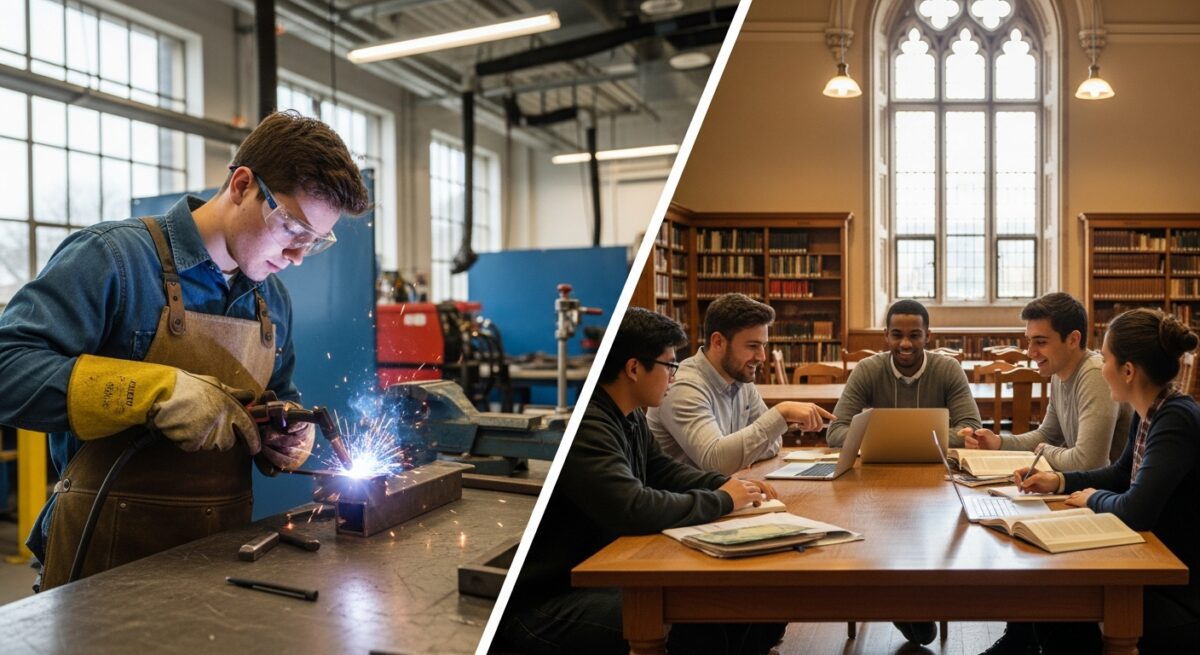
One of the most significant decisions a student faces is selecting the right type of post-secondary education. The choice between a technical college and a traditional university is not merely about picking a school, it is about choosing a distinct educational philosophy, timeline, and career trajectory. This decision hinges on understanding your personal learning style, professional goals, and financial considerations. While both institutions offer valuable pathways to success, they cater to different needs and outcomes. This comprehensive guide will dissect the core differences, advantages, and ideal candidates for each, empowering you to make an informed choice that aligns with your future.
Defining the Educational Models
At their foundation, technical colleges and universities are built upon divergent missions. A technical college, often called a trade school, vocational school, or community college (in its career-focused programs), is designed with a singular, practical purpose: to equip students with the specific skills and certifications needed to enter a particular trade or technical field swiftly. The curriculum is intensely hands-on and directly aligned with industry standards. Conversely, a university education is traditionally broader in scope. It emphasizes theoretical knowledge, critical thinking, research, and a well-rounded liberal arts foundation alongside specialized study in a major. The university path is often seen as a longer, more exploratory journey that prepares graduates for a wide range of careers, many of which require advanced degrees or licensure.
Curriculum and Learning Experience
The classroom experience in these two settings could not be more different. In a technical college program, you are likely to spend the majority of your time in labs, workshops, or simulated work environments. If you are studying automotive technology, you will be working on engines. If you are in a dental hygiene program, you will be practicing on mannequins and eventually real patients. The instruction is direct, applied, and focused on competency. Theory is taught only as it directly applies to the task at hand.
University learning, while it can include labs and practicums (especially in STEM fields), places a heavier emphasis on lectures, textbooks, academic research, papers, and examinations that test conceptual understanding. A university student majoring in biology will spend significant time learning cellular processes and evolutionary theory in a lecture hall before applying that knowledge in a laboratory. The pace is often dictated by semesters dedicated to exploring a subject in depth, with a greater volume of reading and independent study required. This environment fosters analytical skills, written communication, and the ability to synthesize complex information from various sources.
Program Length and Time to Employment
This is one of the most stark contrasts. Technical college programs are defined by their efficiency. Many certificate or diploma programs can be completed in under a year, while associate degree programs typically take two years of full-time study. This accelerated timeline means students can enter the workforce, start earning a salary, and begin gaining seniority much faster than their university counterparts. For individuals seeking a quick return on investment or a career change without a lengthy academic commitment, this is a paramount advantage.
A standard university bachelor’s degree program requires a minimum of four years of full-time study. This timeline extends for students who change majors, pursue co-op opportunities, or require additional coursework. Furthermore, many professional paths that originate from a university degree, such as law, medicine, academia, or high-level engineering, require additional years of graduate or professional school. The time to full professional employment is therefore considerably longer, but the long-term career ceiling and versatility can be higher.
Cost and Financial Investment
The financial disparity is significant and often a primary deciding factor. Technical colleges are generally far less expensive than universities. Lower tuition rates, combined with shorter program durations, result in substantially lower total education costs. This frequently translates to less student debt, or sometimes no debt at all, allowing graduates to achieve financial stability sooner. Prospective students should conduct thorough research on college degree information to compare specific program costs and potential return on investment.
University tuition, particularly at private or out-of-state public institutions, can be high. The four-year (or more) commitment amplifies this cost. While scholarships, grants, and financial aid are more widely available at the university level, the potential for significant student loan debt is a serious consideration. The financial calculation here weighs the higher upfront cost against the potential for a higher lifetime earning potential in certain fields.
Career Outcomes and Earning Potential
Graduates from technical colleges are trained for specific, in-demand jobs. They often have very clear career paths upon graduation, such as welder, HVAC technician, licensed practical nurse, web developer, or electrician. These fields frequently experience shortages, leading to high job placement rates. Earnings can be strong immediately, with many skilled trades offering excellent wages, benefits, and union opportunities. Career advancement often comes through experience, additional certifications, and moving into supervisory roles.
University degrees offer broader, but sometimes less defined, initial career options. A graduate with a degree in communications, business, or sociology can pursue roles in many different industries. The initial entry-level salary might be lower than that of a skilled tradesperson, but the long-term earning potential in management, executive, or specialized professional roles can surpass it. Furthermore, many corporate, government, and research positions have a bachelor’s degree as a non-negotiable minimum requirement for entry. University degrees also provide the essential foundation for pursuing advanced degrees (Master’s, PhD, JD, MD), which are gateways to the highest earning professions.
Which Path Is Right for You? A Self-Assessment
Making this choice requires honest self-reflection. Ask yourself these key questions to determine which educational model aligns with your personality and goals.
- Learning Style: Do you thrive by doing and seeing immediate results, or by reading, debating, and theorizing?
- Career Goal Clarity: Do you know exactly what job you want (e.g., radiology technician), or are you exploring interests within a general field (e.g., healthcare)?
- Timeframe: How quickly do you need or want to be in the workforce earning an income?
- Financial Picture: What is your budget for education, and what level of debt are you comfortable assuming?
- Long-Term Vision: Are you aiming for a specific skilled trade, or do you aspire to a role that may require graduate studies or corporate leadership?
There is no universally correct answer. A hands-on learner with a clear goal to become a network administrator may find a technical college perfect. A student passionate about research and unsure whether to pursue medicine or biomedical engineering will likely need the breadth of a university. It is also worth noting that pathways can blend: many students start at a technical college or community college to gain skills and save money before transferring to a university to complete a bachelor’s degree.
Frequently Asked Questions
Is a university degree more respected than a technical college degree?
Respect is contextual. In skilled trades, a technical college credential and the accompanying licensure are essential and highly respected. In fields that require theoretical knowledge and research, a university degree is mandatory. The key is respect within your chosen industry, not a blanket societal judgment.
Can I make a good living from a technical college education?
Absolutely. Many skilled trades offer six-figure earning potential, especially for those who own their own business or move into specialized, high-demand areas. The earning potential often rivals or exceeds that of many white-collar jobs requiring a bachelor’s degree.
Do universities offer any hands-on learning?
Yes, many do, particularly through internships, co-op programs, clinical placements (in nursing or education), and laboratory courses in sciences and engineering. However, the ratio of hands-on to theoretical learning is typically lower than at a technical college.
Can I transfer credits from a technical college to a university?
It is possible, but not automatic. It depends heavily on the specific institutions, the accreditation of the technical college, and how the coursework aligns with the university’s degree requirements. Students planning a potential transfer should research articulation agreements between schools early in the process.
Which has a better job placement rate?
Technical colleges often boast very high job placement rates because they train for specific, high-demand occupations. Universities may have more varied placement rates depending on the major, but they provide access to a wider network of employers and career fairs for professional roles.
The debate between technical colleges vs universities is not about which is better, but about which is better for you. Both are vital pillars of the education system, addressing different economic and personal needs. By carefully weighing the factors of cost, time, learning style, and career ambition, you can select the path that will most effectively launch you into a fulfilling and successful professional life. Your future career depends on this informed alignment, not on following a presumed hierarchy of educational prestige.