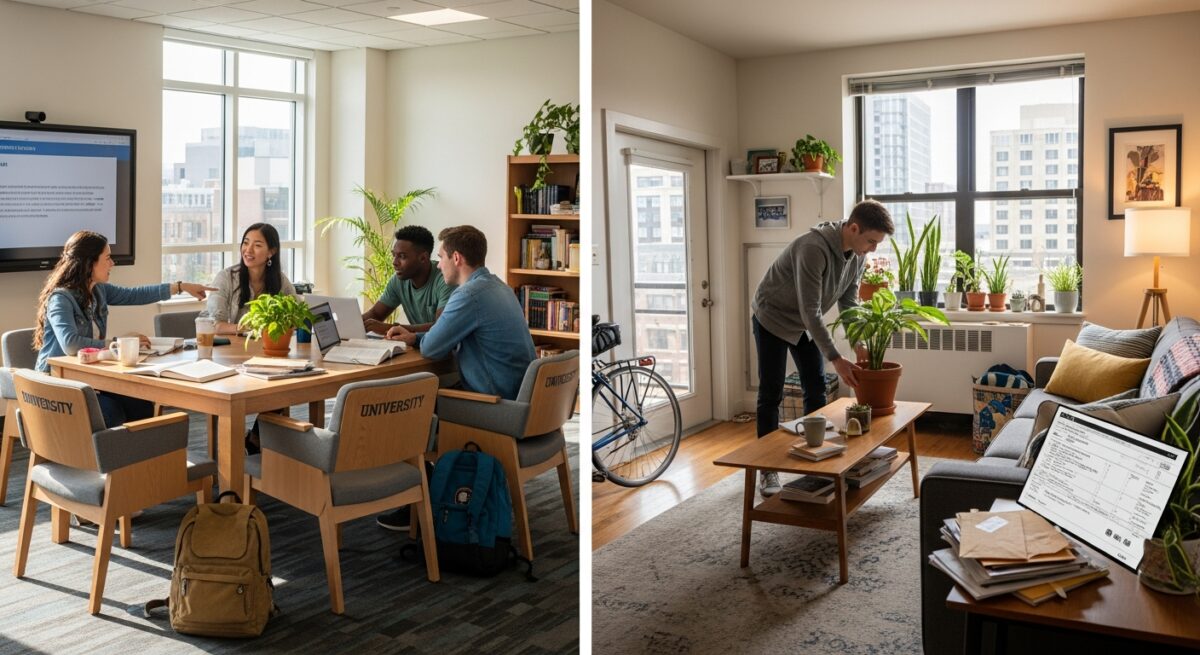
Choosing where to live is one of the most significant decisions a student makes, impacting finances, social life, academic focus, and daily convenience. The choice often boils down to a fundamental student housing options comparison: on-campus university housing versus off-campus private rentals. Yet, within these broad categories lie numerous sub-options, each with its own set of trade-offs. This comprehensive guide will dissect the major student housing options, providing a detailed analysis of costs, benefits, and lifestyle implications to help you make an informed decision that aligns with your personal and academic goals.
Understanding the Core Housing Categories
Before diving into specifics, it’s essential to understand the two primary pathways. On-campus housing refers to residence halls, dormitories, and university-owned apartments managed by the school’s housing office. Off-campus housing encompasses any rental property not owned by the university, including private apartments, shared houses, and corporate-run student housing complexes. The decision between them is not merely about location, it’s about choosing an entire ecosystem for your college years. Your choice will dictate your commute, your monthly budget structure, your level of independence, and the default community you interact with daily. A thorough student housing options comparison requires looking beyond just rent to include utilities, meal plans, transportation, and hidden fees.
On-Campus Housing: A Deep Dive
University dormitories and residence halls are often the default choice for first-year students, and for good reason. They provide a structured transition into college life. Living on campus places you at the heart of university activity, with classes, libraries, dining halls, and campus events just a short walk away. This proximity can be a powerful academic advantage, especially for students adjusting to a demanding course load. The built-in community is a major draw, as residence halls are designed to foster connections through floor meetings, resident advisors (RAs), and shared common spaces. This environment can significantly ease the social transition, helping to combat loneliness and build a network from day one.
However, on-campus living comes with trade-offs. Privacy is often limited, with most first-year options consisting of shared double or triple rooms. Community bathrooms are standard in traditional dorms. The cost, while seemingly straightforward, can be high when you factor in mandatory meal plans, which are typically bundled with room and board fees. This lack of flexibility means you pay for the meal plan whether you use it fully or not. Furthermore, you are subject to university rules, such as quiet hours, guest policies, and restrictions on personal appliances. For students craving autonomy, this can feel restrictive.
Key advantages and disadvantages of on-campus housing include:
- Proximity: Unbeatable access to classes, libraries, and campus resources.
- Community: Built-in social network and structured support from RAs.
- Simplicity: All-inclusive billing (rent, utilities, internet, meals) with no separate utility contracts.
- Limited Privacy: Shared rooms and bathrooms are common.
- Cost Structure: Can be expensive, especially with mandatory meal plans.
- Rules and Regulations: Must adhere to university housing policies.
University Apartments and Suites
For upperclassmen, many universities offer on-campus apartment-style living or suite-style dorms. These options provide a middle ground, offering more privacy (often private bedrooms) and kitchen facilities while retaining the benefits of campus location and university management. They are typically more expensive than traditional dorms but may offer a cost-saving if they allow you to opt out of a full meal plan. Availability is usually limited and often granted via lottery or seniority.
Off-Campus Housing: Exploring the Alternatives
Moving off-campus represents a step toward greater independence and often, a different financial model. The most common option is renting a private apartment, either alone or with roommates. This path offers maximum freedom in terms of location, living space, and lifestyle. You can choose an apartment close to campus, in a quiet neighborhood, or in a vibrant part of the city. You gain full control over your living environment, decor, meals, and schedule. Financially, while rent might be lower than on-campus room and board, you must budget separately for utilities (electricity, water, gas, internet), renters insurance, and groceries. This requires greater financial discipline and planning.
Another popular off-campus model is renting a room in a shared house. This is often the most affordable option, as you split the cost of a whole house with several other tenants. It can mimic a communal living feel but in a less institutional setting than a dorm. However, it also comes with potential challenges: coordinating bills with multiple people, navigating shared responsibilities for cleaning and maintenance, and the risk of roommate conflict without an RA to mediate. A critical step in off-campus living is understanding your lease agreement, which is a legally binding contract, unlike a university housing license agreement.
When conducting a student housing options comparison for off-campus living, consider these factors:
- True Cost: Rent + Utilities + Internet + Renter’s Insurance + Groceries + Transportation.
- Lease Length: Typically 12 months, which may require paying for summer months when you’re not there.
- Commute: Factor in time, cost, and reliability of public transit, biking, or parking.
- Furnishing: Most off-campus apartments are unfurnished, requiring a significant upfront investment.
- Landlord Relations: You deal directly with a private landlord or property management company.
Specialized Student Housing Complexes
A hybrid option that has grown in popularity is the privately-owned, purpose-built student housing (PBSH) complex. These are large apartment buildings located near campus, designed exclusively for students. They offer many perks of on-campus living (furnished units, all-inclusive billing, roommate-matching services, academic amenities like study rooms, and robust social programming) with the independence of off-campus leasing. They often feature resort-style amenities such as pools, gyms, and game rooms. The trade-off is cost, as these are frequently the most expensive off-campus option. They provide a turnkey solution for students who want a curated community experience without university rules, but who can afford a premium price. This is a distinct category worth its own consideration in any student housing options comparison.
Financial Breakdown and Hidden Costs
The financial comparison is rarely apples-to-apples. On-campus costs are usually presented as a lump sum per semester or academic year, covering room, utilities, and often a meal plan. This predictability is valuable. Off-campus costs are fragmented and variable. To make a fair student housing options comparison, you must create a detailed monthly budget for an off-campus scenario.
For example, an on-campus package might cost $12,000 per academic year (9 months). That breaks down to approximately $1,333 per month, all-inclusive. An off-campus apartment at $900 per month seems cheaper, but you must add: $150 for utilities, $50 for internet, $20 for renter’s insurance, $300 for groceries, and $50 for a bus pass or parking. This totals $1,470 per month, making it more expensive. Conversely, sharing a house with three others where rent is $500 per month changes the math dramatically. Furthermore, your choice of housing can impact your overall degree planning for students, as a longer commute or a distracting environment can affect academic performance and time to graduation, which has its own financial implications.
Key financial questions to ask:
- What is the total cost per month for each option, including all foreseeable expenses?
- What are the payment structures (semester lump sum vs. monthly rent)?
- Are there upfront costs (security deposit, first/last month’s rent, furniture)?
- What is the lease term? Can you sublet if you study abroad or leave for the summer?
Lifestyle and Personal Fit Considerations
Beyond finances, the right choice depends heavily on your personality and stage of college life. First-year students often benefit immensely from the structured community of on-campus housing. It accelerates the process of making friends and integrating into campus culture. For students in intensive programs (like engineering, pre-med, or architecture), the time saved by living on campus can be invaluable. Conversely, a student who values quiet, has a established local friend group, or has a partner or pet may find off-campus living more suitable. Upperclassmen frequently seek off-campus housing for the increased space, privacy, and ability to live with a self-selected group of friends. The desire to cook for oneself and live by one’s own rules becomes stronger as students progress.
Frequently Asked Questions
Is it cheaper to live on or off campus?
There is no universal answer. It depends on the university’s location, the cost of local rentals, your lifestyle, and how many roommates you have. A detailed budget comparison is essential. Often, off-campus housing with multiple roommates in a modest apartment is the most cost-effective, but not always.
What should I look for in an off-campus lease?
Key items: lease duration (look for 9-10 month academic leases if possible), subletting policy, utility responsibilities, maintenance procedures, guest policies, and penalties for breaking the lease. Never sign a lease without seeing the actual unit first.
How do I find roommates for off-campus housing?
Start with your existing network. Use university-sponsored roommate-finding boards or social media groups for your school. Be clear about your habits (sleep schedule, cleanliness, noise tolerance) and financial expectations during the screening process.
Can I switch from on-campus to off-campus housing mid-year?
Typically, on-campus housing contracts are for the full academic year. Breaking it may involve fees and is subject to university policy. Plan your housing transition during the normal leasing cycle, which for off-campus often happens 3-6 months before the move-in date.
What are the biggest hidden costs of off-campus living?
Common surprises include: security deposits (often equal to one month’s rent), application fees, utility setup deposits, the cost of furnishing an entire apartment, ongoing transportation costs, and renter’s insurance. Also, factor in the cost of your time for chores like cleaning, grocery shopping, and cooking.
Ultimately, the best student housing option is the one that supports your academic success, fits your budget, and aligns with your desired level of independence. By carefully weighing the pros and cons of on-campus dorms, university apartments, private rentals, shared houses, and purpose-built student complexes, you can make a choice that enhances your college experience. Start your research early, ask detailed questions, and run the numbers thoroughly. Your home during college is more than just a place to sleep, it’s a foundational element of your student journey.