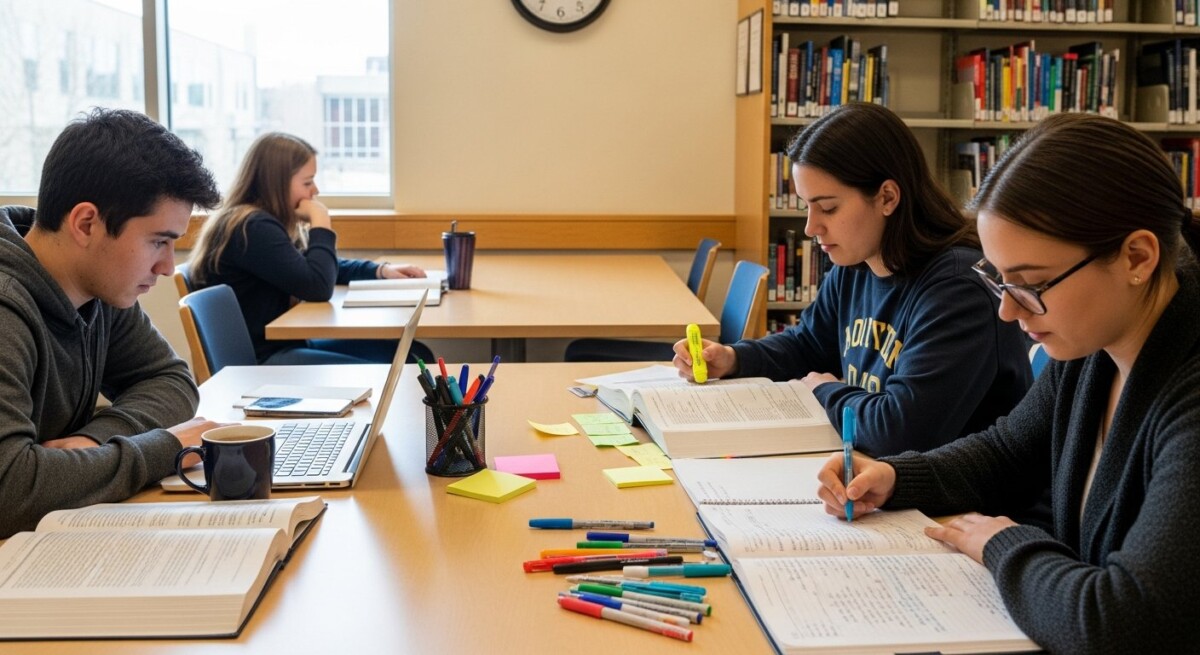
Every college student has experienced that sinking feeling: a pile of assignments, an upcoming exam, and a calendar that seems to shrink by the hour. The difference between thriving and merely surviving in higher education often comes down to two interconnected abilities: study skills and time management. These are not innate talents but learned strategies that can transform your academic experience. By mastering them, you reduce stress, improve grades, and free up time for work, family, or rest. This article provides a practical framework for building these essential skills, whether you are a first-year student or a returning adult learner.
Why Study Skills and Time Management Matter More Than Intelligence
Many students believe that raw intelligence determines academic success. Research and experience tell a different story. The ability to organize your time, process information efficiently, and review material systematically often predicts outcomes more reliably than IQ. When you combine effective study techniques with disciplined scheduling, you work smarter, not harder. This is especially critical for students balancing coursework with jobs or family responsibilities. Online degree programs demand even greater self-discipline, making these skills non-negotiable for success.
Consider two students in the same class. One crams the night before an exam, reads the textbook passively, and studies whenever they find a spare moment. The other uses active recall, schedules dedicated study blocks, and reviews material weekly. The second student will almost certainly perform better, retain more information, and experience less anxiety. The difference is not intelligence; it is strategy. Developing strong study skills and time management habits early in your college journey pays dividends across every course and into your career.
The Core Components of Effective Study Skills
Study skills encompass a range of techniques that help you acquire, retain, and apply knowledge. Rather than treating studying as a single activity, break it down into distinct phases: preparation, active learning, and review. Each phase requires specific methods to maximize efficiency.
Active Learning Techniques That Stick
Passive reading and highlighting are among the least effective study methods. They create an illusion of familiarity without deep understanding. Instead, engage with the material actively. The Feynman Technique, named after the physicist Richard Feynman, involves explaining a concept in simple language as if teaching it to someone else. If you struggle to explain it clearly, you have identified a gap in your understanding. This method forces you to move beyond surface-level recognition.
Another powerful tool is retrieval practice. Instead of rereading notes, close the book and try to recall key points from memory. Use flashcards, practice questions, or blank-page summaries. Research shows that the effort of recalling information strengthens neural pathways, making it easier to access later. Spaced repetition, which involves reviewing material at increasing intervals, complements retrieval practice. Tools like digital flashcard apps automate this process, but a simple paper calendar works just as well. For example, review new material after one day, then three days, then one week, and finally one month.
Note-Taking Systems That Support Learning
Your notes are the raw material for studying, so their quality matters enormously. The Cornell Note-Taking System is a popular method that divides a page into three sections: a narrow left column for cues or questions, a wider right column for main notes, and a bottom section for a summary. During lectures or reading, capture main ideas in the right column. After class, formulate questions in the left column that the notes answer. Finally, write a brief summary at the bottom. This structure forces you to process information twice, once when writing and once when reviewing.
Digital note-taking tools like OneNote or Notion offer flexibility, but they require discipline to avoid distraction. If you type notes, focus on paraphrasing rather than transcribing verbatim. For technical subjects like math or science, handwriting formulas and diagrams may aid memory better than typing. Experiment with both analog and digital methods to see what works for your learning style. The goal is not perfect notes but notes that facilitate active recall and understanding.
Building a Time Management System That Works
Time management is the scaffolding that supports your study skills. Without a plan, even the best techniques fail because you never have time to use them. A good system balances academic work with other responsibilities and includes buffers for the unexpected. The following steps will help you build a personalized framework.
Conduct a Time Audit
Before you can manage your time, you need to know where it goes. For one week, track every activity in 30-minute increments. Include classes, studying, work, commuting, meals, exercise, social media, and sleep. Use a spreadsheet, a paper journal, or a time-tracking app. At the end of the week, categorize your time into fixed commitments (classes, work) and flexible activities (studying, leisure). Most students are surprised by how much time disappears into low-value activities like scrolling social media or watching television. This audit provides the data you need to make informed adjustments.
Create a Weekly Template
Based on your time audit, design a weekly schedule template. Block out fixed commitments first: classes, work hours, appointments, and sleep. Then, schedule dedicated study blocks. Aim for 50-minute sessions with 10-minute breaks, as this interval matches the average attention span. The Pomodoro Technique, which uses 25-minute focused intervals followed by 5-minute breaks, is another effective option. Place study blocks during your peak energy times. If you are a morning person, schedule difficult subjects early. If you focus better in the evening, reserve that time for deep work.
Include buffer time between activities. A 15-minute transition period prevents one task from bleeding into the next. Also, schedule one or two longer blocks each week for major projects or exam preparation. Finally, protect at least one evening or afternoon per week for rest and social activities. Burnout undermines productivity, so rest is not optional; it is strategic.
Prioritize Tasks Using the Eisenhower Matrix
Not all tasks are equally important. The Eisenhower Matrix helps you categorize tasks by urgency and importance. Draw a 2×2 grid. The top-left quadrant is for urgent and important tasks: deadlines, exam preparation, assignments due soon. The top-right quadrant is for important but not urgent tasks: long-term projects, reading, skill development. The bottom-left quadrant is for urgent but not important tasks: some emails, minor requests, interruptions. The bottom-right quadrant is for neither urgent nor important: distractions, excessive social media, busy work.

Focus most of your energy on the top-left and top-right quadrants. Schedule time for important but non-urgent tasks before they become urgent. Delegate or minimize tasks in the bottom-left quadrant. Eliminate tasks in the bottom-right quadrant. This framework prevents you from spending all your time putting out fires while neglecting activities that drive long-term success.
Integrating Study Skills with Your Schedule
Having a schedule and knowing study techniques are only half the battle. The real power comes from integrating them. Use your weekly template to assign specific study methods to each block. For example, a morning block might be dedicated to active recall for a biology class, while an afternoon block focuses on practice problems for statistics. By matching the technique to the subject and your energy level, you maximize every minute.
Plan review sessions in advance. If you have a midterm in four weeks, schedule a 30-minute review block each week leading up to it. This spaced approach is far more effective than a single marathon session. Similarly, break large projects into smaller milestones and assign each milestone to a specific study block. Writing a 10-page paper becomes manageable when you schedule one block for research, another for outlining, and several for drafting and revising.
One common pitfall is multitasking. Research consistently shows that the human brain cannot focus on two cognitively demanding tasks simultaneously. When you study, close unrelated browser tabs, put your phone in another room, and use website blockers if necessary. Single-tasking produces higher quality work in less time. A focused 45-minute study session yields more than two hours of distracted effort.
Overcoming Common Obstacles
Even with the best systems, obstacles will arise. Procrastination is the most common challenge. It often stems from fear of failure, perfectionism, or the daunting size of a task. Break the cycle by using the two-minute rule: if a task takes less than two minutes, do it immediately. For larger tasks, commit to working for just five minutes. The initial momentum often carries you forward. Also, identify your procrastination triggers. If you tend to procrastinate when a task feels vague, spend five minutes clarifying the next specific action. Instead of “study for chemistry,” write “review chapter 5 flashcards for 20 minutes.”
Another obstacle is distraction from digital devices. Social media notifications, text messages, and streaming services compete for your attention. Create a distraction-free study environment. Use apps that block distracting sites during study blocks. Keep your phone in a drawer or backpack. If you need your computer for studying, log out of social media accounts. Environmental cues matter: a clean desk with only the materials you need signals your brain that it is time to focus.
Fatigue and burnout are also serious threats. Pushing through exhaustion reduces cognitive performance and increases errors. Listen to your body. If you feel mentally foggy, take a 10-minute walk, hydrate, or eat a healthy snack. Sleep is non-negotiable for memory consolidation and problem-solving. Aim for 7-9 hours per night. If you consistently sacrifice sleep to study, you are undermining the learning process. A well-rested student learns more in two hours than a sleep-deprived student learns in four.
Frequently Asked Questions
How many hours per week should I study?
A general rule is 2-3 hours of study per credit hour per week. For a 15-credit course load, that means 30-45 hours of studying outside class. However, this varies by subject, your prior knowledge, and course difficulty. Adjust based on your grades and comprehension. If you are struggling, increase study time. If you feel confident, maintain or slightly reduce it.
What is the best time of day to study?
The best time is when you are most alert and focused. Morning people often perform analytical tasks best before noon. Night owls may excel at creative work in the evening. Experiment with different times for one week and track your focus and retention. Schedule your most challenging subjects during your peak cognitive hours.
How do I balance study with work and family?
Start with a realistic time audit and weekly template that includes all commitments. Communicate your study schedule to family members or roommates so they know when you need quiet time. Consider online or asynchronous courses that offer flexibility. If possible, reduce work hours during exam periods. Prioritize quality over quantity: a focused 20-minute study session is better than a distracted hour.
Can study skills and time management help with online learning?
Absolutely. Online learning requires more self-discipline because there are fewer external deadlines and face-to-face accountability. The strategies in this article are especially critical for online students. Create a dedicated study space, stick to your weekly schedule, and actively participate in discussion forums. Many successful online learners treat their study blocks as non-negotiable appointments with themselves.
Final Thoughts on Building Lasting Habits
Mastering study skills and time management is not about perfection; it is about progress. Start small. Choose one technique from this article and implement it this week. Maybe you conduct a time audit, try the Pomodoro Technique, or set up a weekly template. Once that habit feels automatic, add another. Over the course of a semester, these small changes compound into significant improvements in your academic performance and well-being. Remember that every student struggles at first. The key is to keep refining your system until it works for you. Your college journey is a marathon, not a sprint. With the right strategies, you can finish strong and enjoy the process along the way.