Are you considering furthering your education but feeling held back by the staggering price tag of a traditional college degree? You are not alone. The rising cost of higher education is a significant barrier for millions. However, the landscape of learning has fundamentally shifted. A surge in high-quality, inexpensive degree programs online is making accredited, valuable education more accessible than ever before. This guide cuts through the noise to show you how to identify legitimate, low-cost online degrees that align with your career goals and financial reality, without compromising on quality or future potential.
Redefining Value in Online Education
When we discuss inexpensive online degrees, it is crucial to define what “inexpensive” truly means in a higher education context. It is not merely about the lowest advertised tuition rate. True value is a combination of affordable cost, program quality, accreditation status, and return on investment (ROI). An inexpensive program that lacks proper accreditation is not a bargain, it is a financial and professional risk. Conversely, a slightly higher-priced program from a reputable institution that leads directly to career advancement or a higher salary can be the more economical choice in the long run. The goal is to find the intersection where reputable education meets manageable cost.
Modern online education has moved far beyond its early reputation. Today, many prestigious public universities and established private colleges offer complete degree programs through digital platforms. These programs often carry the same curriculum, faculty, and accreditation as their on-campus counterparts, but at a fraction of the cost. This is frequently achieved through lower operational overhead and scalable digital resources. The savings are then passed on to students in the form of reduced per-credit tuition rates, especially for out-of-state learners.
Key Strategies for Finding Low-Cost Programs
Finding the right program requires a strategic approach. Start by focusing on public, in-state institutions. Public universities and state college systems typically offer the most affordable online tuition rates for residents of that state. Many have also developed “in-state equivalency” rates for online students regardless of location. Next, explore competency-based education (CBE) models. These programs, offered by schools like Western Governors University, charge a flat-rate tuition per term, allowing you to accelerate your degree by demonstrating knowledge you already possess, potentially saving thousands.
Another powerful strategy is to maximize transfer credits. Many affordable online degrees are designed for working adults with some prior college credit. You can often transfer credits from community colleges (which have extremely low tuition), military training, professional certifications, or prior university coursework. This can significantly reduce the number of credits you need to pay for at the four-year institution. Always consult with an admissions advisor to understand a program’s specific transfer policies. A thorough review process for online degree programs is essential to verify these details and avoid costly surprises.
Here are the most effective places to search for accredited, inexpensive online degrees:
- Public University Systems: State flagships and their satellite campuses often have robust online divisions.
- Community Colleges: For associate degrees or starter credits that seamlessly transfer to a bachelor’s program.
- Non-Profit Universities with National Reach: Institutions like Southern New Hampshire University or American Public University specialize in affordable, scalable online education.
- Federal and State Financial Aid Portals: Completing the FAFSA is your first step to unlocking grants, loans, and work-study funds applicable to online programs.
Understanding Accreditation: Your Non-Negotiable Filter
No discussion about affordable online degrees is complete without a stern warning about accreditation. This is the single most important factor in determining a program’s legitimacy and value. Accreditation is an external quality review process conducted by agencies recognized by the U.S. Department of Education or the Council for Higher Education Accreditation (CHEA). There are two main types: institutional and programmatic. Always verify that the institution holding the online degree has regional accreditation (considered the gold standard), not just national accreditation. National accreditation is common among for-profit trade schools and often creates significant barriers to transferring credits or pursuing advanced degrees at regionally accredited institutions.
Attending an unaccredited or poorly accredited program can have devastating consequences. You may be ineligible for federal financial aid, your credits will almost certainly not transfer to another school, and future employers or graduate programs may not recognize your degree. Before you get excited about any low tuition figure, your first action must be to verify the accreditation status directly on the accrediting agency’s website, not just the school’s marketing materials. This step protects your investment and your future.
Breaking Down the Real Costs of an Online Degree
To accurately compare programs, you must look beyond the per-credit tuition rate. The total cost includes several components. Tuition is the primary cost, usually quoted per credit hour or per term. Fees are often hidden expenses that can add up: technology fees, distance learning fees, registration fees, and graduation fees. You must also budget for required materials: textbooks, software, subscriptions, and any specialized equipment. While some online programs use inclusive digital textbooks, others do not. Finally, consider ancillary costs: reliable high-speed internet, a capable computer, and potentially proctoring services for exams.
Creating a total cost comparison is straightforward. For each program you are considering, use this formula: (Tuition per Credit x Total Credits Required) + Estimated Fees + Estimated Cost of Materials = Total Estimated Program Cost. This number, not the sticker tuition rate, is what you should use to compare affordability. Many university websites provide a net price calculator, which is an excellent tool for getting a personalized estimate after factoring in potential financial aid.
Maximizing Financial Aid and Scholarships
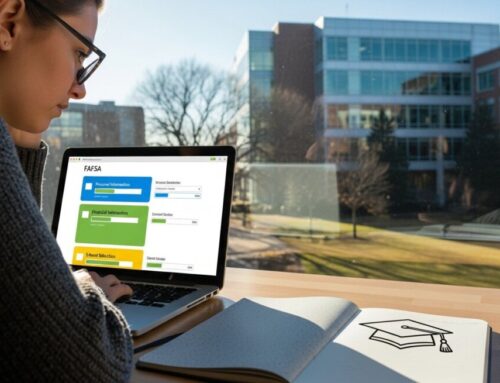
Financial aid is not exclusive to campus-based students. Students enrolled in accredited inexpensive degree programs online are fully eligible for the same federal aid programs. Your journey begins with the Free Application for Federal Student Aid (FAFSA). This form determines your eligibility for Pell Grants (which do not need to be repaid), federal student loans, and work-study opportunities. Many states also use the FAFSA data to award their own grants. It is critical to complete the FAFSA every year, even if you think you may not qualify.
Scholarships are another vital resource. They can be need-based or merit-based and come from a myriad of sources:
- Institutional Scholarships: Offered directly by the university to online students.
- Employer Tuition Assistance: Many companies offer reimbursement programs for job-relevant degrees.
- Private Scholarships: From community organizations, professional associations, and private foundations. Use reputable scholarship search engines.
- Military and Veteran Benefits: The GI Bill and other benefits are fully applicable to approved online programs.
Dedicate time to a structured scholarship search. Treat it like a part-time job; even small awards can significantly reduce your out-of-pocket costs over the duration of your degree.
Choosing the Right Program for Your Career Goals
Affordability should serve your career objectives, not undermine them. The best inexpensive online degree is one that leads to tangible career advancement or entry into a new field. Start by researching job market trends and identifying industries with growth potential and solid median salaries. Some fields are particularly well-suited to online education and offer strong ROI, such as information technology, healthcare administration (like nursing or health information management), business administration, accounting, education (for certification), and cybersecurity.
When evaluating a specific program, scrutinize its career support services. Does the online program offer dedicated career counseling, virtual job fairs, resume workshops, and internship placement assistance? A strong career services department can be the difference between simply earning a degree and launching a new career. Also, investigate the program’s alumni network and employer partnerships. These connections can provide invaluable mentorship and job leads.
Your path to an affordable, high-quality education is clear. It requires diligent research, a steadfast commitment to verifying accreditation, and a strategic approach to financing. By focusing on reputable public and non-profit institutions, maximizing transfer credits and financial aid, and aligning your program choice with concrete career outcomes, you can earn a valuable degree without incurring debilitating debt. The opportunity for an accessible, flexible, and inexpensive degree programs online has never been more real. Take the first step today by mapping your educational journey with these principles in mind.