Earning a bachelor’s degree is one of the most significant investments you can make in your future, but the soaring cost of tuition has left many students and families wondering if it’s financially feasible. The good news is that a high-quality, life-changing education does not have to come with a six-figure price tag. By strategically navigating the landscape of higher education, you can identify truly budget-friendly bachelor’s programs that provide excellent value without compromising on academic quality or career outcomes. This guide will walk you through the proven pathways and practical strategies to secure an affordable degree, turning the dream of a college education into a financially smart reality.
Redefining Value in Higher Education
The search for a budget-friendly program begins with a shift in perspective. Value is not merely about the lowest sticker price, it’s about the return on investment (ROI). A budget-friendly bachelor’s program effectively balances cost with outcomes, such as graduation rates, graduate earning potential, and career support services. The most affordable path is often the one that gets you to graduation on time with minimal debt and strong job prospects. Therefore, your goal should be to find programs that are transparent about costs, offer robust financial aid, and have a track record of student success. This holistic view of value prevents you from choosing a seemingly cheap program that may lack accreditation or career relevance, ultimately costing more in the long run.
Top Pathways to an Affordable Bachelor’s Degree
Several established educational models are specifically designed to reduce the cost of a four-year degree. These pathways leverage different structures and partnerships to make college more accessible.
Start at a Community College
Completing your general education requirements at a local community college is arguably the most effective cost-saving strategy. Tuition at public two-year colleges is typically a fraction of the cost at four-year institutions. You can earn an associate degree or complete a curated set of transferable courses, then seamlessly transfer to a partnering university to finish your bachelor’s. This “2+2” model can cut the total cost of your degree by half or more. The key to success here is meticulous planning. Work closely with advisors at both the community college and your target four-year school to ensure every credit will transfer, keeping you on track for a timely graduation.
Embrace Public In-State Universities
Public universities subsidized by state tax dollars offer significantly lower tuition rates for state residents. For many students, their flagship state university or a regional state campus provides the optimal blend of affordability, program variety, and campus resources. Beyond base tuition, look for public institutions with strong “fixed-rate tuition” guarantees, which lock in your tuition rate for four years, protecting you from annual increases. Also, explore if your state has reciprocity agreements with neighboring states, which may allow you to attend an out-of-state public university at a reduced tuition rate.
Consider Competency-Based Education (CBE) Programs
For self-motivated learners, competency-based education offers a unique pay-for-progress model. Instead of paying per credit hour or semester, you often pay a flat tuition fee for a subscription period (e.g., every six months). During that period, you progress through courses by demonstrating mastery of the material, often via assessments, rather than spending time in a traditional class. If you can learn quickly or have prior knowledge from work experience, you can potentially accelerate your degree completion, saving substantial money. Several accredited, non-profit universities now offer CBE bachelor’s degrees in fields like business, information technology, and healthcare.
Maximizing Financial Aid and Scholarships
Lowering the “net price” (what you actually pay after aid) is just as important as finding a program with low tuition. This requires a proactive and thorough approach to financial aid.
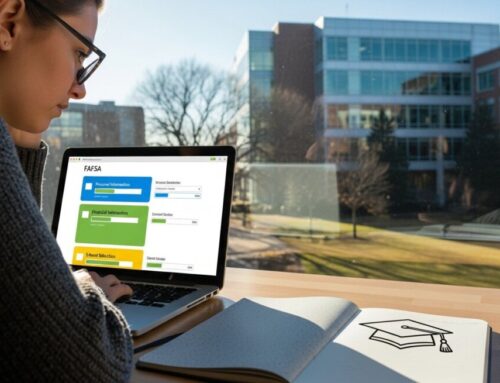
Your first and most critical step is to complete the Free Application for Federal Student Aid (FAFSA) as soon as it opens. This form unlocks federal grants (like the Pell Grant, which does not require repayment), federal student loans, and work-study funds. Many states and colleges also use the FAFSA to award their own need-based aid. Do not assume you won’t qualify, many factors are considered.
Scholarships are essentially free money and should be pursued aggressively. They fall into two main categories:
- Institutional Scholarships: Awarded directly by the college or university. These are often based on academic merit, talent, or specific majors. Always check the financial aid page of your target schools.
- External Scholarships: Offered by private organizations, community foundations, corporations, and nonprofits. Use reputable scholarship search engines and look locally, where competition may be less intense.
To effectively manage this process, create a dedicated calendar for scholarship deadlines and treat applications like a part-time job. Even smaller awards add up and reduce the loan amount you need to borrow.
The Strategic Advantage of Online Degrees
Accredited online bachelor’s programs have become a powerhouse for budget-conscious education. They provide inherent cost savings by eliminating commuting, relocation, and often some campus fees. More importantly, they offer flexibility that can translate into financial savings: you can maintain full-time or part-time employment while studying, preserving your income and reducing reliance on loans. When evaluating online programs, prioritize those from regionally accredited non-profit institutions. Be sure to scrutinize all cost components, including technology fees, proctored exam fees, and whether digital textbooks are included in tuition. A transparent, all-inclusive fee structure is a hallmark of a student-focused, budget-friendly online program.
Essential Due Diligence Before You Enroll
Before committing to any program, conducting thorough research is non-negotiable. This due diligence protects your investment and ensures the degree will hold value in the marketplace.
First, verify accreditation. Regional accreditation is the gold standard for academic quality and ensures your credits will transfer and your degree will be recognized by employers and other universities. Next, investigate the program’s outcomes. Key data points to look for include:
- Graduation rates (a higher rate often indicates good student support).
- Student loan default rates (a low rate suggests graduates are managing debt successfully).
- Post-graduation employment rates and average salaries for graduates.
This information is often found on a college’s website through a “Student Consumer Information” or “Institutional Research” page. If it’s hard to find, contact the admissions office and ask for it. Finally, calculate the true total cost. Don’t just look at tuition, factor in books, supplies, fees, and a realistic estimate for living expenses. Use each school’s net price calculator, available on their website, for a personalized estimate after aid.
Building Your Budget-Friendly College List
With these strategies in hand, you can build a targeted list of schools to apply to. A balanced list should include a mix of “safety,” “match,” and “reach” schools based on both admissions criteria and financial fit. For each school, document the annual cost of attendance, the average financial aid package awarded, and the resulting net price. Contact the financial aid office with specific questions about scholarship opportunities and the appeal process for aid packages. Remember, your application is also a negotiation tool, a more generous offer from one school can sometimes be used to request a reconsideration of aid from another. By being organized, informed, and proactive, you position yourself to choose from multiple affordable options.
Pursuing a bachelor’s degree on a budget is a deliberate and strategic process. It requires looking beyond rankings and prestige to focus on the metrics that truly matter: transparency, support, and outcomes. By leveraging pathways like community college transfer, in-state public universities, and innovative online or competency-based models, and by aggressively pursuing all forms of financial aid, you can obtain a valuable credential without the burden of overwhelming debt. The most budget-friendly program is the one that aligns with your goals, supports your success, and launches you into your career with a solid financial foundation. Your future self will thank you for the careful planning you do today.