Earning a bachelor’s degree remains one of the most reliable pathways to higher lifetime earnings and career advancement, but the soaring cost of tuition has left many prospective students wondering if it’s financially feasible. The narrative of crippling student loan debt can be overwhelming, creating a barrier before the journey even begins. However, a landscape of genuinely affordable bachelor’s degree options does exist for those who know where to look and how to plan strategically. This guide moves beyond generic advice to provide a concrete framework for obtaining a respected, accredited degree without mortgaging your future. By understanding the full spectrum of cost-reduction strategies, from innovative institutional models to smart financial planning, you can make an informed decision that aligns with both your career goals and your financial well-being.
Redefining “Affordable” in Higher Education
When discussing affordable bachelor’s degrees, it’s crucial to look beyond the advertised sticker price. True affordability is a function of total cost, available financial aid, potential earnings during study, and long-term return on investment. An “affordable” program is one you can complete with minimal or manageable debt, often through a combination of low tuition, generous transfer policies, and integrated work opportunities. The goal is not merely to find the cheapest option, but to identify programs that offer a high-value education at a reasonable net price. This requires a shift in perspective, evaluating the entire financial picture rather than just tuition rates alone.
Key metrics to consider include the program’s net price (tuition minus grants and scholarships), graduation rate, and typical student loan debt of graduates. Public institutions, particularly in-state universities, often provide a foundational level of affordability due to taxpayer subsidies. However, the most innovative and cost-effective paths frequently involve hybrid models, competency-based education, and partnerships with employers. These approaches compress timelines and reduce incidental costs, making the overall investment significantly lower. For a deeper dive into evaluating program value, our resource on how to assess online degree options for career success provides a useful framework for aligning cost with outcomes.
Top Pathways to a Low-Cost Bachelor’s Degree
Several established and emerging pathways can drastically reduce the cost of your undergraduate education. These are not theoretical concepts but practical routes taken by thousands of students each year to earn accredited degrees.
First, community college transfer programs represent one of the most reliable money-saving strategies. By completing general education requirements at a local community college for a fraction of the cost, then transferring to a four-year university for the final two years, students can save tens of thousands of dollars while still earning a degree from the senior institution. Success depends on careful planning with an advisor to ensure all credits will transfer seamlessly.
Second, public online universities operated by state university systems offer in-state tuition rates to all online students, regardless of their physical location. Universities like the University of Florida Online, Arizona State University Online, and the University of Illinois Springfield provide identical degrees to their on-campus counterparts at a uniform, discounted online rate. This model eliminates out-of-state tuition premiums and ancillary campus fees.
Third, competency-based education (CBE) programs charge by term rather than by credit, allowing students to accelerate their degree by demonstrating mastery of material they already know. Schools like Western Governors University and Purdue Global ExcelTrack let students complete as many courses as they can per term for one flat fee. For motivated, self-directed learners, especially those with prior work experience, this can cut both time and cost by half or more.
Finally, employer tuition assistance programs are an often-underutilized resource. Many corporations, from retail giants to tech firms, offer significant tuition reimbursement benefits for employees seeking degrees relevant to the business. Some, like Starbucks’ partnership with Arizona State University, even offer full tuition coverage. Working while studying takes discipline, but graduating debt-free is a powerful incentive.
Maximizing Financial Aid and Scholarships
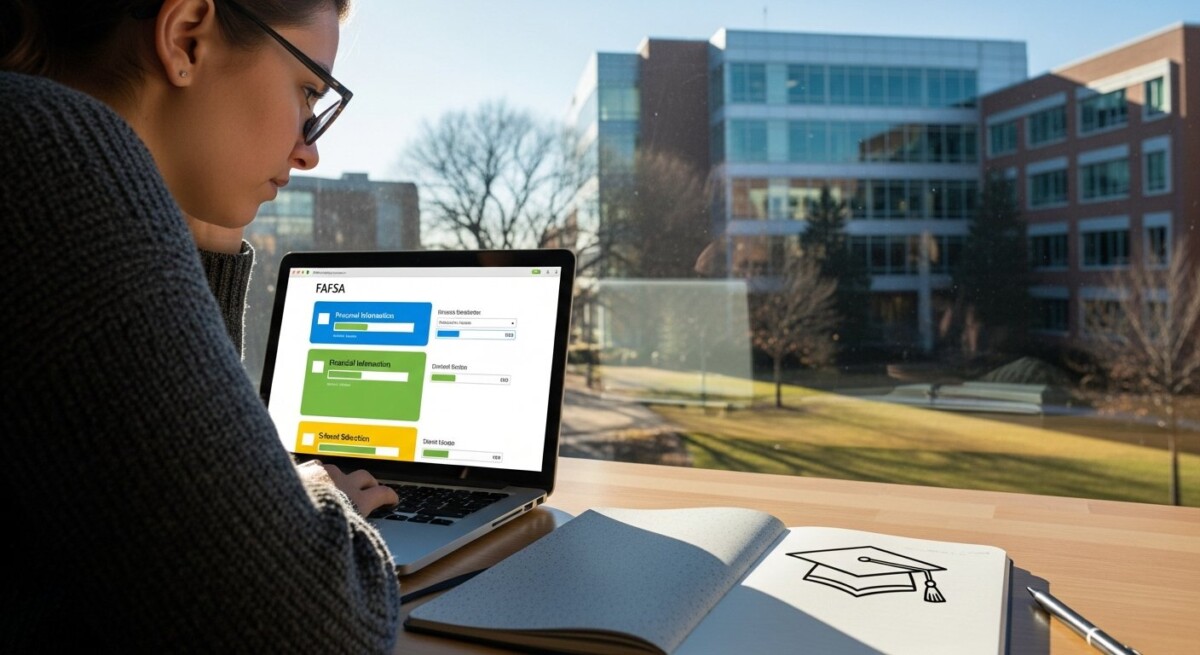
Finding a low-tuition program is only half the battle, actively securing financial aid is the other. The process begins with the Free Application for Federal Student Aid (FAFSA), which every student should complete regardless of income. The FAFSA unlocks federal Pell Grants (which do not require repayment), federal student loans (which have lower interest rates and better terms than private loans), and work-study opportunities. Many states and institutions also use the FAFSA data to award their own need-based grants. Submitting the FAFSA early is critical, as some aid is awarded on a first-come, first-served basis.
Beyond federal aid, strategic scholarship searching is essential. Instead of relying solely on national, highly competitive awards, focus on local and niche scholarships with smaller applicant pools. These can include scholarships from community foundations, local businesses, professional associations related to your intended major, and even the colleges themselves. Many affordable degree programs offer automatic merit scholarships based on GPA or test scores. Diligence in this area can turn an affordable program into a nearly free one.
To organize your search, consider this actionable checklist:
- Complete the FAFSA as soon as it opens for your enrollment year.
- Research institutional scholarships offered directly by the colleges on your shortlist, including automatic merit awards.
- Investigate state grant programs through your state’s higher education agency.
- Search local scholarship databases via your high school counselor, public library, or community foundation.
- Look for employer-dependent aid, including your own employer’s benefits or your parents’ employer scholarship programs.
Remember, scholarships are not just for incoming freshmen. Many are available for transfer students, non-traditional students, and those already enrolled. Continuous application throughout your college career can help cover costs each year.
Evaluating Accreditation and Program Quality
Pursuing affordability should never come at the expense of educational quality or legitimacy. Accreditation is the non-negotiable cornerstone of a valuable degree. Regional accreditation in the United States (granted by agencies like the Higher Learning Commission or Southern Association of Colleges and Schools) is the gold standard and ensures credits will transfer and degrees will be recognized by employers and graduate schools. Always verify a school’s accreditation status directly through the U.S. Department of Education’s database before applying.
With the assurance of proper accreditation, you can then evaluate program-specific factors. Look for indicators of quality such as student-to-faculty ratios, the academic credentials of instructors, career services support for online or remote students, and learning outcomes data. For specialized fields like engineering, nursing, or business, check for additional programmatic accreditation. These signals indicate that the program invests in student success beyond just delivering content.
Graduate outcomes are perhaps the most telling metric of quality. Reputable programs transparently share data on graduation rates, job placement rates, and alumni earnings. A truly affordable program is one that leads to gainful employment, enabling you to reap the return on your investment. Be wary of institutions that are vague about these statistics or that make unrealistic promises about job prospects.
The Strategic Role of Online and Hybrid Formats
The rise of high-quality online education has been a game-changer for affordability. Online bachelor’s degrees often provide the most direct route to lower costs by eliminating numerous expenses associated with traditional campus life: room and board, commuting, campus fees, and relocation. The flexibility also allows students to maintain full- or part-time employment, providing an income stream to pay for tuition as they go and avoid loans. This format is particularly synergistic with the affordable pathways mentioned earlier, such as CBE programs and employer partnerships.
Hybrid or blended programs, which combine occasional in-person sessions with online coursework, offer a middle ground. They can provide valuable networking and hands-on experiences while still keeping costs lower than fully residential programs. When considering online options, assess the structure of student support. Robust online programs offer virtual advising, tutoring, library services, and tech support, ensuring you have the resources to succeed. The delivery method should fit your learning style while serving your financial strategy.
It is important to note that not all online programs are created equal in cost. Some prestigious universities charge premium rates for their online degrees. The key is to target public universities and non-profit institutions that price their online programs competitively as part of their access mission. The most affordable online bachelor’s degree options are typically those from public regional universities that have invested in scaling their online delivery to serve a broader population.
Long-Term Planning for a Debt-Free Graduation
Achieving a debt-free or low-debt degree requires a multi-year financial strategy, not just a one-time search for cheap tuition. Start by creating a realistic budget that includes all anticipated costs: tuition, fees, books, technology, and incidental living expenses. Then, map your projected income from work, savings, and financial aid against this budget. Identify potential gaps early and develop a plan to address them, whether through additional scholarship applications, strategic course load management, or adjusting your work schedule.
Consider the opportunity cost of your time. Accelerated programs, while sometimes more intense, allow you to enter the workforce sooner, beginning your career-earning trajectory earlier. This can offset a slightly higher per-year cost. Conversely, spreading your degree over more years while working can reduce the need for loans. The optimal path depends on your personal circumstances, discipline, and career field.
Finally, view your education as an investment with a tangible return. Research the median salaries for graduates of your intended program and major. Use student loan calculators to understand what a manageable monthly payment would be if you do need to borrow a small amount. The goal is not necessarily to borrow zero dollars, but to borrow an amount that is easily serviceable with your expected entry-level salary. A common rule of thumb is that total student debt at graduation should not exceed your expected first year’s salary.
The pursuit of an affordable bachelor’s degree is an exercise in informed planning and proactive resource management. By leveraging transfer pathways, public online universities, employer benefits, and every available form of gift aid, a high-quality degree is within financial reach. The most successful students are those who approach their education with the mindset of a strategic investor, carefully weighing costs against long-term benefits. Your degree is the foundation for your future career, and building that foundation without a burden of debt is one of the most empowering financial decisions you can make. Start your search with a focus on accredited, reputable institutions that align with your specific cost-saving strategy, and take control of your educational and financial future today.