Choosing the right program is one of the most important decisions you will make on the path to becoming an occupational therapist. The demand for occupational therapy professionals continues to grow, and the quality of your education directly impacts your clinical skills, career opportunities, and earning potential. With hundreds of programs available across the United States, identifying the best occupational therapy schools requires careful research and a clear understanding of your personal goals.
Whether you are a high school student planning a pre-OT track, a college graduate exploring graduate programs, or a career changer seeking a meaningful healthcare role, this guide provides the framework you need to evaluate programs effectively. We will cover accreditation standards, curriculum quality, fieldwork requirements, and other critical factors that distinguish top occupational therapy schools from average ones.
What Makes an Occupational Therapy School Stand Out?
Not all OT programs deliver the same level of preparation. The best occupational therapy schools share several defining characteristics that set them apart. First and foremost is accreditation. The Accreditation Council for Occupational Therapy Education (ACOTE) sets the national standard for OT education. Graduating from an ACOTE-accredited program is essential for eligibility to sit for the national certification exam and obtain state licensure. Schools that hold this accreditation have met rigorous curriculum, faculty, and resource standards.
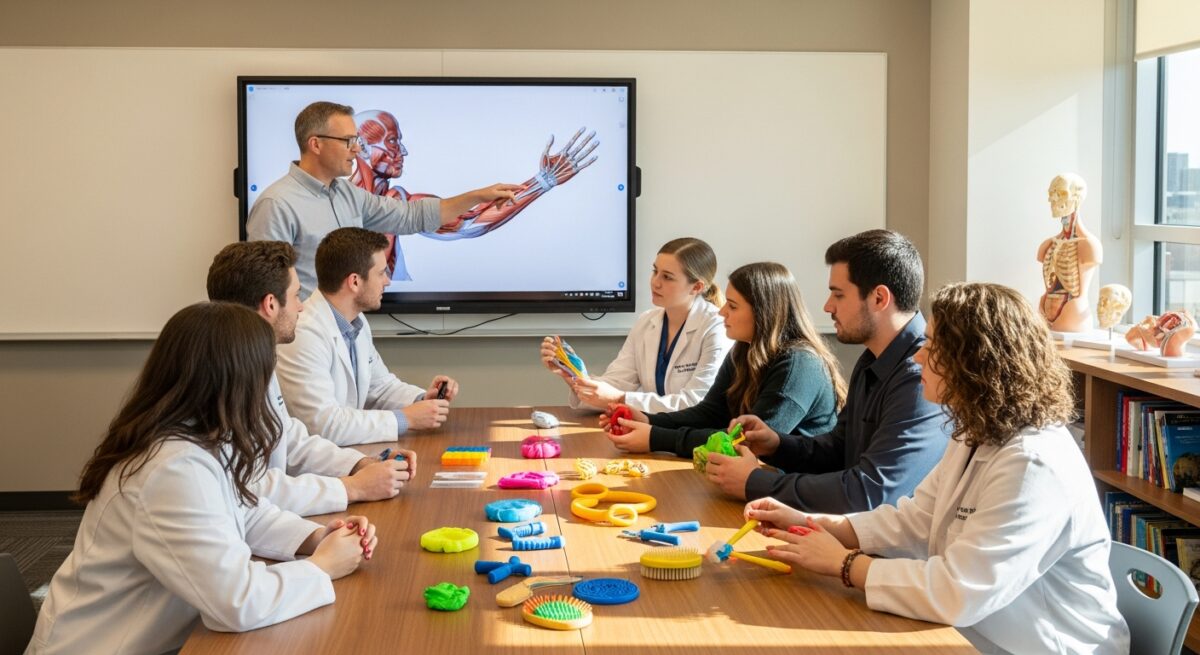
Beyond accreditation, leading programs distinguish themselves through faculty expertise, research opportunities, and clinical partnerships. Faculty members who are active clinicians and researchers bring current best practices into the classroom. Strong connections with hospitals, rehabilitation centers, schools, and community clinics ensure that students complete the required fieldwork hours in diverse, high-quality settings. The best occupational therapy schools also invest in modern simulation labs, assistive technology, and interprofessional education opportunities.
Curriculum Depth and Clinical Preparation
An excellent OT curriculum balances foundational sciences with hands-on clinical training. Core coursework typically includes anatomy, neuroscience, kinesiology, human development, and psychosocial aspects of health. Advanced courses cover assessment techniques, intervention strategies, and specialty areas such as pediatrics, geriatrics, mental health, and hand therapy.
Fieldwork is a critical component, and top programs structure it thoughtfully. Level I fieldwork involves observation and supervised participation, while Level II fieldwork requires full-time, immersive clinical experience across multiple settings. The best occupational therapy schools provide dedicated fieldwork coordinators who help students secure placements that match their interests and career goals. Some programs even offer international fieldwork opportunities, which can broaden your perspective on global healthcare challenges.
Accreditation and Certification Pathways
ACOTE accreditation is non-negotiable when evaluating OT programs. Without it, you cannot take the National Board for Certification in Occupational Therapy (NBCOT) exam. After passing the NBCOT exam, you earn the title of Occupational Therapist Registered (OTR). State licensure follows, with requirements varying by state but typically including graduation from an accredited program, passing the NBCOT exam, and completing continuing education.
When researching schools, verify accreditation status directly on the ACOTE website. Some programs may be in candidacy status, which means they are working toward full accreditation. While candidacy can be acceptable, it carries risk if the program fails to achieve full accreditation before you graduate. The best occupational therapy schools proudly display their accreditation status and provide documentation upon request.
For those considering an accelerated path, some institutions offer combined bachelor’s-to-master’s or bachelor’s-to-doctorate programs. These can save time and tuition but require careful planning. If you are exploring related healthcare fields, you might also find value in our guide to top physical therapy schools, which shares similar accreditation considerations and career outlook information.
Program Formats: Campus, Online, and Hybrid Options
Traditional campus-based programs remain the most common format for occupational therapy education. These programs offer structured schedules, direct access to labs and simulation equipment, and in-person interaction with faculty and peers. For students who thrive on routine and collaborative learning, campus programs often provide the richest educational experience.
However, online and hybrid OT programs have gained popularity, particularly for students who need flexibility due to work, family, or geographic constraints. Fully online programs typically deliver didactic coursework through asynchronous or synchronous virtual classes, with fieldwork arranged locally. Hybrid programs combine online coursework with periodic on-campus intensives for lab work and skills assessments.
When evaluating online or hybrid options, the best occupational therapy schools ensure that virtual components meet the same rigorous standards as their on-campus counterparts. Look for programs that provide dedicated technical support, virtual simulation tools, and strong fieldwork coordination. Accredited online programs are held to the same ACOTE standards as traditional programs, so you can trust the quality if the accreditation is legitimate.
Cost, Financial Aid, and Return on Investment
Occupational therapy education represents a significant financial investment. Tuition varies widely, from approximately $30,000 for in-state public university programs to over $100,000 for private institutions. Additional costs include fees, textbooks, supplies, living expenses, and travel for fieldwork placements. The best occupational therapy schools provide transparent tuition information and help students navigate financial aid options.
Federal student aid, scholarships, grants, and graduate assistantships can offset costs. Many programs offer merit-based scholarships for high-achieving students, and some employers provide tuition reimbursement for employees pursuing OT degrees. When calculating return on investment, consider the median salary for occupational therapists, which was approximately $92,000 per year as of 2024 according to the Bureau of Labor Statistics. Graduates from top programs often command higher starting salaries due to the quality of their training and institutional reputation.
To make informed financial decisions, prospective students should:
- Compare total program costs, including tuition and fees, across multiple schools
- Research scholarship opportunities specific to occupational therapy students
- Investigate graduate assistantship programs that offer tuition waivers and stipends
- Calculate projected student loan payments based on realistic salary expectations
- Consider geographic factors, as cost of living varies significantly across regions
After evaluating these factors, you can create a shortlist of programs that align with both your educational needs and financial situation. Remember that the most expensive program is not always the best fit, and affordable options at public universities often provide excellent education.

Specializations and Career Outcomes
Occupational therapy offers diverse career paths, and the best occupational therapy schools provide opportunities to explore specializations. Common areas of focus include pediatrics, mental health, hand therapy, neurorehabilitation, gerontology, and assistive technology. Some programs offer elective coursework, research projects, or clinical rotations in specific areas, allowing you to develop expertise before graduation.
Career outcomes data is an important metric when comparing programs. Reputable schools publish graduation rates, NBCOT pass rates, and job placement statistics. High NBCOT pass rates indicate strong curriculum and exam preparation. Strong job placement rates suggest effective career services and employer partnerships. The best occupational therapy schools maintain relationships with healthcare systems that actively recruit their graduates.
As you research programs, consider the long-term trajectory of the profession. Occupational therapy is projected to grow 12 percent from 2022 to 2032, much faster than the average for all occupations. This growth is driven by an aging population requiring rehabilitation services and increased awareness of occupational therapy’s role in mental health and pediatric care. Graduating from a top program positions you to take advantage of these expanding opportunities.
How to Research and Compare Programs
Start your search by using the ACOTE directory to identify accredited programs. From there, narrow your list based on program format, location, cost, and specialization options. Visit program websites to review curriculum details, faculty bios, and admission requirements. Attend virtual open houses or information sessions when available, as these provide direct access to program directors and current students.
Speaking with alumni and current students offers invaluable insight. Ask about their experiences with coursework, fieldwork placements, faculty mentorship, and career preparation. The best occupational therapy schools foster strong alumni networks that support graduates throughout their careers. You can often connect with alumni through LinkedIn, professional organizations, or program-sponsored events.
For additional guidance, explore resources from professional organizations such as the American Occupational Therapy Association (AOTA). AOTA provides information on career pathways, continuing education, and advocacy. Many top OT programs have active AOTA student chapters that offer networking and professional development opportunities.
Frequently Asked Questions
What is the difference between an MOT and an OTD degree?
Master of Occupational Therapy (MOT) programs typically take 2 to 2.5 years to complete and prepare students for entry-level practice. Occupational Therapy Doctorate (OTD) programs take 3 to 3.5 years and include additional coursework in leadership, research, and advanced clinical practice. Both degrees lead to the same certification and licensure, but the OTD may be preferred for roles in academia, research, or administration.
Can I become an occupational therapist with a bachelor’s degree?
No, entry-level practice as an occupational therapist requires at least a master’s degree from an ACOTE-accredited program. Some programs offer combined bachelor’s-to-master’s pathways that allow students to earn both degrees in an accelerated timeline. Occupational therapy assistants (OTA) typically hold an associate degree and work under the supervision of an OT.
How important is the NBCOT pass rate when choosing a school?
Very important. The NBCOT pass rate reflects how well a program prepares students for the national certification exam. Programs with consistently high pass rates (above 90 percent) demonstrate strong curriculum and student support. Low pass rates may indicate weaknesses in the program that could affect your ability to become licensed.
What prerequisite courses do OT programs require?
Most programs require undergraduate coursework in anatomy and physiology, psychology, sociology, statistics, and human development. Some programs also require courses in kinesiology, neuroscience, or medical terminology. Prerequisites vary by school, so check individual program requirements carefully. Many schools accept prerequisite courses from community colleges or online providers.
How do I gain observation or volunteer hours for my application?
Contact local hospitals, rehabilitation centers, skilled nursing facilities, school districts, and pediatric clinics to inquire about volunteer or shadowing opportunities. Many programs require a minimum number of observation hours under the supervision of a licensed occupational therapist. Document your hours carefully and reflect on your experiences in your personal statement.
For those exploring broader educational options, online degree programs in healthcare fields can provide flexible pathways for students balancing work, family, and education. These programs often feature accelerated formats and rolling admissions, making them accessible to motivated learners.
Building Your Future in Occupational Therapy
Selecting the best occupational therapy schools requires thoughtful evaluation of accreditation, curriculum, clinical training, cost, and career outcomes. Take the time to research multiple programs, speak with faculty and alumni, and visit campuses when possible. Trust your instincts and choose a program that aligns with your learning style, career aspirations, and personal circumstances.
The journey to becoming an occupational therapist is demanding but deeply rewarding. You will gain the skills to help people of all ages overcome challenges and participate fully in the activities that matter to them. By starting with a strong educational foundation from a top occupational therapy school, you set yourself up for a successful and fulfilling career in this growing field.