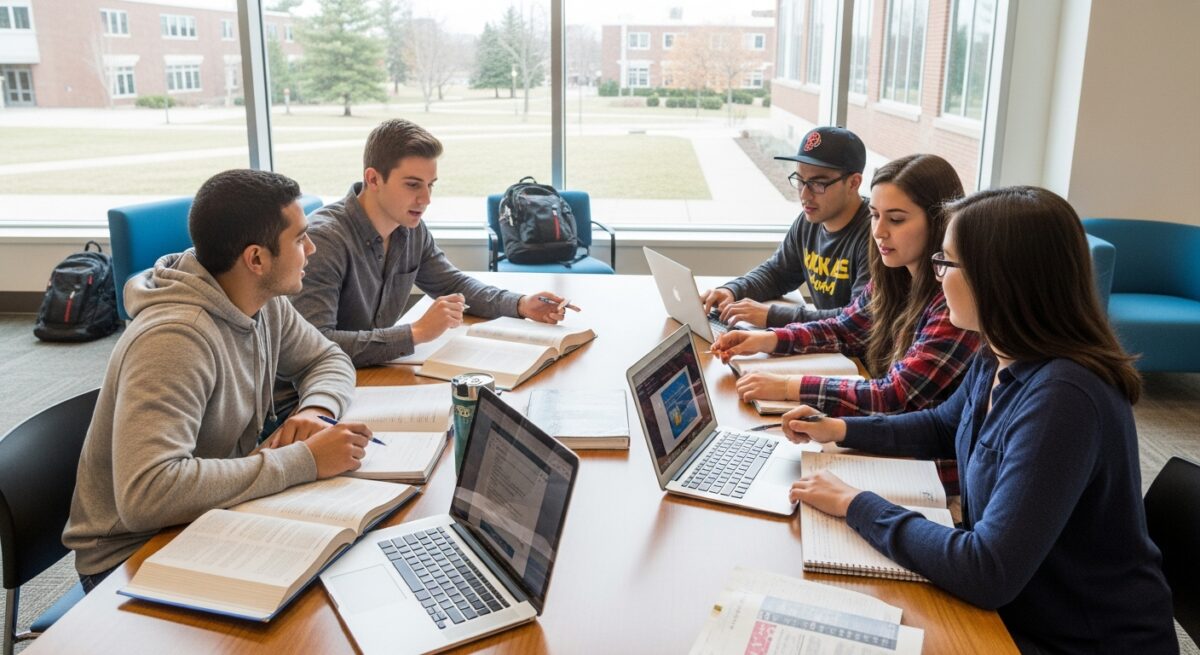
Imagine walking into your first college class, not as an isolated individual, but as part of a ready-made group of peers who share your major, your schedule, and your academic goals. This is the reality for students who join learning communities in colleges, a powerful educational model transforming the traditional freshman experience. Far more than just a shared dorm floor or a common course, these intentionally designed communities weave academic and social support into the fabric of a student’s life, directly combating the isolation and overwhelm that can derail academic progress. In an era where student retention and engagement are critical metrics, learning communities stand out as a proven, high-impact practice that connects classroom learning to real-world relationships and a profound sense of belonging on campus.
The Core Structure and Purpose of College Learning Communities
At its heart, a learning community is a cohort-based program where a group of students enrolls together in two or more linked courses, often around a common theme, academic interest, or major. The linkage is the key differentiator. Instead of taking unrelated classes with different sets of classmates, students in a learning community move through a coordinated academic block with the same peer group. This structure is frequently combined with shared residential living, dedicated academic advising, and collaborative projects. The primary purpose is integrative learning, breaking down the artificial barriers between discrete subjects and helping students see connections. For instance, a “Global Health” learning community might link a biology course with a sociology course and a writing seminar, where assignments are designed to overlap, allowing students to examine health issues from multiple disciplinary lenses simultaneously.
The model also serves a crucial developmental purpose for new students. The transition to college is a significant life change, and learning communities provide a built-in social network from day one. This directly addresses the challenge of making friends in large lecture halls, reducing the anonymity that can lead to disengagement. By creating a smaller, more intimate academic unit within a larger university, these communities foster peer-to-peer learning, accountability, and mutual support. Students are more likely to form study groups, attend office hours together, and persist through difficult coursework because they are not navigating the challenges alone. This supportive infrastructure is a cornerstone of effective degree planning for students, as it creates a stable foundation upon which to build a successful academic career.
Documented Benefits and Positive Outcomes
The efficacy of learning communities is not merely anecdotal, it is strongly supported by decades of educational research. Institutions that have implemented these programs consistently report measurable improvements in key student success indicators. The benefits are multifaceted, impacting academic performance, social integration, and long-term persistence.
First-year students participating in learning communities typically show higher GPAs compared to their non-participant peers. This academic boost is attributed to the embedded support systems and the reinforcement of material across linked courses. Furthermore, retention rates from the first to the second year are significantly higher for learning community participants. Students feel more connected to the institution, its faculty, and their peers, which increases their commitment to completing their degree. This sense of connection is especially vital for historically underserved populations, including first-generation college students and students from underrepresented backgrounds, for whom the campus environment can feel particularly foreign or intimidating.
The advantages extend beyond mere numbers. Students develop stronger critical thinking and communication skills through the interdisciplinary dialogue encouraged in linked courses. They build deeper relationships with faculty members, who often teach in a more collaborative and engaged style within the community setting. The social capital gained, the network of friends and academic allies, becomes an invaluable resource throughout college and beyond. For a deeper look at how supportive academic structures benefit specific student populations, consider the insights from our guide on Historically Black Colleges online degree programs, which often incorporate community principles into their digital learning models.
Common Models and Variations Across Campuses
While all learning communities share core principles, they manifest in different structural models to suit various institutional goals and student needs. Understanding these variations can help prospective students identify the right fit.
The most prevalent model is the Linked or Clustered Course Community. Here, students co-enroll in a set of courses (often a general education requirement, a major introductory course, and a seminar). The faculty teaching these courses coordinate syllabi to create thematic connections. A step further is the Freshman Interest Group (FIG), popular at large research universities. FIGs are typically themed around a potential major (e.g., Engineering, Business, Pre-Health) and include linked courses, a peer mentor (an upperclassman), and regular group meetings.
The Residential Learning Community (RLC), or living-learning community, is one of the most integrated forms. Students in an RLC not only take classes together but also live on the same residence hall floor or wing. The residential space often includes dedicated study rooms, programming, and a faculty-in-residence who engages with students informally. This model powerfully blends academic and social life. Finally, Cohort-Based Major Communities are designed for students who have declared a specific major. They move through their core major courses as a locked cohort, fostering deep collaboration and professional identity development from the start of their academic journey.
Key Components for an Effective Learning Community
Not all programs labeled as “learning communities” are equally effective. Research points to several essential components that separate high-impact programs from those that are merely administrative groupings. The presence of these elements is a good indicator of a program’s potential value.
First, intentional curricular integration is non-negotiable. Faculty collaboration is the engine of this integration. Instructors must actively work together to align assignments, projects, and discussions so students experience genuine connections between the subjects. Without this, the community is just a scheduling convenience. Second, dedicated advising and mentoring are critical. This includes both professional academic advisors familiar with the community’s pathway and peer mentors (successful upper-level students) who can provide guidance and support from a student’s perspective.
Third, purposeful out-of-class activities and events solidify the community bond. These can include service-learning projects, field trips related to the theme, guest speaker series, or cultural events. Fourth, the community must be of a manageable size to allow for meaningful interaction. While definitions vary, groups larger than 25-30 students can begin to lose the “small community” feel. Finally, assessment and feedback loops are essential. Effective programs regularly solicit student input and use data on grades and retention to refine their approach continuously.
Considerations for Students and Educators
For students considering joining a learning community, the decision requires some reflection. The primary consideration is alignment with academic and personal interests. Students should ask: Does the theme or focus of the community genuinely interest me? Are the linked courses required for my intended major or general education? While communities offer incredible support, they also represent a commitment to a set schedule and a specific peer group. The benefits of deep relationships come with less flexibility in course selection during the term of participation.
For faculty and administrators developing these programs, the challenges often involve resources and institutional buy-in. Successful communities require funding for faculty collaboration time, peer mentor stipends, and programming budgets. They also demand a shift from strictly departmental thinking to interdisciplinary cooperation. Assessment must be ongoing to demonstrate the return on investment to the institution in terms of student success. Despite these challenges, the long-term benefits for student engagement, retention, and overall educational satisfaction make learning communities a compelling investment for any college or university serious about undergraduate education.
Frequently Asked Questions
Are learning communities only for first-year students?
While they are most common for incoming freshmen to ease the transition, many institutions offer learning communities for transfer students, students within specific majors (sophomore or junior cohorts), and even themed communities for upperclassmen. The model is adaptable to various stages of the academic journey.
Do learning communities cost extra money?
Typically, there is no extra tuition cost for participating in a learning community. Students pay standard tuition for the courses they take. There might be modest fees for special programming or events, but these are usually minimal or covered by the institution. Any potential costs should be clearly communicated during the application process.
Can I join a learning community if I am undecided about my major?
Absolutely. Many communities are designed specifically for exploratory students. Themes like “Innovation and Discovery,” “Liberal Arts Explorations,” or “Leadership and Society” allow undecided students to sample different disciplines in a connected way while building essential academic skills and a support network.
How does housing work with a residential learning community (RLC)?
If you join an RLC, you will typically be assigned to live in a specific residence hall or on a designated floor with other members of your community. This housing assignment is usually part of the community acceptance process. You should apply for the RLC by the university’s housing deadline to secure your spot.
What is the time commitment outside of class?
Commitment varies by program. Most communities include some required out-of-class components, such as a weekly seminar, monthly meetings with a peer mentor, or a few special events per semester. The time commitment is structured to enhance your experience, not overwhelm it, and is a key part of building the community bond.
The transformative power of learning communities in colleges lies in their simple, human-centric design: they remind us that learning is fundamentally a social endeavor. By intentionally weaving together academic coursework, peer relationships, and faculty mentorship, these programs create an ecosystem where students are known, challenged, and supported. They move the college experience from a transactional series of classes to a holistic journey of intellectual and personal growth. For any student navigating the complex landscape of higher education, seeking out or advocating for these connected learning experiences can be the single most impactful decision for their academic success and overall college satisfaction.