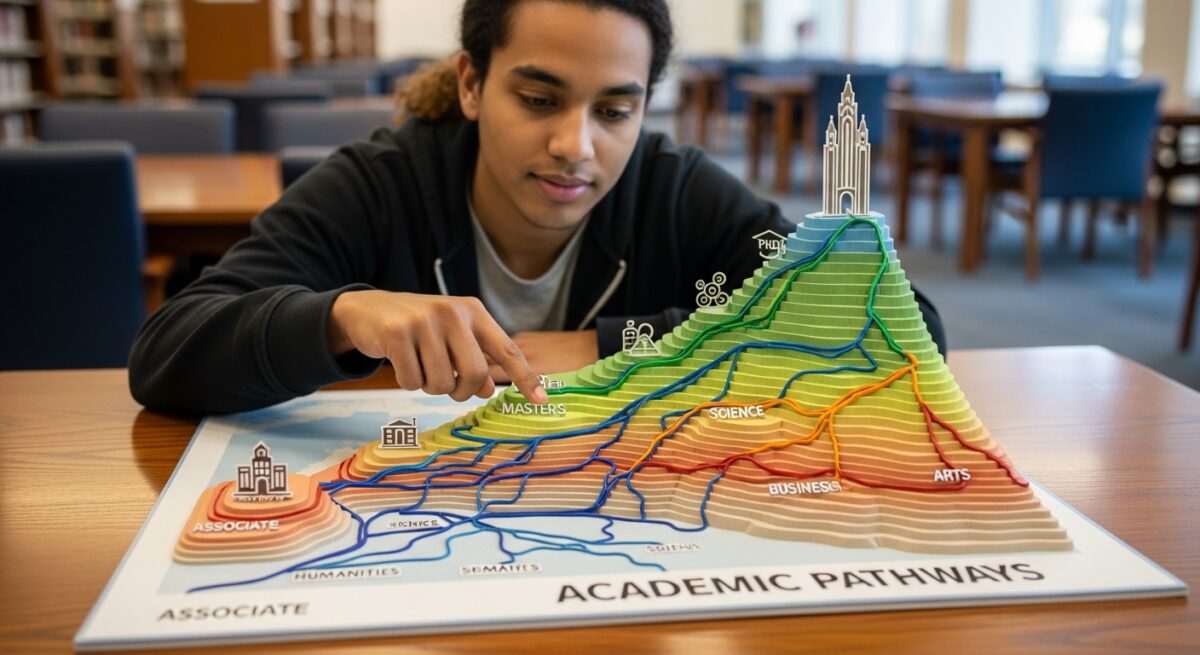
The landscape of higher education is vast, offering a dizzying array of academic paths. Choosing from the multitude of degree programs offered by colleges can feel like navigating a complex map without a compass. This decision shapes not only your educational journey but also your career trajectory, financial future, and personal growth. Understanding the full spectrum of available degrees—from foundational associate credentials to specialized doctoral research—is the critical first step in plotting a course that aligns with your ambitions, learning style, and life circumstances. This comprehensive exploration will demystify the hierarchy, formats, and specializations of college degrees, empowering you to make an informed choice among the many degree programs offered by colleges and universities today.
The Foundational Hierarchy of Academic Degrees
Degree programs offered by colleges are structured in a tiered system, each level building upon the previous one and serving distinct educational and professional purposes. This hierarchy begins with undergraduate studies and progresses through graduate and professional levels. The associate degree, typically a two-year program offered by community colleges and some four-year institutions, serves as an entry point. It provides foundational knowledge in a field, fulfills general education requirements, and can lead directly to certain careers or serve as a stepping stone to a bachelor’s program. For those seeking career-ready skills in a shorter timeframe or a cost-effective start to higher education, associate degrees in fields like nursing, information technology, or paralegal studies are invaluable options among degree programs offered by colleges.
The bachelor’s degree is the most recognized undergraduate credential, usually requiring four years of full-time study. It combines in-depth study in a major subject with a broad liberal arts education. This degree is a standard prerequisite for many professional careers and is almost always required for admission to graduate programs. The versatility of a bachelor’s degree cannot be overstated; it develops critical thinking, communication, and analytical skills that are transferable across industries. Whether pursuing a Bachelor of Arts (B.A.) in humanities or a Bachelor of Science (B.S.) in a STEM field, this credential represents a significant investment and a transformative life experience. For a deeper look at how to navigate the financial aspect of this investment, our resource on financing an affordable bachelor’s degree program offers practical strategies.
Graduate and Professional Degree Advancements
For those seeking expertise, leadership roles, or careers in specialized fields, graduate degree programs offered by colleges represent the next level of academic pursuit. Master’s degrees, which typically require one to three years of study beyond a bachelor’s, allow for concentrated specialization. Programs like a Master of Business Administration (MBA), Master of Science (M.S.), or Master of Fine Arts (MFA) dive deeply into a discipline, often incorporating significant research or practical projects. These degrees can lead to career advancement, higher earning potential, and a change in professional direction.
At the apex of academic achievement are doctoral and professional degrees. Doctorates, such as the Ph.D. (Doctor of Philosophy), are heavily research-focused and prepare individuals for careers in academia, advanced research, or high-level industry positions. The journey involves coursework, comprehensive exams, and the completion of a dissertation that contributes new knowledge to the field. Professional doctoral degrees, like the Doctor of Medicine (M.D.) or Juris Doctor (J.D.), are intensive programs designed to train practitioners in legally regulated professions. These terminal degrees represent the highest level of formal education one can attain in a given field and command significant time, financial, and intellectual commitment.
The Digital Transformation: Online and Hybrid Degree Formats
The delivery method of degree programs offered by colleges has undergone a radical transformation, expanding access far beyond the physical campus. Online degree programs have evolved from a niche alternative to a mainstream, respected modality. Fully online programs allow students to complete all coursework remotely, often asynchronously, providing unparalleled flexibility for working adults, caregivers, or those in remote locations. The key to a successful online education lies in accreditation and program quality. It is essential to verify that any online program is offered by a properly accredited institution to ensure the credential will be recognized by employers and other schools.
Hybrid or blended programs combine the best of both worlds, merging online convenience with valuable in-person experiences like labs, intensive workshops, or networking events. This format is particularly effective for hands-on fields such as healthcare, education, or engineering. When evaluating a virtual program, prospective students should consider factors like technological requirements, student support services, opportunities for interaction, and the institution’s experience with digital learning. For a systematic approach to this evaluation, our guide on evaluating virtual degree programs provides a crucial framework.
To help you understand the key distinctions, here is a comparison of common degree formats:
- Traditional On-Campus: Full immersion in campus life, fixed schedule, in-person interaction, and access to physical facilities like labs and libraries.
- Fully Online (Asynchronous): Maximum flexibility, learn at your own pace, requires strong self-discipline, primarily digital interaction.
- Fully Online (Synchronous): Live online classes at set times, real-time interaction with peers and instructors, more structured than asynchronous.
- Hybrid/Blended: Balanced mix of online and on-campus requirements, offers flexibility while retaining some face-to-face elements.
The proliferation of accredited online college degree options means that geographic and scheduling barriers are lower than ever, making higher education accessible to a broader, more diverse population of learners. This digital shift is a permanent and growing feature of the educational landscape, offering reputable degree pathways for students from all walks of life.
Choosing Your Academic and Career Alignment
Selecting the right degree program is a deeply personal decision that must align with your career goals, interests, and practical realities. The first step is self-assessment: identifying your strengths, passions, and long-term professional objectives. Are you seeking a broad, versatile education that opens multiple doors, or a highly specialized skill set for a specific trade or profession? Researching career outlooks, salary potentials, and industry demand for certain degrees is a practical necessity. Fields like data science, healthcare administration, and artificial intelligence are experiencing rapid growth, while other traditional fields are evolving to incorporate new technologies.
It is also vital to consider the institution itself. Factors such as accreditation status, faculty expertise, campus culture (even for online programs), career services, alumni network, and cost must be weighed. A degree from an accredited institution is non-negotiable for credibility and financial aid eligibility. Furthermore, exploring the specific degree programs offered by colleges you are interested in is crucial; two schools may have a “business administration” degree, but their curricula, specializations, and pedagogical approaches can differ significantly. For insights into degrees known for their adaptability across sectors, consider reviewing our analysis of the most versatile college degrees.
Specialized Fields and Emerging Disciplines
Beyond the traditional arts and sciences, degree programs offered by colleges now encompass a wide range of specialized and interdisciplinary fields. STEM (Science, Technology, Engineering, and Mathematics) programs continue to be in high demand, driving innovation in areas like biotechnology, cybersecurity, and renewable energy. Simultaneously, the digital economy has spawned entirely new disciplines. Degree programs in Data Science teach students to extract insights from massive datasets, while Artificial Intelligence programs delve into machine learning, neural networks, and robotics. These cutting-edge fields often blend computer science, statistics, and domain-specific knowledge.
Other growing areas include healthcare administration, responding to the complex business and regulatory needs of the medical field, and sustainability studies, which address environmental challenges. The key for prospective students is to look for programs that not only teach current theory but also emphasize practical, applied skills and maintain strong connections to industry. Whether you are drawn to the logical architecture of blockchain technology, the immersive potential of virtual reality, or the interconnected systems of the Internet of Things, there are increasingly sophisticated degree programs designed to build expertise in these transformative areas.
The journey through higher education is one of the most significant investments you will make. By thoroughly understanding the types, levels, and formats of degree programs offered by colleges, you equip yourself to make a choice that is both strategic and personally fulfilling. From the foundational associate degree to the specialized doctorate, from the traditional lecture hall to the virtual classroom, the options are designed to meet diverse needs and aspirations. Your task is to match your unique goals with the pathway that best supports them, ensuring your educational investment yields lifelong returns in knowledge, opportunity, and growth.