Your college campus is more than just a collection of buildings, it’s the backdrop for four of the most formative years of your life. The decision between an urban university and a rural college campus is one of the most significant choices a prospective student makes, influencing not only academic opportunities but also social life, career prospects, and personal growth. This choice extends far beyond aesthetics, it shapes your daily rhythm, your access to resources, and the very texture of your student experience. Understanding the distinct advantages and trade-offs of each setting is crucial for finding an environment where you can truly thrive, both inside and outside the classroom.
Defining the Environments: More Than Just Geography
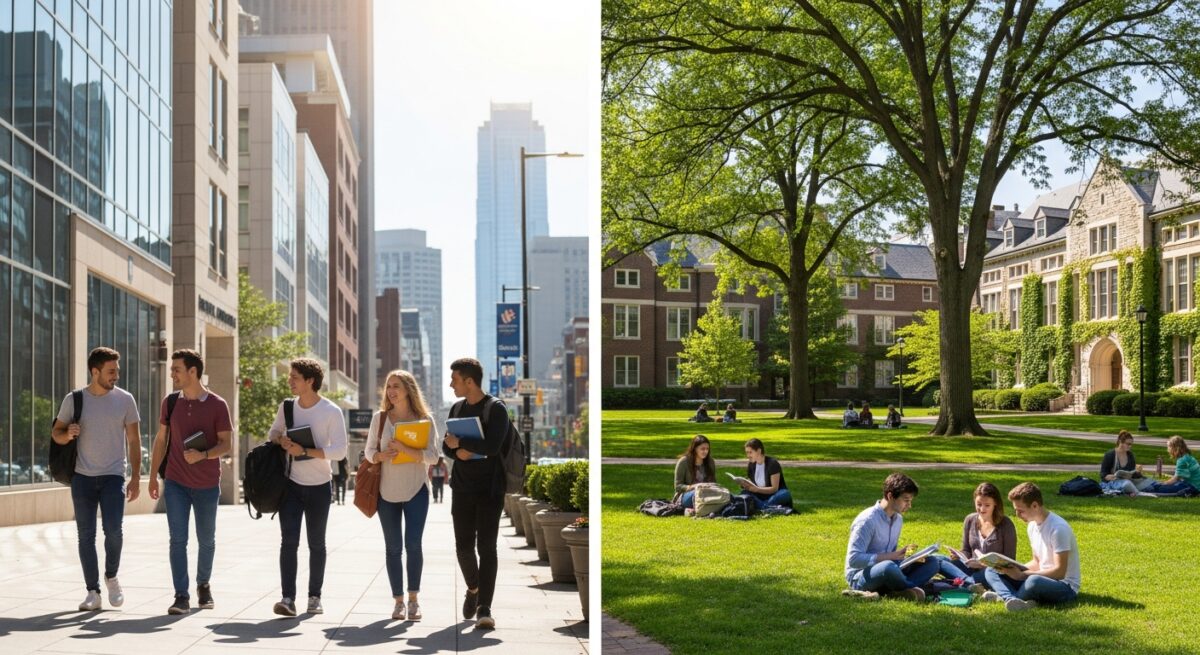
The distinction between urban and rural college campuses goes far beyond simple population density. An urban campus is typically integrated into the fabric of a major city. Think of New York University’s Washington Square Park campus, the University of Chicago in Hyde Park, or Boston University stretched along Commonwealth Avenue. These institutions often lack a traditional, enclosed “campus” feel, with academic buildings, student housing, and city streets blending together. The city itself becomes an extension of the classroom, offering unparalleled access to cultural institutions, diverse populations, and professional networks.
In contrast, a rural college campus is often a self-contained community, sometimes described as a “college town.” Places like Dartmouth College in Hanover, New Hampshire, or Cornell University in Ithaca, New York, exemplify this model. The university is the central economic and social engine for the surrounding area. The campus is usually clearly defined, with expansive quads, dedicated student facilities, and a strong sense of insular community. The surrounding environment offers natural beauty and a slower pace, but requires more intentionality to access the amenities of a major metropolitan center.
The Academic and Professional Landscape
The setting of your university directly impacts the structure and opportunities of your academic life. Urban campuses frequently boast stronger, more direct ties to specific industries. A student studying finance may find internships on Wall Street a subway ride away from a Manhattan campus. An aspiring journalist in Washington D.C. can secure a part-time role at a news bureau. This proximity facilitates networking, guest lectures from practicing professionals, and applied learning that is deeply integrated with the local economy. The academic calendar can feel more fluid, with professional life seamlessly intersecting with student life.
Rural campuses often foster a different kind of academic intensity. With fewer off-campus distractions, the focus can shift more exclusively to studies, research, and on-campus activities. This can lead to a very tight-knit intellectual community where students and professors interact frequently, not just in class but also in dining halls and campus events. Many rural universities invest heavily in their on-campus facilities, from state-of-the-art laboratories to extensive libraries, creating a rich, all-encompassing academic environment. Research opportunities, particularly in fields related to agriculture, environmental science, or forestry, can be exceptional due to the surrounding natural resources.
When planning for the financial aspect of either path, exploring all funding options is essential. Prospective students should seek comprehensive school‑level degree guidance to understand scholarship programs and financial aid specific to their chosen institution and setting.
Social Life and Campus Culture
The social experience on urban versus rural college campuses diverges dramatically. On a rural campus, the student body is the primary social pool. This creates a powerful sense of shared identity and tradition. Campus events, football games, club meetings, and Greek life often form the core of social activity. The community is immersive, which can lead to deep, lasting friendships but may also feel insular or lacking in anonymity. For students who thrive on school spirit and a strong sense of belonging, this model can be ideal.
Urban campus social life is decentralized. The city offers an infinite menu of options: concerts, museums, restaurants, professional sports, and diverse neighborhoods to explore. Your social circle can extend beyond other students to include interns, city residents, and professionals. This fosters independence and worldly experience but requires more initiative. It’s easier to feel anonymous or disconnected from the university community if you don’t actively engage with on-campus organizations. The key challenge is balancing the allure of the city with the need to build a supportive peer network within the university.
Cost of Living and Daily Logistics
Financial considerations are a practical reality in the urban vs rural college campuses debate. Urban settings almost universally come with a higher cost of living. Tuition may be comparable, but expenses like housing (often off-campus apartments), food, transportation, and entertainment are significantly steeper. Students may need to budget carefully and often consider part-time work to cover these costs. However, the ability to live without a car, using robust public transit, can offset some expenses.
Rural campuses typically have a lower cost of living. On-campus housing and meal plans are standard, and off-campus rentals in a college town are usually more affordable than city apartments. The primary logistical challenge is transportation. A car often becomes a necessity for grocery shopping, accessing healthcare, or simply getting away for a weekend. This adds costs for insurance, fuel, and maintenance. Campus shuttles may exist but are limited in scope. Here is a breakdown of key logistical factors to weigh:
- Housing: Urban: High-cost, competitive off-campus market. Rural: Lower-cost, often dominated by university housing.
- Transportation: Urban: Public transit is viable, car is a burden. Rural: Car is often essential, limited public options.
- Daily Amenities: Urban: Immediate access to everything, 24/7 options. Rural: Limited to town offerings, may require travel for specialty goods.
- Personal Safety: Urban: Requires more street-smarts and awareness of varying neighborhood safety. Rural: Generally lower crime rates, but different safety considerations (e.g., wildlife, isolation).
These daily realities shape student life profoundly, influencing everything from your weekly budget to your sense of freedom and convenience.
Career Services and Post-Graduation Pathways
The location of your campus casts a long shadow on your early career. Urban universities have a natural advantage in terms of on-campus recruiting and internship pipelines. Major corporations, nonprofits, and startups are more likely to send recruiters to a campus in a city where they have a major office. Students can interview for internships during the day and be back in class for the evening. This seamless integration can lead to more robust resumes upon graduation and a stronger professional network rooted in a specific job market.
Rural universities counter with highly dedicated career service offices that work aggressively to bring employers to campus. They may organize career treks to nearby cities, host intensive networking weekends, and leverage powerful alumni networks. The bond among alumni from an isolated campus can be exceptionally strong, leading to valuable networking connections across the country. Graduates from prestigious rural institutions often find their degree carries significant weight, regardless of location, though they may need to be more proactive in relocating for job opportunities after graduation.
Personal Growth and Lifestyle Fit
Ultimately, the choice is deeply personal. An urban campus is a boot camp for real-world independence. It teaches navigation, budgeting in a high-cost environment, and adaptability. It exposes you to immense diversity of thought, culture, and lifestyle, fostering open-mindedness and resilience. It suits the self-starter who is energized by constant stimulus and seeks to build a life integrated with a major metropolitan center.
A rural campus offers a protected space for exploration and focus. It allows for deep immersion in academics and campus activities without the constant pull of city distractions. It encourages strong, community-oriented relationships and a connection to nature. It is ideal for the student who values a traditional collegiate experience, a strong sense of school identity, and a more gradual transition into full adult independence. The slower pace can be conducive to reflection and personal development in a less pressurized environment.
Frequently Asked Questions
Can I get a “city experience” at a rural college?
Yes, but it requires effort. Many rural colleges are within a few hours’ drive of a major city, and student organizations often plan trips. The experience will be periodic, not daily. Conversely, some urban universities work hard to create a traditional campus feel within the city through dedicated quads and student centers.
Are academic programs better in one setting over the other?
Quality is institution-specific, not location-specific. A top-tier rural liberal arts college offers academic rigor on par with a top-tier urban university. The difference lies in the type of opportunities: applied, industry-connected learning in the city versus focused, residential community learning in a rural setting.
Is it harder to make friends on an urban campus?
It can be if you are passive. In a rural setting, the community is built-in. In a city, you must actively seek it out by joining clubs, attending campus events, and making an effort with classmates. The friendships you make can be just as strong, but they require more initial intention.
Which setting has better financial aid?
Financial aid packages are determined by the institution’s endowment and policies, not its location. Both urban and rural campuses can offer generous aid. The critical comparison is the total cost of attendance (tuition + living expenses) after aid is applied.
Do graduate schools or employers prefer one setting?
Graduate schools and employers prioritize the reputation of the institution, your GPA, relevant experience, and skills. The location of your undergraduate campus is a minor factor. What matters more is how you leveraged your environment: the internships you secured in the city or the profound research you conducted on a rural campus.
Choosing between urban and rural college campuses is not about selecting a superior option, but about finding the right ecosystem for your individual goals and temperament. It requires honest self-assessment. Are you drawn to the energy and opportunity of a metropolis, or the community and focus of a college town? Visit campuses if possible, talk to current students in both settings, and visualize your daily life. Your perfect college experience is waiting, whether it’s set against a skyline or a mountain range. The most successful students are those who choose an environment that aligns with who they are and who they aspire to become, then fully engage with all the unique opportunities that setting provides.