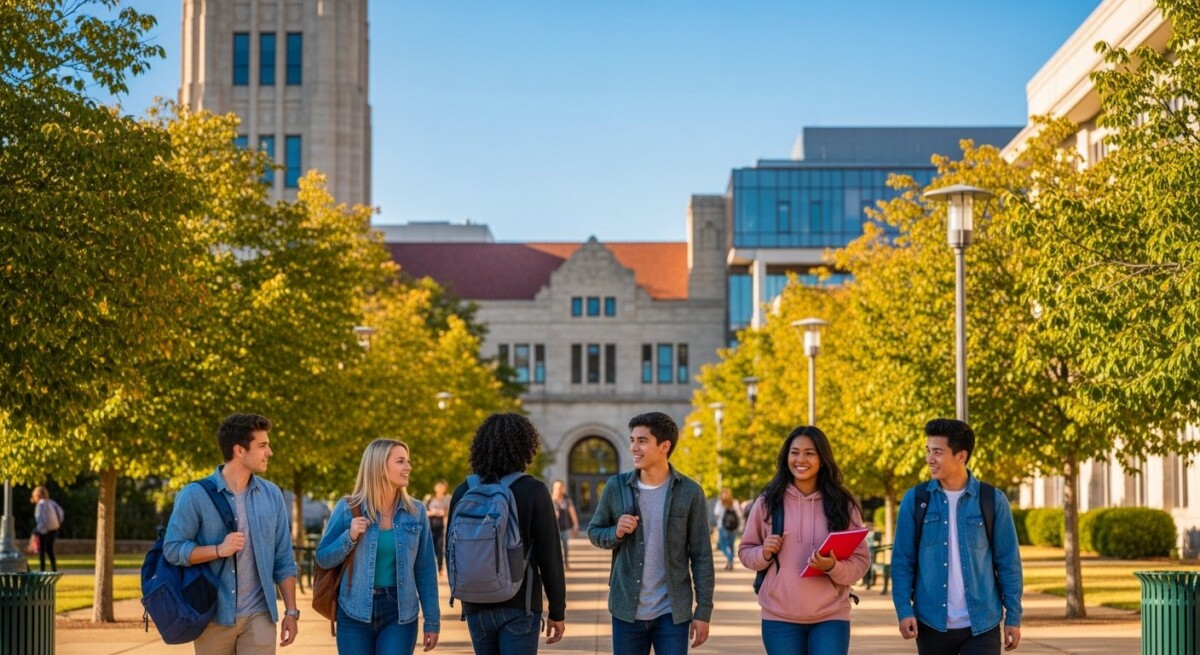
Selecting a college is one of the most significant decisions a student will make, and while academic programs and campus culture are crucial, the physical location of the institution often plays an underrated role in shaping the entire experience. The city, state, or even country where a campus is situated influences everything from daily cost of living and internship opportunities to social life and long-term career networks. Understanding the college location pros and cons is not about finding a perfect spot, but about aligning a place’s characteristics with your personal goals, learning style, and financial reality. This deep dive moves beyond simple urban versus rural debates to explore how location impacts practical outcomes, from your first semester to your first job offer.
The Urban University Experience
Urban campuses, embedded within major cities like New York, Chicago, or Boston, offer a distinct educational ecosystem. The integration of city and campus can be seamless, with classrooms, libraries, and student housing sitting alongside corporate headquarters, cultural institutions, and vast public transit networks. The primary advantage here is access. Students have immediate exposure to a high density of internships, co-op programs, and part-time jobs relevant to their field of study. A business student can intern at a financial firm a subway ride away, while an art history major might have weekly class sessions at a world-class museum. This proximity to industry is a powerful career accelerator, allowing for professional networking and resume building that begins freshman year.
However, the urban college experience comes with significant trade-offs that constitute the core cons of this location choice. The cost of living is almost invariably higher, impacting not just tuition but also housing, food, and transportation. Campus life may feel less centralized or insulated, as the city’s distractions and pace compete with academic focus. The sense of a traditional, enclosed campus community can be diluted. Safety concerns in certain city areas may also influence housing choices and late-night mobility. Furthermore, the constant stimulation, while exciting for some, can be overwhelming for students accustomed to quieter environments, potentially impacting mental health and academic concentration.
The Rural or Small-Town Campus Setting
In contrast, colleges located in rural areas or small towns present a fundamentally different environment. These campuses often boast self-contained communities where student life is the central focus. The pros of a rural location are deeply connected to this immersive atmosphere. A stronger, more unified campus identity frequently develops, with high participation in school-sponsored events, sports, and clubs. There are typically fewer distractions from academic work, potentially fostering better study habits and closer relationships with professors who live nearby. The natural setting can be a benefit for mental well-being, and the lower cost of living eases financial pressure on students and families. For those studying fields like environmental science, agriculture, or certain types of engineering, the rural setting itself can be a living laboratory.
The cons of a rural college location are primarily defined by isolation and limited access. Internship and job opportunities within the immediate vicinity are often scarce, requiring students to seek summer positions elsewhere or rely heavily on the college’s career center to connect them with distant employers. Cultural and entertainment options are limited to what the campus provides, which can feel restrictive over four years. Transportation is a major hurdle, as a personal vehicle becomes a near-necessity, adding expense. For students from diverse urban backgrounds, the lack of cultural diversity in the surrounding community can also be a significant adjustment and point of discomfort.
The Suburban Compromise and Specialized Locations
Suburban campuses attempt to strike a balance between the two extremes, offering a curated college town feel with manageable access to a nearby metropolitan hub. This can be an effective compromise, providing a defined campus community while allowing students to tap into city resources for internships and entertainment via occasional commutes. The pros include a generally safer environment than a dense urban core, more affordable housing than the city center, and a focus on campus life. The cons involve a dependence on sometimes unreliable public transit or personal cars to access the city’s benefits, and the location may feel neither fully immersive nor fully connected.
Beyond this spectrum, specialized locations warrant consideration. A college located in a state capital offers unparalleled access to government and policy internships. A campus in a major tech hub, like Silicon Valley or Austin, provides a direct pipeline to the tech industry. These locations offer powerful, niche advantages but can also hyper-specialize the student experience and come with extreme costs of living. Similarly, the choice of in-state versus out-of-state is a critical financial and personal component of the college location decision. In-state public universities offer substantial tuition discounts, while out-of-state or private institutions provide geographic diversity and potentially unique programs.
Evaluating Personal Fit and Long-Term Goals
The decision ultimately hinges on self-assessment. A student must weigh the college location pros and cons against their own personality, academic needs, and career aspirations. An introverted student who thrives in quiet, focused environments might struggle on a chaotic urban campus, while an extrovert seeking constant cultural stimulation could feel stifled in a remote rural setting. Prospective students should ask concrete questions: How do I handle stress and distraction? Do I need easy access to a specific industry? How important is a strong, insular school spirit to me? What is my budget for living expenses beyond tuition?
Practical steps for evaluation are essential. If possible, visiting campuses at different times (not just on a curated tour day) is invaluable. Spend time in the surrounding town or city. Talk to current students about how they actually use the location. Research internship placement rates and where alumni secure jobs. For those considering online or hybrid programs, the location question transforms entirely, focusing instead on the program’s digital infrastructure and support services. Exploring academic degree resources can be particularly helpful for understanding how accredited online programs mitigate traditional location constraints, offering quality education regardless of geography.
To systematically compare options, consider these key factors in a side-by-side analysis:
- Career Alignment: Proximity to relevant industries, strength of local alumni network, career center partnerships.
- Financial Impact: Tuition differential (in/out-of-state), average rent, cost of food and transportation, availability of local part-time work.
- Lifestyle & Wellness: Match for your social personality, access to preferred hobbies (outdoors, arts, etc.), mental health resources, overall campus safety.
- Academic Environment: Potential for distraction or focus, opportunities for applied learning in the community, class sizes influenced by setting.
Frequently Asked Questions
How much should location influence my final college choice compared to academic ranking?
While academic quality is paramount, location is a close second for many students because it directly affects quality of life, opportunities, and cost for four years. A top-ranked program in a location where you are miserable or financially strained may not lead to optimal success. The ideal choice balances a strong academic fit with a location that supports your well-being and professional goals.
Can a bad location choice be overcome?
Yes, but it requires proactive effort. If you’re at a rural school but want city internships, you will need to plan ahead for summer positions elsewhere and leverage online networking. If an urban campus is too expensive, seeking out-of-the-way housing or rigorous budgeting is necessary. A strong career center can help bridge geographic gaps. However, overcoming a poor fit consumes energy that could be directed elsewhere.
Are there hidden costs associated with different college locations?
Absolutely. Urban locations often have hidden costs like mandatory meal plans (if cooking is hard), higher utilities, and transportation passes. Rural locations may require the purchase and maintenance of a car, including insurance and gas. Suburban locations might involve costs for rideshares into the city for entertainment or internships. Always budget beyond just tuition and room/board.
Does college location impact graduate school admissions or job prospects?
It can. For jobs, location provides direct access to recruiters and local interviews. A company is more likely to recruit from a nearby school. For graduate school, the reputation of your professors and the research opportunities afforded by your location (e.g., access to specific labs, archives, or organizations) can strengthen your application more than the city name itself.
How do I research the safety of a college location?
Do not rely on stereotypes. Use the college’s official Annual Security Report (Clery Act report), which details crime statistics on and near campus. Explore city crime maps online. During a visit, walk around the areas you’d frequent at night. Talk to current students about their perceptions of safety and what precautions they take.
In the end, the geography of your education is a silent partner in your success. It provides the backdrop against which you will grow, learn, and launch your career. By honestly assessing the college location pros and cons against your personal map of needs and ambitions, you can select a setting that doesn’t just house your education, but actively enriches it, turning the place you study into a foundational part of who you become.