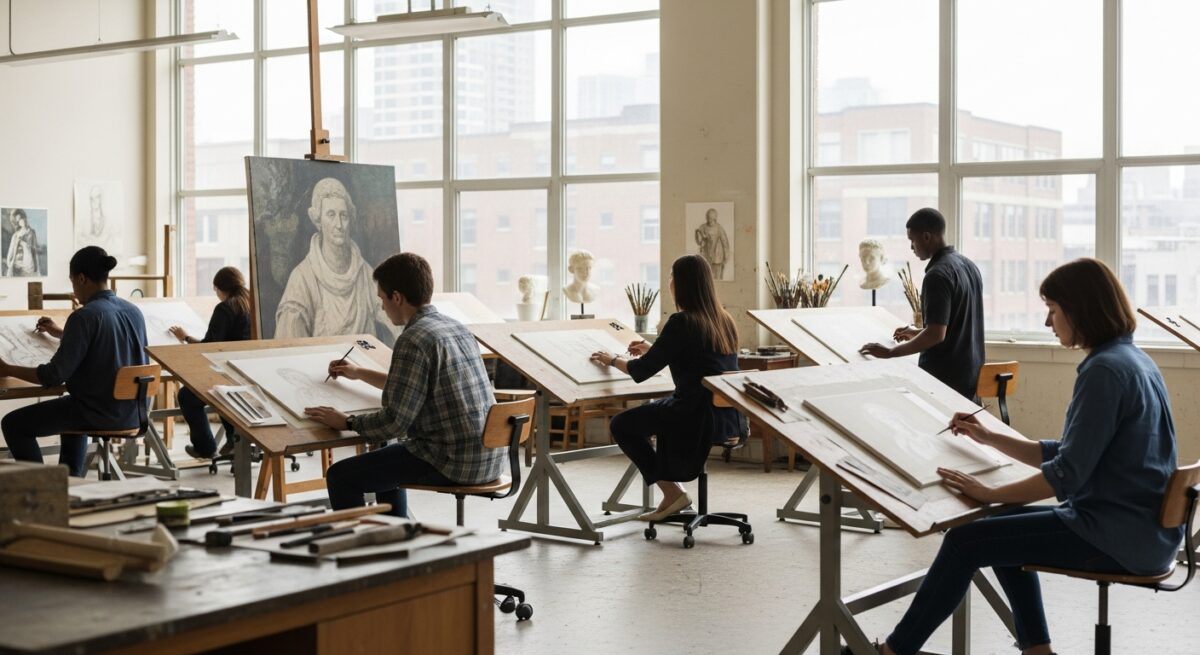
For the aspiring artist, designer, or creative thinker, selecting the right college is a pivotal decision that shapes not just your education, but your entire professional trajectory. The journey begins with understanding that the “best” art school is not a universal title, but a deeply personal fit between your unique creative voice and an institution’s philosophy, resources, and community. This guide moves beyond simple rankings to explore the critical factors that define top art colleges for creative students, helping you identify programs where your talent can flourish, your skills can be honed to professional standards, and your network can be built for lifelong success. We will examine renowned institutions, specialized programs, and the essential considerations, from portfolio development to career outcomes, that every prospective student must weigh.
Defining Excellence in Art and Design Education
What truly separates a good art school from a great one? The answer lies in a combination of tangible resources and intangible culture. Top art colleges provide more than just instruction, they offer immersion. This begins with faculty who are active, practicing professionals in their fields, bringing real-world experience and contemporary industry connections directly into the classroom and studio. These institutions invest heavily in state-of-the-art facilities: traditional printmaking studios alongside digital fabrication labs, animation suites with industry-standard software, and spacious, 24-hour accessible studios that become a second home. Crucially, the best art schools foster a culture of critique and collaboration, pushing students to defend their ideas, iterate on their work, and engage in a dynamic dialogue with peers that mirrors professional creative environments.
Another hallmark is a robust connection to the professional world. This manifests through mandatory internship programs, visiting artist lectures that provide direct access to luminaries in the field, and career services specifically tailored for creative professions. The alumni network of a top-tier program is often its most valuable asset, opening doors to internships, jobs, and collaborative opportunities. When evaluating art universities, prospective students should look for a curriculum that balances foundational skills in drawing, color theory, and design thinking with the freedom to explore and specialize. The goal is to graduate not just with a polished portfolio, but with a sophisticated understanding of conceptual development and the ability to articulate the meaning behind your work.
Profiles of Leading Art and Design Institutions
While fit is personal, certain institutions consistently appear on lists of the best art schools due to their historical impact, resource allocation, and graduate success. It is important to research each thoroughly, as their strengths and cultures vary significantly.
Comprehensive Art and Design Universities
These schools are dedicated exclusively to the visual and applied arts. The Rhode Island School of Design (RISD) is renowned for its intense, studio-based approach and rigorous foundational program, often cited as a leader in fostering conceptual depth and technical mastery across disciplines from illustration to architecture. The School of the Art Institute of Chicago (SAIC) offers an exceptionally interdisciplinary environment with a strong emphasis on theory and critical study, housed within one of the world’s premier art museums. California Institute of the Arts (CalArts) was founded by Walt Disney and champions an experimental, avant-garde ethos, particularly in character animation, film/video, and performance arts. These environments are ideal for students seeking total immersion in an artistic community.
University-Based Art Schools
Many prestigious universities house equally prestigious art departments, offering the benefits of a specialized art education within a broader liberal arts context. Yale University’s School of Art, a graduate-only program, is legendary for its highly competitive MFA and profound influence on contemporary art. The University of California, Los Angeles (UCLA) Department of Art and Carnegie Mellon University’s School of Art provide strong studio programs integrated with world-class research universities, allowing for unique cross-disciplinary collaborations. This model suits students who want a strong arts curriculum alongside the opportunity to take academic courses in other fields and engage with a larger, more diverse student body.
Specialized and Technical Institutes
For students with a clear focus on specific applied arts fields, specialized institutes offer targeted, industry-aligned training. Savannah College of Art and Design (SCAD) is a massive institution known for its extensive program offerings in digital media, fashion, and entertainment design, with a keen focus on career preparation. Fashion Institute of Technology (FIT) in New York is a global authority on fashion design, business, and technology. Ringling College of Art and Design has built a stellar reputation, particularly for its computer animation and game art programs, with direct pipelines to major studios. These schools often feature curricula developed in advisory partnership with industry leaders.
When building your list of top art colleges, consider this representative sample of highly regarded programs across different models:
- Rhode Island School of Design (RISD): A benchmark for foundational rigor and conceptual studio practice.
- School of the Art Institute of Chicago (SAIC): Unparalleled interdisciplinary resources within a museum setting.
- Pratt Institute: Strong focus on architecture, interior design, and communications design in a New York City context.
- Parsons School of Design (The New School): A leader in fashion, strategic design, and transdisciplinary creative studies.
- Maryland Institute College of Art (MICA): Renowned for its community-focused and socially engaged art practices.
The Application Journey: Portfolio, Academics, and Fit
Gaining admission to a top art college requires a strategic approach that starts years before the application deadline. The centerpiece of your application is the portfolio, a curated collection of 15-20 pieces that demonstrates your technical skill, conceptual thinking, and personal voice. Admissions committees look for evidence of observational drawing skills (even for non-drawing disciplines), a creative process that includes experimentation and iteration, and a cohesive point of view. It is not merely a display of finished work, sketches and process pages are often just as important. Many students benefit from pre-college summer programs or portfolio development courses to strengthen their work.
While the portfolio is paramount, academic records and standardized test scores (where required) still matter, as they indicate your ability to handle college-level coursework and manage deadlines. Your artist statement and supplemental essays are critical opportunities to articulate your influences, goals, and why you are a perfect fit for that specific program. Mentioning particular faculty, facilities, or curricular philosophies shows you have done your research. For a broader perspective on aligning your artistic passions with viable academic paths, our guide on the best degrees for creative careers explores how different programs structure their outcomes.
Finally, the campus visit or virtual tour is indispensable. Attend National Portfolio Day events, sit in on a critique if possible, and talk to current students. Ask about studio access, faculty availability, and the feel of the student community. Does the environment feel competitive or collaborative? Supportive or sink-or-swim? Your intuition about where you can thrive for four years is a crucial data point.
Financial Planning and Career Realities
Art and design education is a significant investment, and understanding the financial landscape is a practical necessity. Tuition at top private art colleges can be substantial, making financial aid, scholarships, and merit awards essential components of your decision. Be proactive: research each school’s scholarship opportunities for incoming freshmen, which are often portfolio-based. Complete the FAFSA to determine eligibility for federal grants and loans. Many schools offer robust work-study programs that place students in campus studios, galleries, or labs, providing both income and relevant experience. It is also worth exploring the growing field of accredited online art and design courses, which can sometimes offer more flexibility and lower costs for certain foundational or theory-based components of a degree. Students exploring all their options will find a wealth of information through trusted academic degree resources that detail various educational pathways.
The ultimate goal of any degree is meaningful employment. The best art schools proactively address this through dedicated career centers that help students build professional portfolios, draft artist statements and resumes, and practice interview skills. They host portfolio review events where recruiters from companies like Pixar, Nike, or design firms meet students. Look for programs with high internship placement rates and alumni success stories in your field of interest. Remember, a creative career often requires entrepreneurship. Many programs now incorporate courses on freelance business practices, marketing for artists, and grant writing, equipping you to build your own professional practice upon graduation.
Frequently Asked Questions
Q: Is it necessary to attend a prestigious, expensive art school to have a successful creative career?
A: While top art colleges offer exceptional resources and networks, they are not the only path to success. Many successful artists and designers graduate from state universities, liberal arts colleges, or even build careers through self-directed learning and community college foundations. Success depends more on your talent, work ethic, networking ability, and the strength of your portfolio than the name on your diploma. Choose a school that provides the specific tools and environment you need without imposing unsustainable debt.
Q: What is the difference between a BFA and a BA in art?
A: A Bachelor of Fine Arts (BFA) is a professional, studio-intensive degree. Typically, 65-75% of the coursework is in studio art and art history, with the remainder in liberal arts. A Bachelor of Arts (BA) in art is a liberal arts degree with a concentration in art; the balance is reversed, with more academic coursework and less studio time. The BFA is generally preferred for students seeking a professional practice, while the BA offers more flexibility for double majors or broader academic exploration.
Q: How important is the location of the art school?
A> Location is extremely important. Schools in major cultural hubs like New York, Los Angeles, Chicago, or London provide direct access to museums, galleries, internships, and a constant influx of visiting artists and professionals. This can accelerate professional development and networking. Schools in smaller towns or cities may offer a more focused, less expensive campus environment but require more initiative to seek out external opportunities. Consider where you want to live, work, and build connections after graduation.
Q: Should I choose a school with a broad art program or one known for a specific specialty?
A> This depends on your certainty. If you are absolutely dedicated to becoming an animator or a fashion designer, a specialized institute provides targeted training and industry connections from day one. If you are exploring or interested in interdisciplinary work, a broader program that allows you to sample different mediums before declaring a concentration may be a better fit. Look for schools that allow flexibility to change majors within the arts.
The search for the right art college is a creative act in itself, requiring introspection, research, and vision. By looking beyond rankings to assess curriculum, culture, resources, and outcomes, you can identify the institutions that will not just teach you techniques, but challenge you to find your unique voice and provide the platform to launch it into the world. Your dedication to this careful selection process is the first step in building a fulfilling and sustainable creative life.