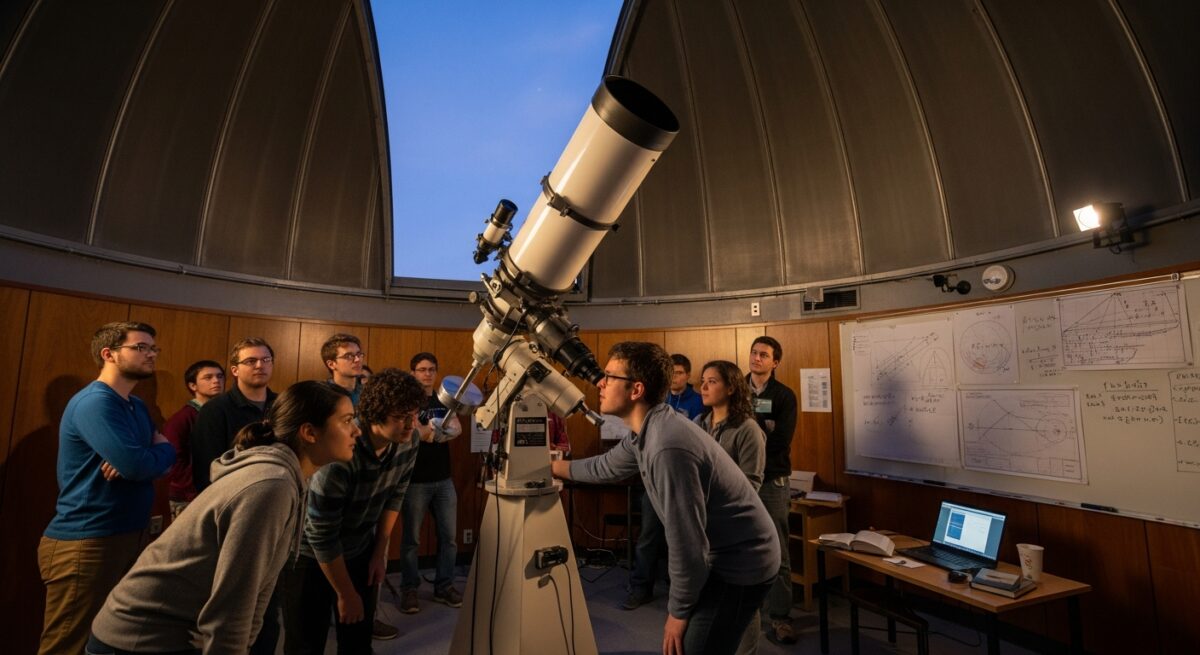
Choosing where to study astrophysics is one of the most consequential decisions you can make as a future scientist. The right program can open doors to cutting-edge research, influential mentors, and a robust professional network. With hundreds of universities offering degrees in this field, the search can feel overwhelming. This guide evaluates the leading institutions based on research output, faculty expertise, undergraduate opportunities, and career outcomes. We will help you understand what makes a top-tier astrophysics program and how to match those strengths to your personal goals. Whether you dream of probing black holes or mapping dark matter, the right foundation starts with selecting from the best schools for astrophysics programs.
Astrophysics is not just about stargazing; it is a rigorous discipline that combines physics, mathematics, and computational science to explain the universe’s most profound mysteries. As you evaluate options, you will want to consider factors like access to observatories, internship placements, and the availability of specialized coursework. This article breaks down the top contenders and provides a clear framework for making your choice. We will also touch on how online and hybrid options have expanded access to this traditionally campus-based field, making it possible for more students to pursue their cosmic ambitions.
What Defines a Top Astrophysics Program
Before diving into specific universities, it is essential to understand the criteria that separate exceptional programs from the rest. A leading astrophysics department is characterized by world-class faculty who are actively publishing in peer-reviewed journals and securing major research grants. These professors bring cutting-edge discoveries directly into the classroom and offer undergraduates the chance to participate in meaningful research projects. Additionally, the department should have strong ties to national laboratories and space agencies, providing students with internship and collaborative opportunities that are hard to find elsewhere.
Another critical factor is the curriculum’s depth and flexibility. Top programs offer a sequence of courses that build from classical mechanics and electromagnetism to advanced topics like general relativity, stellar structure, and cosmology. Look for programs that allow you to specialize in areas such as observational astrophysics, theoretical astrophysics, or planetary science. The availability of modern computing resources and data analysis tools is equally important, as these skills are highly valued in both academia and industry. Finally, consider the department’s culture: a supportive environment with accessible professors and a strong peer community can significantly enhance your learning experience.
Top Universities for Astrophysics Research
Several institutions consistently rank at the top for astrophysics due to their research infrastructure and faculty talent. These universities are often home to major observatories and research centers, giving students direct access to cutting-edge instruments and data. For example, the University of California, Berkeley, is renowned for its work on exoplanets and dark energy, while the California Institute of Technology (Caltech) operates the Jet Propulsion Laboratory, offering unmatched opportunities in space exploration. Similarly, Princeton University has a storied history in theoretical astrophysics, with faculty who have made foundational contributions to our understanding of the universe.
Here are some of the most prominent institutions known for their astrophysics programs:
- Massachusetts Institute of Technology (MIT): Known for its strong emphasis on hands-on research and its Kavli Institute for Astrophysics and Space Research.
- University of Chicago: Offers a rigorous program with ties to the Fermi National Accelerator Laboratory and the Adler Planetarium.
- Stanford University: Provides unique opportunities through its Kavli Institute for Particle Astrophysics and Cosmology, bridging physics and astrophysics.
- University of Arizona: A leader in observational astronomy with access to the Steward Observatory and major telescope facilities.
These institutions not only offer exceptional academic training but also boast impressive alumni networks that can help you secure research positions or further study. When evaluating these schools, pay attention to the specific research interests of faculty members. Reaching out to professors whose work aligns with your interests can be a powerful way to gauge whether a program is the right fit. Remember that the best school for you is one where you can thrive academically and personally, not just one with a high ranking.
Best Undergraduate Astrophysics Programs
For undergraduates, the best astrophysics programs provide a strong foundation in physics and mathematics while offering early exposure to research. Many top-tier universities allow students to begin working in labs during their freshman or sophomore years, which is invaluable for building skills and clarifying career goals. The University of California, Santa Cruz, is particularly notable for its undergraduate research opportunities, with many students co-authoring papers before graduation. Similarly, the University of Colorado Boulder offers a highly ranked program through its Department of Astrophysical and Planetary Sciences, where students can engage in everything from solar physics to exoplanet studies.
Another excellent choice is the University of Texas at Austin, home to the McDonald Observatory and a robust undergraduate research program. Students there can take courses in stellar spectroscopy, galactic dynamics, and cosmology, and they often participate in summer research internships. For those who prefer a smaller liberal arts environment, institutions like Williams College and Amherst College offer rigorous astrophysics tracks with close faculty mentorship. These schools may not have large research centers, but they excel at preparing students for top graduate programs through personalized attention and a strong curriculum.
When comparing undergraduate programs, consider the following:
- Access to research: Are there structured programs for undergraduates to work with faculty?
- Class size: Will you have opportunities to interact with professors and ask questions?
- Facilities: What telescopes, labs, and computing resources are available to students?
- Career support: Does the department help with internship placements and graduate school applications?
These factors can make a significant difference in your development as a scientist. A program that offers research experience, even at a smaller school, may be more beneficial than a large university where you are just a face in the crowd. It is also worth looking into whether the department has partnerships with nearby research institutions, as these can provide additional opportunities for collaboration and employment after graduation.
Online and Flexible Astrophysics Degree Options
Not every aspiring astrophysicist can relocate to a campus with a top-tier program. Fortunately, the landscape of astronomy and physics education has evolved, and several reputable universities now offer online or hybrid degrees that provide flexibility without sacrificing academic rigor. For example, the University of Arizona offers an online Master’s in Astronomy and Astrophysics that is designed for working professionals, with courses covering observational techniques, data analysis, and theoretical modeling. Similarly, the University of Central Lancashire in the UK offers an online BSc in Astronomy, though it is important to verify accreditation and transferability if you are in the US.

These online programs are ideal for career changers or those with family or work commitments that prevent full-time, on-campus study. They typically use interactive platforms, virtual labs, and remote access to observatories to deliver a meaningful learning experience. However, it is crucial to ensure that the program you choose has a strong physics foundation, as some astronomy degrees may be more descriptive than quantitative. Look for programs that include calculus-based physics and computational coursework, as these are essential for graduate study or research positions. Additionally, consider whether the program offers opportunities for capstone projects or research theses, which can be valuable for building your portfolio.
As you explore these options, keep in mind that online degrees are still relatively rare in astrophysics, and the field often values hands-on research experience. If you pursue an online path, seek out internships, summer research programs, or collaborations with local observatories to supplement your studies. The flexibility of online learning can be a huge advantage, but it requires self-discipline and proactive effort to create the same networking and research opportunities you would have on a campus.
How to Choose the Right Astrophysics School for You
Selecting from the best schools for astrophysics programs is a highly personal decision that depends on your academic background, career aspirations, and financial situation. Start by asking yourself what kind of astrophysicist you want to become. Do you enjoy hands-on observing, or are you more drawn to theoretical work and simulations? Are you aiming for a career in academia, or are you interested in data science, aerospace, or education? The answers to these questions will guide you toward programs with the right specializations and resources.
Another important consideration is the financial investment. Many top-tier private universities have high tuition, but they also offer generous financial aid packages that can make them more affordable than public schools. On the other hand, state universities like the University of California, Berkeley, or the University of Michigan offer excellent programs at a lower cost for in-state students. Additionally, consider the location and campus culture: do you thrive in a bustling city or a quieter college town? Is there a strong community of students interested in astronomy? These factors can greatly affect your overall well-being and academic success.
It is also wise to connect with current students and alumni to get an inside perspective on the program. Ask about their experiences with advising, research, and job placement. Many departments host open houses or virtual information sessions, which can be an excellent way to learn more. You can also check out resources like our guide on top astrophysics programs, which provides additional context on leading universities for space science. Remember that the best choice is one that aligns with your unique goals and circumstances, not just a name on a ranking list.
Frequently Asked Questions
What is the difference between astronomy and astrophysics?
Astronomy is the broader field that encompasses the study of celestial objects and phenomena, while astrophysics focuses on the physical principles that govern them. In practice, most modern astronomy programs are heavily based in physics, so the distinction is often blurred. When choosing a program, look at the curriculum to see if it emphasizes physics and mathematics, which is essential for a career in research.
Can you become an astrophysicist with an online degree?
Yes, it is possible, but you must be diligent about gaining research experience. Online programs can provide the necessary coursework, but you will likely need to find internships or research opportunities independently. Some online master’s programs offer thesis options that allow you to conduct research remotely, but these are less common. Be sure to choose an accredited program and seek out complementary experiences to strengthen your resume.
What are the career prospects for astrophysics graduates?
Astrophysics graduates are highly sought after for their strong analytical and problem-solving skills. Many go on to academic research positions, while others find careers in data science, finance, aerospace, and technology. The skills you learn in modeling, data analysis, and computation are transferable to many industries, making this a versatile degree. According to the American Institute of Physics, astrophysicists enjoy competitive salaries and low unemployment rates.
When exploring your options, it is also beneficial to consider how the program’s alumni network can support your career goals. Schools with strong ties to government agencies, research labs, and tech companies can provide valuable connections. For a comprehensive overview of degree options and career pathways, you might also visit CollegeDegree.School, which offers resources to help you make informed decisions about your education.
Final Thoughts on Choosing Your Path
Selecting from the best schools for astrophysics programs is an exciting step toward a rewarding career in science. The key is to find a program that not only offers excellent academics but also fits your personal and professional needs. Whether you choose a research powerhouse like MIT or a flexible online program, the most important factor is your own motivation and curiosity. Astrophysics is a challenging field, but with the right training and support, you can make significant contributions to our understanding of the universe.
As you move forward, remember to utilize all available resources, from faculty advisors to online forums, to make an informed choice. The journey to becoming an astrophysicist is long, but it is filled with discovery and wonder. We encourage you to take the next step with confidence, knowing that you have the tools and knowledge to select a program that will help you reach for the stars.