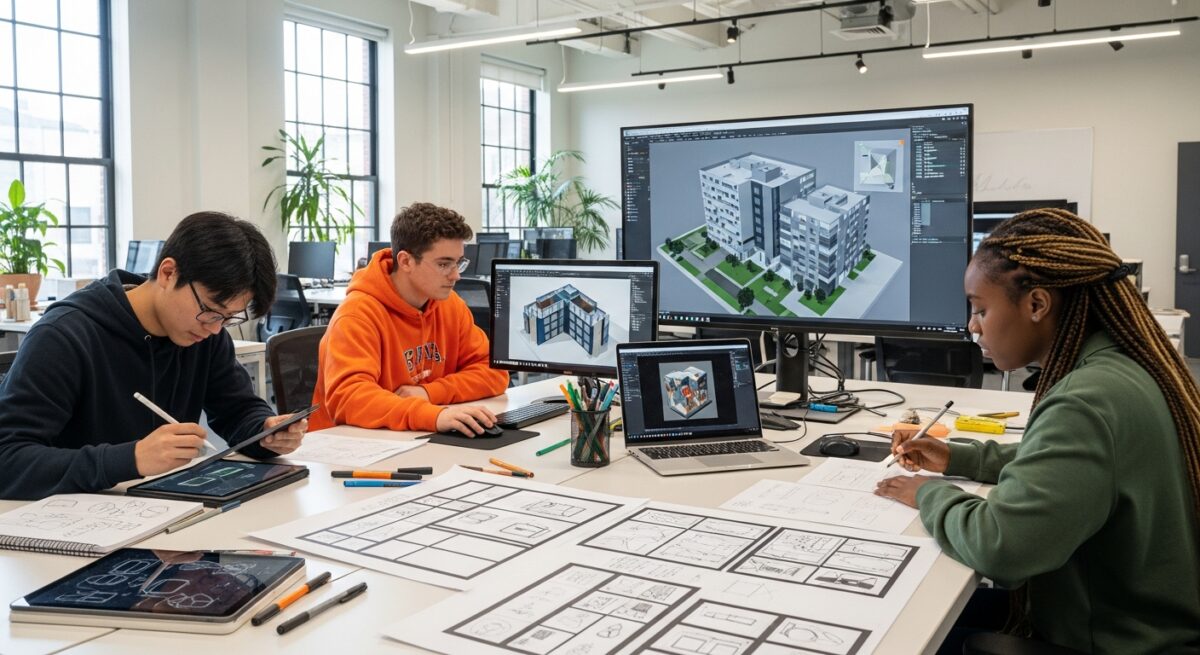
For students who think in color, solve problems through storytelling, and see the world through a unique lens, the traditional college path can feel confining. The myth that creative passions and practical degrees are mutually exclusive is just that, a myth. Today’s higher education landscape is rich with programs designed to transform imaginative talent into professional expertise. The right college degree for a creative student doesn’t stifle creativity, it provides the structure, tools, and industry knowledge to build a sustainable and fulfilling career. From the visual arts to strategic communication, these programs validate creative skills as essential professional assets.
Redefining the Creative Degree: Beyond the Studio
The concept of a creative degree has expanded far beyond the fine arts. While BFA programs remain vital, modern creative careers exist at the intersection of artistry, technology, and business. This evolution means creative students can choose paths that align with both their personal expression and their professional aspirations, such as financial stability and industry demand. For those concerned about career longevity, exploring future proof careers can provide context on which creative fields offer enduring opportunities.
Contemporary creative degrees often function as hybrid disciplines. They teach foundational artistic principles while integrating digital tools, project management, user psychology, and entrepreneurial strategy. This approach ensures graduates are not just talented creators, but also collaborative professionals who can articulate the value of their work, manage deadlines, and contribute to team goals. The outcome is a graduate who is both artist and problem-solver, prepared for the complexities of the modern workplace.
High-Value Degree Paths for Creative Minds
Selecting a degree requires matching one’s innate strengths with a program’s curriculum and outcomes. The following areas represent some of the most robust and rewarding college degrees for creative students seeking to channel their talents into viable professions.
Visual Communication and Digital Design
This category encompasses degrees like Graphic Design, Visual Communications, UI/UX Design, and Motion Graphics. These programs are ideal for students who are visually oriented and enjoy communicating ideas through imagery, layout, and interactive media. Curricula typically combine color theory, typography, and composition with software proficiency in industry-standard tools like Adobe Creative Suite, Figma, and 3D modeling programs. Students learn to create everything from brand identities and website layouts to mobile app interfaces and animated marketing videos. The demand for these skills is pervasive, spanning tech startups, marketing agencies, corporate in-house teams, and freelance opportunities, making it a cornerstone among college degrees for creative students.
Narrative and Content-Driven Fields
For those who find creativity in words and story, degrees in Creative Writing, Film and Television, Journalism, and Media Production offer structured pathways. These programs move beyond simple storytelling to teach narrative structure, audience engagement, genre conventions, and production pipelines. A film student learns cinematography, editing, and directing, while a creative writing major might explore novel writing, screenwriting, or poetry within the context of publishing markets. These fields are project-based, culminating in portfolios, screenplays, or short films that serve as a professional calling card. Success often depends on the ability to adapt one’s voice to different platforms, from streaming services and podcasts to digital publications.
Strategic and Experiential Creativity
Some of the most dynamic creative careers lie in strategy and experience design. Degrees in Advertising, Marketing, Public Relations, and Experience Design cater to big-picture thinkers who enjoy crafting campaigns, building brand narratives, and influencing public perception. These are collaborative fields that blend psychology, data analysis, and artistic execution. Students might develop a full advertising campaign for a real client, plan a public relations event, or design a multi-sensory retail experience. This strategic angle is perfect for creative students who are equally analytical and enjoy seeing their ideas manifest in real-world impact and measurable results.
Building a Career Portfolio While in School
The single most important asset for a creative graduate is not just the diploma, but a compelling portfolio. Unlike more traditional fields, creative hiring managers prioritize demonstrated skill over coursework listings. Therefore, the most successful students treat their degree program as a portfolio-building engine. This means going beyond assigned projects to pursue personal work, internships, and freelance gigs. Many programs now incorporate capstone projects or client-based work, providing tangible outcomes for a portfolio. Students should document their process, not just the final product, to showcase problem-solving and conceptual thinking.
Furthermore, learning to present and discuss one’s work is a critical skill developed in critique-based courses. This ability to articulate creative decisions prepares students for job interviews and client meetings. A robust portfolio demonstrates versatility, technical skill, and a personal point of view. It is the bridge between academic work and professional practice, and its development should be an intentional focus throughout one’s education. For creative students aiming for roles with global reach, understanding how to position their portfolio for international opportunities is key, a topic explored in our resource on top college degrees for international careers.
Financial Considerations and Scholarship Opportunities
Pursuing a creative degree often involves additional costs for materials, software, and technology. Proactive financial planning is essential. Beyond federal aid and university scholarships, there are numerous private scholarships and grants specifically for students in the arts, design, writing, and media fields. These are offered by professional associations, industry foundations, and private corporations seeking to support emerging talent.
Students should begin researching these opportunities early, often in their junior year of high school or first year of college. Requirements may include a portfolio submission, a project proposal, or an essay. It’s also wise to investigate work-study programs within university arts departments or media centers, which provide both income and relevant experience. For a comprehensive database of funding options, students can visit a trusted scholarship information resource to find programs that match their specific creative discipline and background.
The Rise of Digital and Interdisciplinary Programs
The digital transformation has created entirely new academic disciplines perfect for tech-savvy creatives. Degrees in Digital Media, Game Design, and Interactive Arts are growing rapidly. These programs sit at the crossroads of art, computer science, and storytelling. A game design student, for example, learns character design, narrative scripting, and level architecture alongside basic programming and game engine mechanics. This interdisciplinary model is becoming the gold standard, producing graduates who are fluent in multiple “languages” of creation.
Similarly, many universities now offer flexible, custom-built majors or “arts and technology” tracks that allow students to combine coursework from different schools. This autonomy enables a student to, for instance, blend music composition with computer engineering to work in audio software development, or merge graphic design with psychology for a career in user research. The key is to find programs with strong career services that understand how to market these hybrid skill sets to employers.
Ultimately, the best college degrees for creative students are those that provide a balance of three elements: technical mastery of craft, conceptual and critical thinking skills, and real-world professional practice. They validate the student’s innate way of seeing the world while equipping them with the vocabulary and tools to build a life with it. The journey from creative student to creative professional is one of refinement and focus, and the right degree program is the essential catalyst for that transformation.