Choosing the right doctoral program in chemistry is one of the most consequential decisions a future research scientist can make. With hundreds of universities offering a PhD in chemistry across the United States, the challenge is not finding a program but identifying the one that aligns with your specific research interests, mentorship style, and long-term career trajectory. Whether you aim to lead a laboratory in academia, drive innovation in the pharmaceutical industry, or tackle environmental challenges through materials science, the best chemistry PhD programs in the US for research careers provide more than coursework. They offer a launchpad for independent thinking, publication, and professional networking. This article will help you evaluate top-tier chemistry doctoral programs USA based on faculty expertise, research output, funding, and placement success. We will also outline practical steps for building a competitive application and navigating the admissions landscape.
What Defines a Top Chemistry PhD Program for Research
Not all doctoral programs are created equal, especially when your goal is a research-intensive career. The best chemistry PhD programs share several defining characteristics that set them apart from standard offerings. First, they house faculty who are leaders in their subfields, whether that be synthetic organic chemistry, computational chemistry, biochemistry, or materials science. These faculty members have strong publication records, active federal funding from agencies like the NSF and NIH, and a history of placing graduates in prestigious postdoctoral or industry positions.
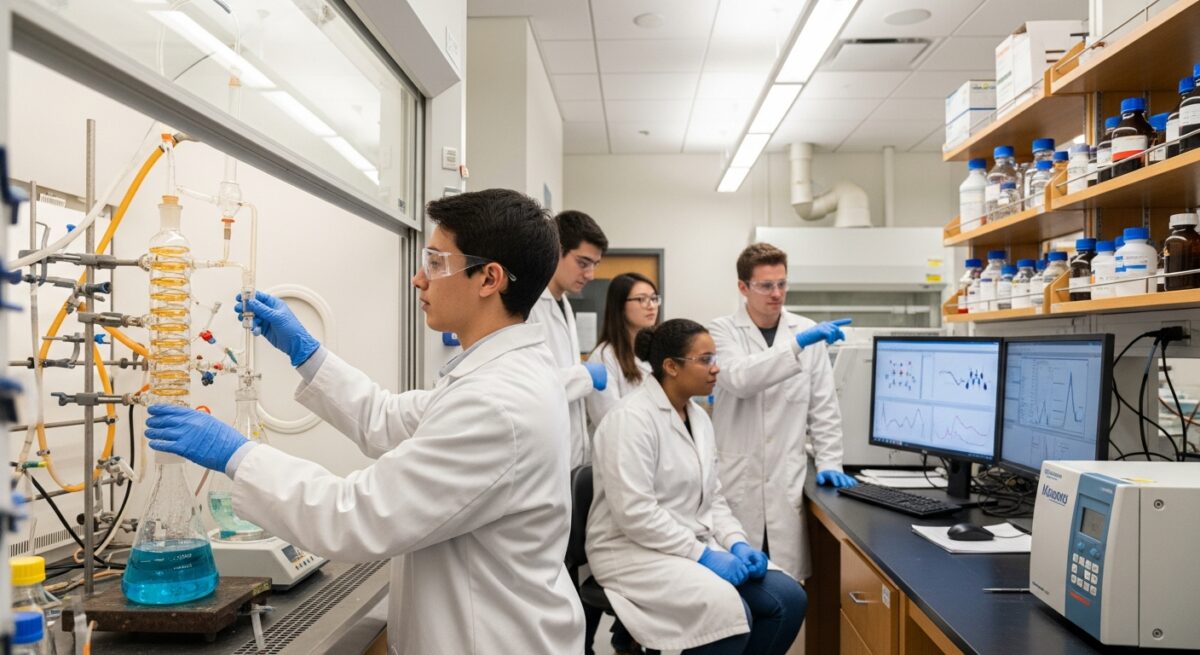
Second, these programs provide robust infrastructure. State-of-the-art instrumentation such as NMR spectrometers, mass spectrometers, X-ray diffractometers, and high-performance computing clusters are essential for modern chemical research. Programs that invest in shared facilities and core labs enable students to conduct complex experiments without traveling to external centers. Third, the best programs foster a collaborative rather than competitive environment. While rigor is expected, the culture of the department matters greatly for your mental health and productivity. Look for programs where students co-author papers, share techniques, and support each other through qualifying exams.
Research Rotation and Mentorship Structures
Most top-tier chemistry doctoral programs USA require students to complete two to three research rotations in different labs during their first year. This system allows you to experience different research styles, lab cultures, and project types before committing to a thesis advisor. The quality of mentorship is often more important than the prestige of the university. A supportive advisor who meets regularly, provides constructive feedback, and advocates for your career can make the difference between a transformative PhD experience and a frustrating one. When researching programs, look for evidence of mentorship awards, graduate student satisfaction surveys, and alumni outcomes.
Top Chemistry PhD Programs by Research Focus
To help you narrow your search, we have categorized leading programs by their primary research strengths. Remember that many departments excel across multiple areas, but identifying your specific interest will guide you to the best fit. The best chemistry PhD programs in the US for research careers often have multiple Nobel laureates or National Academy members on their faculty, but smaller programs can also offer exceptional training in niche areas.
Organic and Synthetic Chemistry: Institutions like the Scripps Research Institute, Harvard University, and the University of California, Berkeley are renowned for their contributions to total synthesis, methodology development, and chemical biology. These programs emphasize creative problem-solving and often have strong ties to pharmaceutical and biotechnology companies. If you are interested in drug discovery or natural product synthesis, these departments should be at the top of your list.
Physical and Theoretical Chemistry: The Massachusetts Institute of Technology (MIT), Stanford University, and the California Institute of Technology (Caltech) lead in areas such as quantum chemistry, spectroscopy, and reaction dynamics. These programs require a strong background in physics and mathematics, and they produce graduates who excel in both academic research and computational modeling roles in industry.
Materials and Nanochemistry: Northwestern University, the University of Chicago, and the University of Illinois at Urbana-Champaign have world-class programs focused on polymer chemistry, nanomaterials, and solid-state chemistry. These programs often collaborate with engineering and materials science departments, offering interdisciplinary training that is highly valued in the energy and electronics sectors.
Biochemistry and Chemical Biology: The University of California, San Francisco (UCSF), the University of Michigan, and Yale University have strong programs that bridge chemistry and biology. These departments are ideal for students interested in enzyme mechanisms, protein engineering, or chemical genetics. Graduates frequently move into biotech startups or academic positions in molecular pharmacology.
How to Evaluate and Compare Chemistry Doctoral Programs USA
When you are researching potential programs, it is easy to get overwhelmed by rankings and reputation. Instead of relying solely on US News or NRC rankings, create a personalized evaluation rubric. Consider the following factors, which are critical for research career preparation:
- Faculty alignment: Identify three to five faculty members whose research excites you. Check their publication records, grant funding, and whether they are accepting new students. Reach out to current graduate students in those labs to ask about mentorship and lab culture.
- Funding and stipend: All reputable chemistry PhD programs offer full tuition waivers and a stipend. However, the amount varies significantly by location and cost of living. A higher stipend in an expensive city may not go as far as a modest stipend in a college town. Also, inquire about health insurance, travel funds for conferences, and summer fellowships.
- Placement record: Ask the department for recent graduate placement data. Where did alumni go for postdocs or jobs? How many secured tenure-track faculty positions versus industry roles? A program that tracks outcomes and shares them publicly demonstrates confidence in its training.
- Collaborative opportunities: Does the program encourage collaborations across departments or with national labs? Programs with ties to institutions like the National Institutes of Health, Argonne National Laboratory, or the National Renewable Energy Laboratory offer unique resources and networking.
After gathering this information, create a shortlist of programs that meet your criteria. Attend virtual open houses or recruitment weekends to get a feel for the department culture. Many top programs offer travel funding for prospective students, so take advantage of these opportunities to visit labs, meet faculty, and talk with current students in an informal setting. Remember, a program that looks perfect on paper may feel wrong in person, and vice versa.
Application Strategies for Competitive Chemistry PhD Programs
Gaining admission to the best chemistry PhD programs requires a deliberate and strategic approach. The application process typically includes submission of transcripts, GRE scores (though many programs have dropped this requirement), letters of recommendation, a statement of purpose, and sometimes a research proposal. Your statement of purpose is your most powerful tool. It should not merely list your achievements but tell a coherent story about your research journey, your specific interests, and why you are a good fit for that particular program. Mention faculty by name and reference their recent papers to show you have done your homework.
Letters of recommendation carry immense weight. Choose recommenders who know you well and can speak to your research ability, persistence, and intellectual curiosity. A strong letter from a well-known scientist in your field can open doors, but a detailed, enthusiastic letter from a lesser-known professor is often more effective than a generic letter from a famous one. Give your recommenders ample time and provide them with your CV, research summary, and list of programs.
Your research experience is the cornerstone of your application. Most successful applicants have at least two years of undergraduate research, a senior thesis, or a post-baccalaureate position. Publications are not required but are a significant advantage. If you do not have a publication, focus on describing your contributions, techniques mastered, and the impact of your work in your statement. For additional guidance on structuring your academic journey, you may find it helpful to review our guide on best English PhD programs in top universities, which offers parallel advice on building a competitive doctoral application across disciplines.
Finally, consider applying to a mix of reach, match, and safety programs. Even strong applicants face unpredictable admissions outcomes due to funding constraints and faculty availability. Applying to 8 to 12 programs increases your chances of receiving multiple offers, which gives you leverage in negotiating funding packages and choosing the best fit. Do not be discouraged by rejections from elite programs; many excellent chemistry doctoral programs USA at large public universities offer training that is just as rigorous as that at Ivy League schools.
Funding Your Chemistry PhD and Maximizing Stipends
One of the most attractive features of a chemistry PhD is that virtually all programs provide full funding. This typically includes a tuition waiver, health insurance, and a stipend for living expenses. Stipends in 2026 range from approximately $30,000 to $50,000 per year, depending on the institution and location. Programs in high-cost areas like New York City or San Francisco tend to offer higher stipends, but the cost of housing and food can offset this benefit. Conversely, programs in the Midwest or South may offer lower stipends but significantly lower living expenses.
Beyond the standard stipend, there are opportunities to supplement your income through fellowships, teaching assistantships, and summer internships. Prestigious external fellowships such as the NSF Graduate Research Fellowship Program (GRFP), the Ford Foundation Fellowship, and the Goldwater Scholarship can provide additional funding and prestige. Winning one of these fellowships can free you from teaching obligations, allowing you to focus entirely on research. Many departments also offer internal fellowships for incoming students based on merit. When comparing offers, ask about the average time to degree (typically 5 to 6 years), the availability of summer funding, and whether students are expected to teach every semester. A program that guarantees summer support can reduce financial stress and accelerate your research progress.
For students concerned about the cost of applying, many programs offer fee waivers for first-generation, low-income, or underrepresented minority applicants. Do not hesitate to request a fee waiver if you qualify. The investment in applications is modest compared to the long-term return of a fully funded PhD. Additionally, explore external resources like scholarship.education for information on funding opportunities that can support your graduate education.
Frequently Asked Questions
What is the difference between a PhD in chemistry and a PhD in chemical biology?
A PhD in chemistry typically requires core coursework in organic, inorganic, physical, and analytical chemistry, with specialization in one area. A PhD in chemical biology is an interdisciplinary program that combines chemistry with molecular biology, genetics, and biochemistry. Chemical biology programs often emphasize quantitative approaches to biological problems and may require coursework in cell biology or bioinformatics. Both can lead to research careers in academia or industry, but chemical biology is more directly aligned with drug discovery and biomedical research.
How important is the GRE for chemistry PhD admissions?
The GRE General Test and GRE Chemistry Subject Test have been dropped by many top programs, including MIT, Stanford, and the University of California system. However, some programs still require or recommend them. Check each program’s website for current requirements. If you have strong grades and research experience, the absence of GRE scores will not hurt your application. Focus your energy on writing a compelling statement of purpose and securing strong letters of recommendation.
Can I work in industry after a chemistry PhD, or is academia the only path?
Industry is a common and rewarding career path for chemistry PhD graduates. Pharmaceutical companies, chemical manufacturers, materials science firms, and biotechnology startups actively recruit PhD chemists for research and development roles. Many programs offer career development resources, industry internships, and alumni networks to support non-academic career paths. The best chemistry PhD programs in the US for research careers prepare students for both academia and industry by emphasizing transferable skills such as project management, data analysis, and communication.
How do I choose between a large public university and a small private institute?
Large public universities often have more faculty, a wider range of research areas, and larger cohorts, which can provide more collaboration opportunities and diverse perspectives. Small private institutes may offer smaller class sizes, closer mentorship, and a tight-knit community. Visit both types of institutions if possible and talk to current students about their experiences. Consider your learning style: do you thrive in a bustling, resource-rich environment, or do you prefer a more intimate setting with personalized attention? Both can be excellent choices; it depends on your personal preferences.
The journey to earning a chemistry PhD is demanding but deeply rewarding. By carefully evaluating programs based on research fit, funding, mentorship, and placement outcomes, you can position yourself for a successful and fulfilling research career. The best chemistry PhD programs in the US for research careers are not defined solely by rank but by how well they match your aspirations and support your growth as a scientist. Take the time to research, ask questions, and trust your instincts when making this important decision.