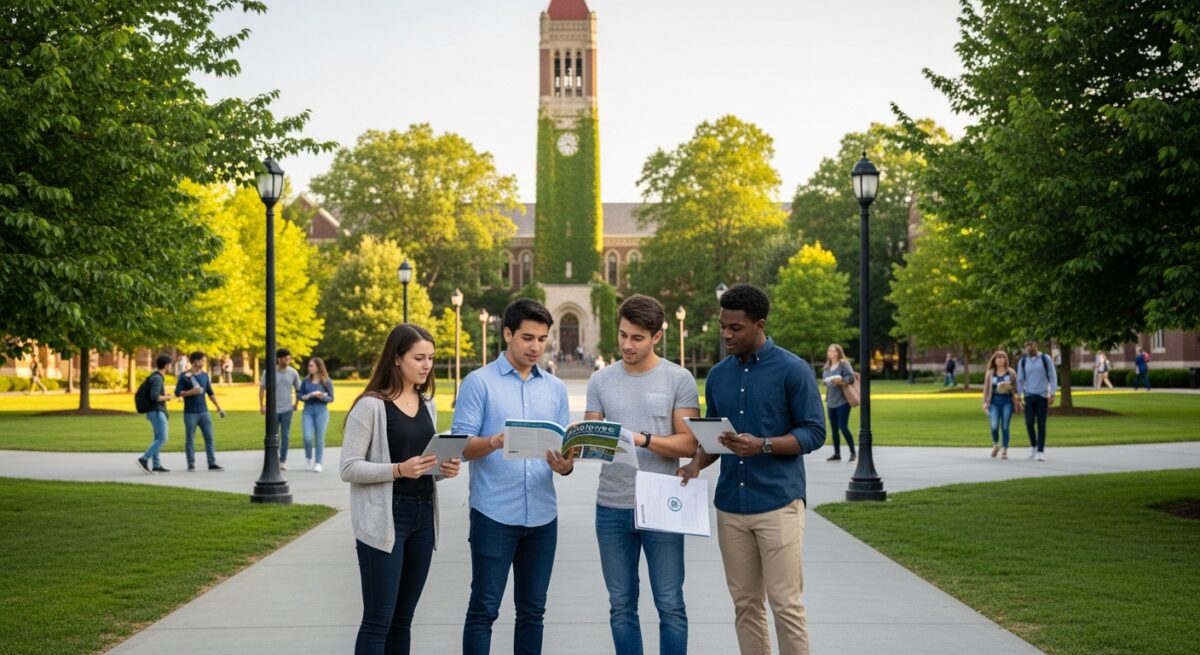
Earning a college degree is a powerful step toward career advancement and personal growth, but the perceived cost often creates a significant barrier. Many prospective students assume they must either take on overwhelming debt or forgo higher education entirely. This is a critical misconception. With strategic planning and the effective use of federal financial aid, obtaining an accredited degree at a low net cost is an achievable goal for countless individuals. The key lies not in finding mythical “free” degrees, but in identifying inexpensive FAFSA degree options where your federal aid, including grants and subsidized loans, covers the majority, if not all, of your direct educational expenses. This approach transforms the financial aid application from a simple form into a strategic tool for funding your future.
Understanding How FAFSA Unlocks Low-Cost Education
The Free Application for Federal Student Aid (FAFSA) is your gateway to all federal financial assistance, and its strategic use is the cornerstone of affordable education. It determines your eligibility for need-based grants like the Pell Grant, which does not require repayment, and for subsidized federal student loans, where the government pays the interest while you are in school. The goal of pursuing inexpensive FAFSA degree options is to structure your education so that these aid packages minimize your out-of-pocket costs and future debt burden. Your Expected Family Contribution (EFC), now known as the Student Aid Index (SAI), calculated from the FAFSA, is subtracted from a school’s Cost of Attendance (COA) to determine your financial need. Therefore, selecting institutions with a lower COA is the most direct way to ensure your aid goes further.
This means affordability is a relative measure. A $30,000 annual COA might leave a significant gap even with maximum aid, while a $10,000 COA at a carefully chosen institution could be fully covered by Pell Grants and other aid for eligible students. Your mission is to find programs where the COA is low enough that your federal and state aid can effectively cover it. This often leads students to public community colleges, in-state public universities, and certain online programs known for transparency and value. For a deeper dive into evaluating different program structures, our resource on how to assess online degree options for career success provides a useful framework.
Top Institutional Choices for FAFSA-Covered Degrees
Not all colleges are created equal when the goal is minimizing net price. Certain types of institutions are systematically designed to be more affordable and work efficiently with federal aid packages. Focusing your search here dramatically increases your chances of graduating with little to no debt.
Public community colleges are the undisputed leaders in this arena. With tuition often a fraction of that at four-year schools, they provide an ideal starting point for associate degrees or for completing general education requirements before transferring. Many states have guaranteed admission agreements between community colleges and public university systems, creating a seamless, low-cost pathway to a bachelor’s degree. Regional public universities, particularly those focused on teaching within your state of residence, offer another high-value tier. Their in-state tuition is regulated and typically lower than that of flagship or private institutions, while still providing full accreditation and robust student support services.
The landscape of accredited online education has also matured, offering compelling inexpensive FAFSA degree options. Many public universities now run extensive online divisions that charge tuition rates close to or equal to in-state rates for all students, regardless of geography. These programs eliminate costs for commuting and housing, further reducing the overall COA. When researching, prioritize programs that are transparent about their total costs and have a strong track record of serving non-traditional and financially conscious students. To explore a wide range of these flexible pathways, you can compare online degree options for flexible learning through our dedicated guides.
Strategic Steps to Minimize Your Out-of-Pocket Cost
Finding an affordable program is the first step, but optimizing your financial aid and personal finances is what seals the deal. This requires a proactive, multi-faceted approach that begins long before the first day of class.
First, file the FAFSA as early as possible when it opens. Aid is often distributed on a first-come, first-served basis for certain state and institutional grants. Early submission maximizes your potential award. Second, after receiving your financial aid offer letter, analyze it meticulously. Distinguish between grants (free money), work-study (earned money), and loans (borrowed money). Your aim is to accept all grants and work-study first. For loans, always accept subsidized loans before unsubsidized ones. Third, actively search for additional scholarships. While federal aid forms your foundation, external scholarships from community organizations, employers, and private foundations can fill any remaining gaps and reduce your need for loans.
Beyond aid, smart personal financial choices are crucial. Consider attending part-time while working to spread out costs and maintain income, though this can affect your aid eligibility (typically, you must be enrolled at least half-time). Live frugally, opting for used textbooks, shared housing, and a careful budget. Every dollar you don’t spend from your loan disbursement is a dollar plus interest you won’t have to repay later. For comprehensive, step-by-step planning that covers these financial strategies and more, seeking out detailed school‑level degree guidance can be invaluable.
Maximizing Value: Choosing the Right Degree Program
An inexpensive degree only represents a true return on investment if it leads to your desired career outcomes. The intersection of affordability and value is where your research must be most thorough. Start by ensuring any institution you consider is properly accredited by an agency recognized by the U.S. Department of Education. This is non-negotiable, as it affects aid eligibility, credit transfer, and employer recognition.
Next, investigate program-specific outcomes. Look for published data on graduation rates, job placement rates, and average salaries for graduates. Connect with the program’s career services department to understand their support network. Some high-value, affordable degrees are in consistently high-demand fields that offer strong starting salaries, which makes managing minimal residual debt much easier. Fields like nursing, information technology, accounting, teaching, and skilled trades (often offered through community college associate degrees or certificates) frequently offer this balance. The goal is to align an affordable tuition price with a clear, achievable career path that provides financial stability after graduation.
Frequently Asked Questions
Can FAFSA really cover the entire cost of a degree?
Yes, for many students at low-cost institutions, the combination of the Pell Grant, other state grants, and federal subsidized loans can cover the full Cost of Attendance. This is most common at community colleges and for students with significant financial need as determined by the FAFSA.
What is the difference between “cheap” and “inexpensive” FAFSA degree options?
“Cheap” might imply low quality. “Inexpensive” in this context refers to programs with a low net price after financial aid is applied. These are often quality, accredited programs at public institutions where strategic use of aid makes them affordable.
Do I have to be poor to qualify for enough aid to make college inexpensive?
While maximum Pell Grants are for students with the highest need, many students from middle-income families qualify for substantial federal subsidized and unsubsidized loans at low interest rates. Attending a lower-COA school makes these loan amounts manageable, keeping the overall cost inexpensive.
Are online degrees a good option for FAFSA affordability?
Absolutely. Many accredited online programs from public universities have competitive tuition and no costs for campus facilities or commuting. They are also ideal for students who need to work while studying, providing flexibility to earn an income and reduce borrowing.
How do I know if a school’s Cost of Attendance is accurate?
Schools are required to publish their COA, which includes tuition, fees, room, board, books, and personal expenses. Be critical: budget your personal expenses independently. If you can live more frugally than the COA estimates, your actual cost will be lower.
The path to an affordable college degree is a deliberate one, paved with research, timely applications, and strategic choices. By reframing your search around the net price after federal aid and targeting institutions designed for value, you can access life-changing education without the anchor of debilitating debt. Your FAFSA is more than an application, it is the first step in a financially sound educational journey. Start early, look beyond the sticker price, and invest your time in planning to ensure your investment in higher education pays dividends for years to come.