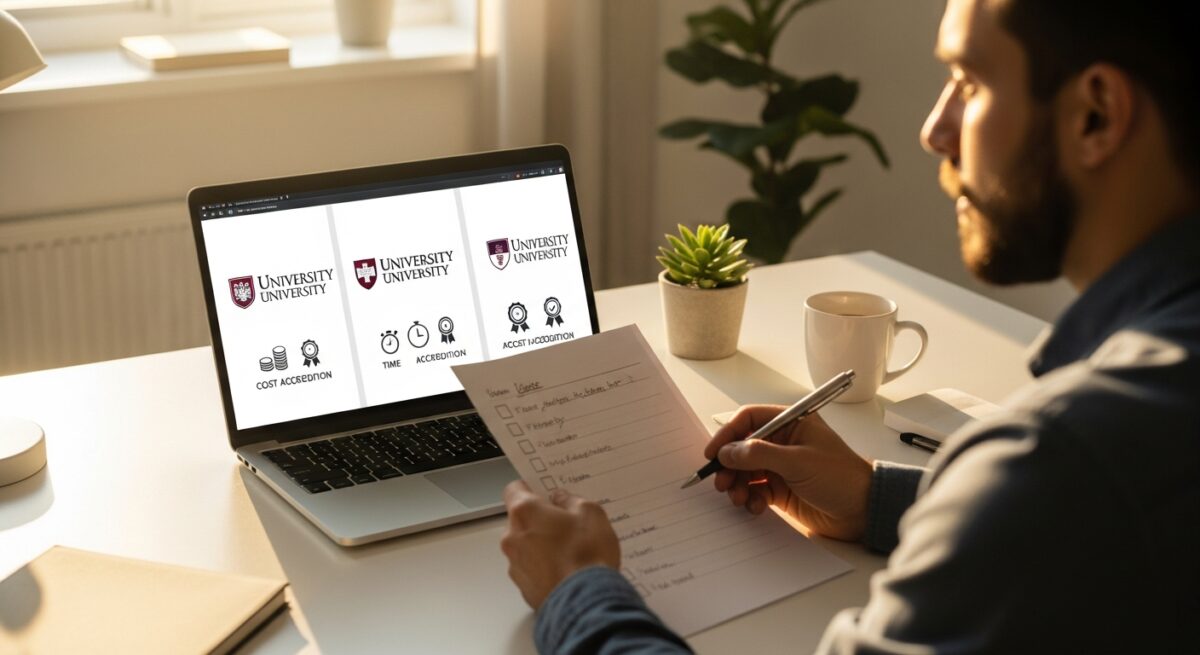
The decision to pursue an online degree is a significant investment in your future, but with thousands of programs available, the choice can be overwhelming. Simply browsing university websites is not an effective strategy. To make an informed decision that aligns with your career goals, learning style, and budget, you need a structured, analytical approach. This guide provides a comprehensive framework to compare online study programs strategically, moving beyond surface-level marketing to evaluate the critical factors that determine educational quality and return on investment.
Clarifying Your Personal Goals and Constraints
Before you compare online study programs, you must first define your own parameters. This foundational step ensures you spend time evaluating only programs that truly fit your life. Begin by asking fundamental questions about your professional objectives. Are you seeking a career change, a promotion within your current field, or the acquisition of specific skills? Your answer will dictate whether you need a full degree, a certificate, or individual courses. Next, conduct a realistic audit of your time and resources. How many hours per week can you genuinely dedicate to coursework while managing work and family obligations? What is your total budget, including tuition, fees, and potential lost income? Finally, reflect on your learning preferences. Do you thrive in a structured environment with weekly deadlines, or do you need the ultimate flexibility of a self-paced, asynchronous program? Understanding these personal constraints will create a filter through which you can effectively sift through program options.
Evaluating Academic Quality and Institutional Reputation
The cornerstone of any legitimate educational program is its academic rigor and recognition. This is the most critical area for comparison. Start with accreditation. Regional accreditation is the gold standard in the United States and is non-negotiable for ensuring your degree will be respected by employers and other institutions. Programmatic accreditation from specialized bodies like the AACSB for business or ABET for engineering adds another layer of credibility. Next, investigate the faculty. Who will be teaching your courses? Look for professors who are not only academics but also practitioners with real-world experience in their field. The student-to-instructor ratio and the level of faculty engagement in online discussions are strong indicators of teaching quality. Finally, research the curriculum in detail. A current, relevant curriculum should balance theoretical foundations with applied, practical skills. Look for capstone projects, internships, or other experiential learning components that build a portfolio.
To effectively navigate this complex evaluation, consider following a dedicated process. Our resource on how to compare online degree programs effectively breaks down these academic factors into a clear, actionable checklist.
Analyzing the True Cost and Financial Value
The advertised tuition rate is often just the starting point. A thorough financial comparison requires digging into the full cost structure and potential return. First, clarify the tuition model. Is it per-credit, per-term, or a flat-rate subscription? Calculate the total degree cost based on the exact number of required credits. Then, identify all additional mandatory fees: technology fees, graduation fees, and course material fees can add hundreds or thousands of dollars. Crucially, explore financial aid options. Does the school offer scholarships, grants, or tuition discounts for corporate partners, military personnel, or first responders? Investigate the flexibility of payment plans to manage cash flow. Beyond cost, assess the value proposition. Research the career outcomes of graduates. Does the program have strong connections with specific industries? Does it offer robust career services, including virtual coaching, resume reviews, and online networking events with alumni? A slightly more expensive program with a proven track record of high job placement and salary increases may offer a far greater return on investment than the cheapest option.
Understanding the Student Experience and Support Services
The quality of the online learning experience is what separates good programs from great ones. This encompasses technology, community, and support. Start by examining the Learning Management System (LMS), such as Canvas, Blackboard, or a proprietary platform. Is it intuitive and reliable? Many schools offer demo courses or tours. Assess the structure of student interaction. Are courses primarily asynchronous (on your own schedule), synchronous (live online classes), or a blend? Look for programs that foster collaboration through group projects, discussion forums, and virtual study groups to combat the isolation sometimes felt in online learning. Most importantly, scrutinize the student support ecosystem. This is vital for online learners who cannot walk into a campus office.
Key support services to compare include:
- Technical Support: 24/7 availability for LMS and access issues.
- Academic Advising: Dedicated advisors who understand the online student journey and help with course selection and degree planning.
- Online Library and Tutoring: Full remote access to research databases, e-books, and live, virtual tutoring sessions.
- Career Services: Tailored for online students, offering virtual workshops, interview practice, and job boards.
A program with a strong, integrated support network significantly increases your chances of persistence and success, especially when balancing other life commitments.
Making the Final Decision and Next Steps
After you have gathered detailed information on a shortlist of programs, it is time to synthesize the data and make your choice. Create a simple comparison matrix or spreadsheet with columns for each of the key criteria: cost, accreditation, curriculum focus, format flexibility, and support services. Assign weights to each category based on your personal priorities from the first step. For instance, if budget is your primary constraint, cost may carry 40% of the weight. If career advancement is key, the strength of career services and alumni outcomes might be most important. This objective scoring can help reveal the best overall fit.
Do not hesitate to reach out directly to admissions counselors with specific, pointed questions. Their responsiveness and knowledge are a preview of the institution’s customer service. If possible, request to speak with a current student or alumnus of the program for an unfiltered perspective. For those considering advanced studies, a more focused analysis is required. Our guide on how to compare online master’s programs and make the right choice delves into considerations like thesis versus non-thesis tracks and faculty research alignment.
Choosing the right online program is a deliberate process that rewards careful research. By moving beyond promotional materials to analyze accreditation, cost structures, curriculum relevance, and student support, you empower yourself to select a program that is not just convenient, but transformative. The right fit will provide a challenging, engaging education that fits your life and propels you toward your long-term professional vision. Take the time to compare methodically, your future self will thank you for the diligence.