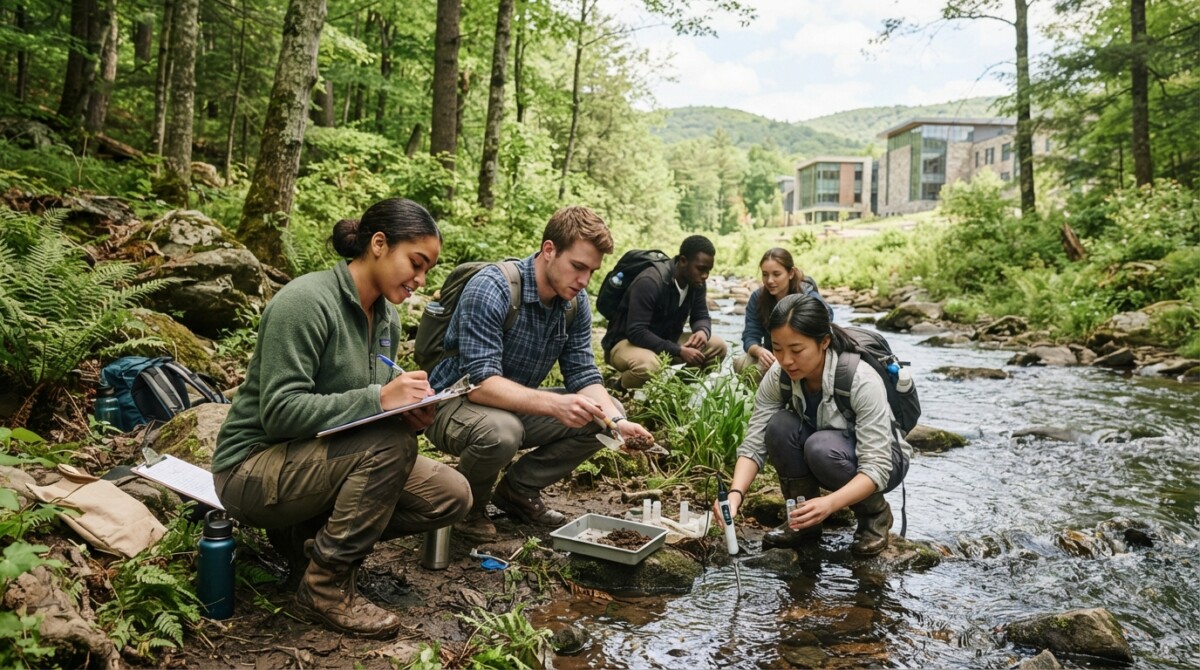
Choosing where to study environmental science is one of the most consequential decisions you can make for your future career and the health of the planet. The best programs do more than teach ecology and policy; they immerse you in fieldwork, connect you with cutting-edge research, and open doors to meaningful internships. Whether you dream of restoring wetlands, designing sustainable cities, or advising governments on climate policy, the right college can make all the difference. This guide examines the top environmental science colleges, what makes them stand out, and how to select a program that fits your goals, budget, and learning style.
What Defines a Top Environmental Science Program?
Rankings often focus on research output and faculty awards, but for students, a top program should offer a blend of academic rigor, hands-on learning, and career support. Look for institutions with dedicated environmental science departments, strong laboratory facilities, and access to diverse ecosystems, whether coastal, forest, or urban. Small class sizes and undergraduate research opportunities are critical; they allow you to work directly with professors on projects that can lead to publications or conference presentations.
Another key factor is the curriculum’s interdisciplinary nature. Environmental challenges do not respect disciplinary boundaries, so the best programs integrate biology, chemistry, geology, policy, and economics. Check whether the program offers concentrations in areas like conservation biology, environmental chemistry, or sustainability management. Also, examine the school’s track record for job placement and graduate school admission. Many top environmental science colleges have strong alumni networks in government agencies, non-profits, and environmental consulting firms, which can be invaluable when you start your job search.
Finally, consider the campus culture and available resources. Does the school have a sustainability office, a student environmental club, or a farm or nature preserve on campus? These extras can enrich your education and provide leadership opportunities. Financial aid and scholarship packages also matter, as the cost of attendance can vary dramatically between institutions. Remember that a high-priced name is not always the best fit; a smaller program with dedicated mentors might offer more hands-on experience.
The Leading Schools in Environmental Science
While many universities offer environmental science majors, a select group consistently ranks at the top due to their research funding, faculty expertise, and student outcomes. Here are some of the most prominent institutions, each with unique strengths.
Stanford University
Stanford’s Earth System Science program is a leader in climate change research and sustainability. Students here benefit from the university’s proximity to Silicon Valley, which fosters innovation in clean energy and environmental technology. The program emphasizes quantitative skills and systems thinking, preparing graduates for careers in both policy and tech. Stanford also offers extensive field trips to the nearby Sierra Nevada and California coast, giving students direct exposure to diverse ecosystems.
Duke University
Duke’s Nicholas School of the Environment is renowned for its marine science and conservation programs. The university has its own marine lab in Beaufort, North Carolina, and offers courses in environmental economics, law, and policy. Duke’s strong connection to the Research Triangle Park means students have access to internships with environmental consulting firms and biotech companies. The school’s commitment to interdisciplinary study is a major draw for students who want to address environmental problems from multiple angles.
University of California, Berkeley
Berkeley’s College of Natural Resources offers a top-ranked environmental science program with a strong emphasis on ecology and environmental biology. The campus is a living lab, with the adjacent Tilden Regional Park and the San Francisco Bay providing ample opportunities for fieldwork. Berkeley is also a hub for environmental activism, and students can engage in policy work through the Goldman School of Public Policy or the Berkeley Law Environmental Law Clinic. The program’s rigorous coursework prepares students for graduate study or immediate employment in the public and non-profit sectors.
Cornell University
Cornell’s College of Agriculture and Life Sciences houses an exceptional environmental science program that combines natural and social sciences. The university’s vast campus includes over 4,000 acres of forests, wetlands, and agricultural lands, which serve as living laboratories. Cornell is particularly strong in environmental toxicology, water resources, and sustainable agriculture. The program encourages students to design their own majors, allowing for highly personalized academic pathways. Graduates often go on to work for the USDA, the EPA, or international conservation organizations.
University of Michigan, Ann Arbor
The School for Environment and Sustainability at Michigan offers a comprehensive environmental science curriculum with a focus on environmental justice and sustainability solutions. Students can choose from tracks in ecosystem management, environmental policy, or geospatial data science. The university’s location in the Great Lakes region provides unique opportunities for freshwater research. Michigan also has strong partnerships with automotive and manufacturing companies, making it a great choice for students interested in corporate sustainability.
These schools are just a starting point; there are many other excellent programs across the country. When evaluating your options, look beyond the brand name and consider which program’s strengths align with your specific interests.
How to Choose the Right Environmental Science Program for You
With so many strong options, narrowing down your list can feel overwhelming. Start by making a list of your priorities: location, cost, program size, and specific research areas. Use the following steps to guide your decision.
- Define your career goals. Do you want to be a field researcher, a policy analyst, or a sustainability manager? Different programs have different strengths. For example, if you are interested in environmental law, look for programs with strong policy components. If you want to be a wildlife biologist, prioritize schools with strong ecology and zoology departments.
- Research the faculty. Look at the research interests of professors in the environmental science department. Read a few of their recent papers. If you find their work exciting, you will likely enjoy working with them. Reach out to current students or alumni to ask about their experiences.
- Visit campuses (in person or virtually). If possible, tour the campus, attend a class, and talk to an advisor. Virtual tours and online info sessions can also give you a feel for the community. Pay attention to the facilities, like labs, greenhouses, and field stations.
- Compare financial aid packages. Environmental science programs can be expensive, but many schools offer merit-based scholarships or need-based grants. Use the net price calculator on each school’s website to estimate your actual cost. Consider the return on investment: will the program’s alumni network and career services help you land a well-paying job after graduation?
- Evaluate the curriculum flexibility. Check whether the program allows you to take electives in other departments, study abroad, or pursue a double major. A flexible curriculum can help you tailor your education to your evolving interests.
Choosing a college is a personal decision, so trust your instincts. The right program should feel like a place where you can thrive academically and personally. Remember that you can always transfer if you find that your first choice is not the right fit.
Online and Hybrid Environmental Science Degrees
Not all students can relocate for a four-year residential program. Online and hybrid environmental science degrees have become increasingly popular, offering flexibility for working professionals and parents. Many top environmental science colleges now offer fully online bachelor’s or master’s degrees in fields like sustainability management, environmental policy, or geospatial analysis. These programs often use synchronous video lectures, discussion forums, and virtual labs to create an interactive learning environment.
When considering an online program, check for accreditation and whether the degree is recognized by employers and graduate schools. Look for programs that offer opportunities for in-person fieldwork or internships, even if the rest of the coursework is online. Some schools, like Arizona State University and Oregon State University, have well-established online environmental science programs that are highly regarded. The flexibility of online learning can be a huge advantage if you are balancing studies with a job or family commitments. However, you will need to be self-disciplined and proactive in seeking out networking opportunities.

Hybrid programs, which combine online coursework with weekend or summer residential sessions, can be a great middle ground. These allow you to build relationships with professors and classmates while still maintaining your day job. As you explore your options, be sure to verify that the program’s curriculum covers the core scientific principles and not just policy or management, unless you are specifically seeking a policy-focused degree.
Career Paths and Earnings Potential
One of the most common questions from prospective students is, “What can I do with an environmental science degree?” The answer is: a lot. The U.S. Bureau of Labor Statistics projects that environmental science jobs will grow faster than the average for all occupations over the next decade, driven by increasing concerns about climate change and sustainability. Here are some of the most common career paths for environmental science graduates.
- Environmental Consultant: Advise businesses and governments on how to minimize environmental impact, comply with regulations, and clean up contaminated sites. Median salary around $76,000.
- Conservation Scientist: Manage and protect natural resources, such as forests, parks, and wildlife habitats. Median salary around $64,000.
- Environmental Engineer: Design solutions for environmental problems, such as waste treatment systems and pollution control equipment. Median salary around $96,000.
- Geoscientist: Study the Earth’s physical structure and processes to locate natural resources and assess environmental risks. Median salary around $93,000.
- Sustainability Specialist: Help organizations reduce their carbon footprint and adopt sustainable practices. Median salary around $76,000.
These figures are national averages, and salaries can vary based on location, experience, and education. A master’s degree can significantly increase your earning potential, especially for research or senior management roles. Many environmental science top colleges also offer strong career counseling and job placement services, so take advantage of those resources while you are a student.
In addition to the technical skills you will learn, employers value critical thinking, communication, and problem-solving abilities. Your coursework, internships, and research projects will help you develop these competencies. For more detailed information on specific programs and how to choose, you can refer to our guide on the best colleges for environmental science, which provides a deeper dive into program rankings and application tips.
Financial Aid and Scholarships
The cost of college can be daunting, but many resources are available to help you finance your education. In addition to federal student aid (FAFSA), many colleges offer merit-based scholarships for students with strong academic records or outstanding extracurricular involvement in environmental causes. Some organizations, like the National Science Foundation, offer research fellowships for undergraduate and graduate students in STEM fields. Private foundations and non-profits also provide scholarships specifically for students pursuing environmental studies.
When comparing offers, look beyond the sticker price and calculate the net cost after scholarships and grants. You can also consider work-study programs, which allow you to earn money while gaining relevant experience in a campus lab or office. Some schools offer accelerated degree programs that allow you to earn a bachelor’s and master’s degree in five years, saving both time and tuition. Be proactive in searching for scholarships; even small awards can add up.
If you are considering an online degree, check if the program qualifies for federal financial aid. Many reputable online programs do, but some for-profit institutions may not. Always verify the school’s accreditation and financial aid policies before enrolling. For additional resources on funding your education, you might find useful information on scholarship opportunities to supplement your financial aid package.
Frequently Asked Questions
What is the difference between environmental science and environmental studies?
Environmental science is a natural science that focuses on the physical, chemical, and biological processes of the environment. It involves rigorous lab and field work, and it emphasizes data analysis. Environmental studies, on the other hand, is a social science that examines the relationship between humans and the environment, often focusing on policy, ethics, and sustainability. Many schools offer both majors, and some students choose to combine the two.
Do I need a graduate degree to work in environmental science?
Not necessarily. Many entry-level positions, such as environmental technician or consultant, only require a bachelor’s degree. However, a master’s degree is often required for research or senior management positions, and it can significantly boost your earning potential. If you are interested in academia, a Ph.D. is essential.
What skills are most important for an environmental science student?
Strong analytical and problem-solving skills are crucial. You should also be comfortable with math and statistics, as you will frequently analyze data. Communication skills are important too, because you will need to write reports and present your findings to non-scientific audiences. Fieldwork requires physical stamina and the ability to work in varying weather conditions.
Are online environmental science degrees respected by employers?
Yes, as long as the program is accredited and from a reputable institution. Employers care more about the skills and knowledge you gain than the format of the degree. Look for programs that offer hands-on components, such as capstone projects or internships, to ensure you get practical experience.
Choosing an environmental science program is a significant investment in your future. By carefully evaluating your goals, researching programs, and visiting campuses, you can find a school that will set you up for a rewarding career. The top environmental science colleges offer not just a degree, but a community of like-minded peers and mentors who share your passion for the planet.
As you move forward, keep an open mind. The field of environmental science is evolving rapidly, and new opportunities are emerging all the time. Whether you end up at a large research university or a small liberal arts college, your education will equip you to make a tangible difference in the world. Good luck with your search, and remember that the most important step is the first one: applying to a program that feels right for you.