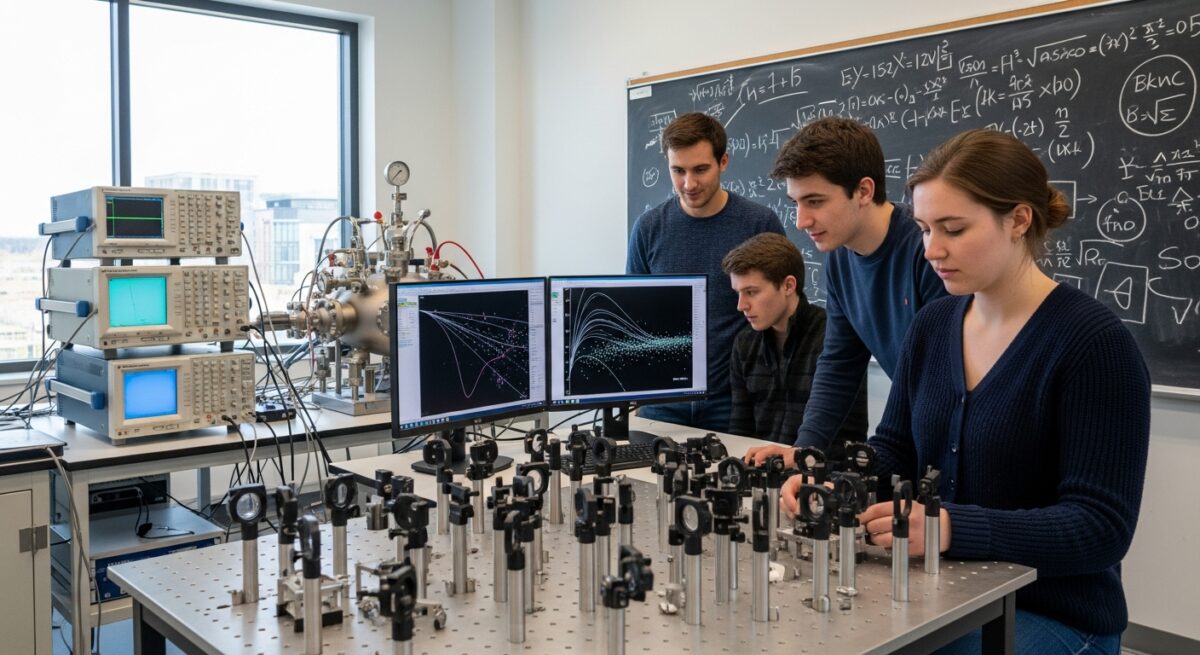
Choosing where to study physics is one of the most consequential decisions a student can make. The right program can open doors to cutting-edge research, prestigious fellowships, and a thriving career in academia, industry, or technology. But with hundreds of institutions offering physics degrees, how do you separate genuine excellence from mere reputation? This guide breaks down the key factors that define the best physics universities, from research output and faculty expertise to undergraduate opportunities and career outcomes. Whether you are a high school student planning your college list or a career changer considering a physics degree, understanding these criteria will help you make an informed choice.
What Makes a Physics Program Exceptional?
The best physics universities share several distinguishing features. First, they maintain robust research programs that push the boundaries of human knowledge. These institutions attract top-tier faculty who are not just teachers but active researchers publishing in journals like Physical Review Letters and Nature. Second, they offer state-of-the-art facilities: particle accelerators, cryogenic labs, supercomputing clusters, and observatories. Third, they foster a collaborative culture where undergraduates can work alongside graduate students and postdocs on real experiments. Finally, they provide strong career support, connecting students with internships at national labs like Fermilab or CERN, and with employers in tech, finance, and defense.
However, prestige alone does not define quality. A university with a Nobel laureate on staff may still offer a mediocre undergraduate experience if classes are taught by teaching assistants or if research opportunities are reserved for graduate students. Therefore, when evaluating physics colleges, you must look beyond rankings and examine the specific structure of their programs. Look for evidence of undergraduate research funding, small class sizes in upper-level courses, and mentorship programs. Also consider the institution’s placement record: what percentage of physics graduates go on to top graduate schools or secure industry positions within six months of graduation?
Key Criteria for Ranking Physics Universities
To objectively compare institutions, we synthesize several metrics. These include research output (measured by publications and citations), faculty awards (like the Breakthrough Prize or Sloan Fellowship), student-to-faculty ratio, graduation rate, and post-graduation outcomes. We also weigh the availability of specialized tracks, such as astrophysics, quantum computing, or condensed matter physics. Below is a checklist of features that consistently appear at the best physics universities:
- Research Infrastructure: Access to national laboratories, observatories, or specialized research centers (e.g., a synchrotron or a cryogenic facility).
- Undergraduate Research: Formal programs that allow students to earn credit or pay for research assistantships starting in their first or second year.
- Faculty Mentorship: A formal advising system that pairs each student with a faculty member for academic and career guidance.
- Career and Internship Support: Dedicated staff who help students secure internships at government labs, private companies, or academic institutions.
- Alumni Network: A strong, active alumni community in physics-related fields that can provide networking and job leads.
These criteria help separate programs that simply offer a physics major from those that actively cultivate future physicists. For instance, a university might have a high reputation but if it enrolls hundreds of physics majors without corresponding research slots, the experience can be impersonal and competitive. On the other hand, a smaller program with dedicated faculty and a strong undergraduate research requirement might offer a more transformative education, even if its name is less famous.
Another critical factor is the curriculum’s flexibility. The best physics universities allow students to tailor their degree with electives in computer science, mathematics, engineering, or even philosophy of science. They also offer accelerated pathways, like a combined bachelor’s and master’s program, which can save time and money. Furthermore, many top programs now incorporate computational physics and data science into the core curriculum, reflecting the growing importance of these skills in both academia and industry.
Top Institutions in the US and Beyond
While we avoid publishing a rigid numerical ranking (since such lists often oversimplify complex choices), we highlight several institutions that excel across our criteria. In the United States, the Massachusetts Institute of Technology (MIT) is often cited as the gold standard, with its extensive research centers like the MIT Kavli Institute for Astrophysics and the Research Laboratory of Electronics. Stanford University offers a similarly strong program with unique strengths in applied physics and photonics. The University of California, Berkeley, is renowned for its theoretical physics group and its proximity to Lawrence Berkeley National Laboratory. Harvard University, Princeton University, and Caltech also consistently produce top-tier research and place graduates in elite graduate programs.
Internationally, the University of Cambridge and the University of Oxford in the UK offer centuries-old physics traditions, with rigorous tutorial systems and access to the Cavendish Laboratory. ETH Zurich in Switzerland is a powerhouse for experimental physics, while the University of Tokyo leads in particle physics research. However, for most American students, domestic options are more practical due to cost, financial aid, and ease of access. That said, a few international programs offer generous scholarships and may be worth considering for the global experience.
For students seeking a more specialized education, consider institutions with strong ties to national labs. For example, the University of Chicago has deep connections with Fermilab, and the University of New Mexico collaborates with Sandia National Laboratories. These partnerships provide direct research opportunities and a clear pipeline to government employment. Similarly, schools like the University of Maryland, College Park, have robust quantum information programs. When evaluating any program, ask about the specific research areas of the faculty and whether you can join their labs as an undergraduate.
Online and Flexible Physics Degree Options
Not every student can relocate to a campus with a top-ranked physics department. Fortunately, many respected universities now offer online physics degrees, both at the undergraduate and graduate levels. These programs are ideal for working professionals or those with family obligations. For instance, Arizona State University offers an online Bachelor of Science in Physics that includes hands-on lab kits and virtual simulations. Oregon State University also has a well-regarded online physics program with a strong emphasis on research methods. As you evaluate online options, check whether the program provides synchronous lab experiences, access to faculty office hours, and a pathway to on-campus research if you wish to pursue a graduate degree later.
Online programs often have the advantage of lower tuition and greater flexibility. However, they may lack the immersive research environment of a residential campus. To bridge this gap, some online programs allow students to complete a capstone project at a local research institution or national lab. Also, look for programs that offer accelerated timelines; for example, some allow you to complete a master’s degree in 18 months. If you are considering an online physics degree, our guide on Best Physics Universities for Science Students provides additional insights into which programs offer the most robust virtual learning experiences.

How to Fund Your Physics Education
The cost of attending a top physics university can be substantial, but many institutions offer generous financial aid packages, especially for doctoral students. For undergraduates, scholarships are available from the university, government agencies, and private foundations. For example, the National Science Foundation’s Graduate Research Fellowship Program supports graduate students in STEM fields, and the Barry Goldwater Scholarship is for undergraduates pursuing research careers. Additionally, many top programs offer merit-based scholarships that can cover full tuition and living expenses. When you receive an acceptance letter, carefully compare the financial aid offers, not just the sticker price. Remember that the best physics universities often have large endowments that allow them to meet your full demonstrated financial need.
For graduate students, most physics departments offer teaching assistantships or research assistantships that include a stipend and tuition waiver. It is uncommon for a PhD student in physics to pay tuition out of pocket; in fact, a funded offer is the norm. Therefore, when applying to graduate programs, focus on the quality of the research fit rather than the cost, since funding is typically provided. For professional master’s programs, however, funding may be limited, so consider scholarships or employer reimbursement. Always explore external scholarships, such as those listed on scholarship.education, which aggregates opportunities for STEM students.
Career Outcomes and Graduate School Placement
One of the strongest indicators of a physics program’s quality is where its graduates end up. The best physics universities track this data and share it publicly. Look for placement rates into top PhD programs (like Harvard, MIT, or Stanford) and into industry positions at companies like IBM, Google, or Lockheed Martin. Also, examine the median starting salary for physics graduates. According to the American Institute of Physics, the median starting salary for physics bachelor’s degree holders is around $50,000, but it can be higher at institutions with strong engineering or data science components. Many graduates also pursue careers in finance, consulting, or software engineering, where quantitative skills are highly valued.
If you are planning to attend graduate school, your undergraduate research experience is critical. Therefore, choose a university that not only offers research but also encourages you to present at conferences and co-author papers. Faculty letters of recommendation carry significant weight, so having a mentor who knows you well is essential. In our experience, students who graduate from smaller, research-intensive programs often have an advantage in PhD admissions because they have more meaningful research contributions. Conversely, students from large universities may have access to more advanced equipment but might compete for attention.
Frequently Asked Questions
What is the difference between a physics degree from a university versus a liberal arts college?
Universities often have larger departments, more specialized courses, and more research funding. Liberal arts colleges may offer smaller classes and more personalized mentoring, but they might have fewer advanced lab facilities. For undergraduates, both can provide excellent preparation for graduate school, but you should evaluate the research opportunities available to undergraduates and the faculty-to-student ratio.
Do I need to attend a top-10 university to succeed in physics?
No. While top-tier institutions offer certain advantages, your success depends more on your initiative, research experience, and networking. Many successful physicists come from public universities or smaller colleges. What matters is finding a program where you can work closely with faculty and gain hands-on research skills.
Can I study physics online and still have a successful career?
Yes, but you must be proactive about gaining research or internship experience. Online programs are increasingly accepted, but you should complement them with summer research programs or internships at national labs. Employers value skills and experience over the mode of study.
What are the most lucrative career paths for physics graduates?
Physics graduates often move into data science, quantitative finance, software engineering, or engineering roles in tech companies. These positions can offer starting salaries above $80,000, especially with a master’s degree or relevant coding skills. Also, careers in applied physics, like semiconductor or optics industries, are in high demand.
Final Thoughts
Selecting the best physics university for you is a personal decision that should balance academic reputation, research opportunities, financial fit, and your long-term goals. Use the criteria in this article to create a shortlist of schools, then visit campuses (or attend virtual sessions) to get a feel for the culture. Speak with current students and professors, ask about undergraduate research success stories, and review the curriculum for alignment with your interests. Remember that the name of the institution is not a guarantee of success; your engagement and curiosity will shape your outcomes. We encourage you to explore our other resources on degree planning and career pathways to support your journey. With careful research and a clear plan, you can find a physics program that will launch you into a fulfilling and impactful career.