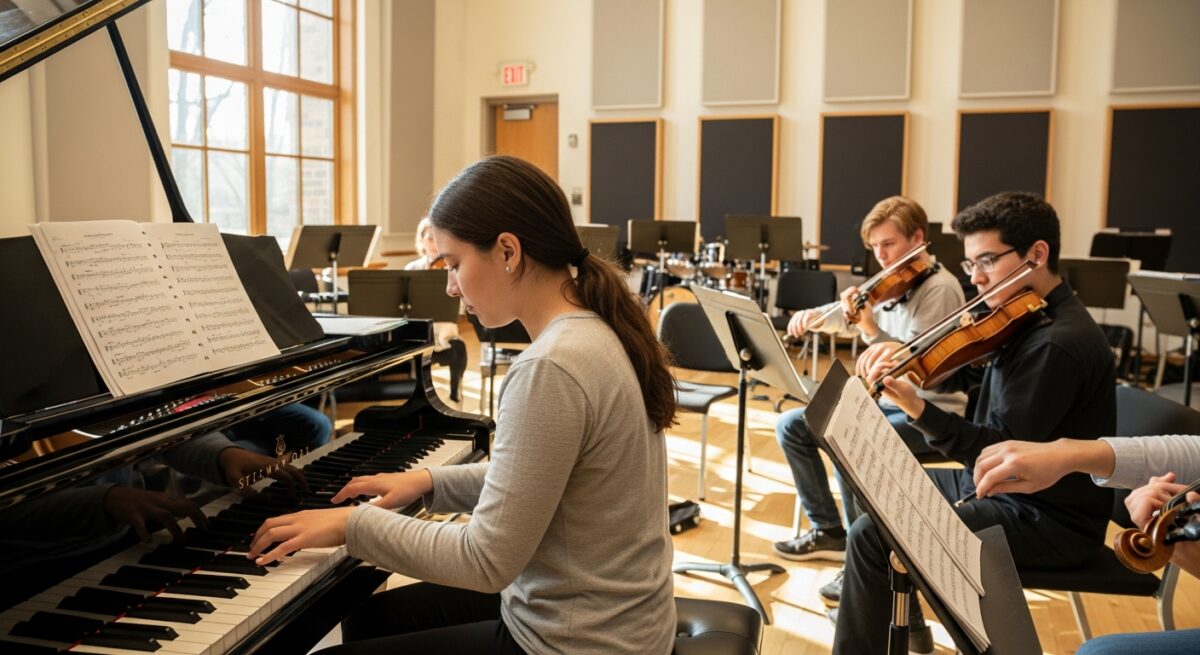
Choosing the right music school can shape your entire career, whether you dream of performing on global stages, composing for film, or teaching the next generation. With hundreds of programs across the United States, the decision can feel overwhelming. This guide breaks down the top music schools for aspiring musicians, what makes them exceptional, and how to find the best fit for your goals and budget. We will also explore how online and hybrid options are expanding access to high-quality music education, making it easier than ever to pursue your passion without relocating.
What Defines a Top Music School?
A top music school is more than a prestigious name. It is an environment that nurtures technical skill, artistic expression, and professional readiness. The best programs combine rigorous coursework, world-class faculty, performance opportunities, and industry connections. They also offer strong support services, from career counseling to mental health resources, because the demands of music study can be intense.
When evaluating schools, consider the following factors:
- Faculty: Are the instructors active professionals with real-world experience?
- Facilities: Does the school have practice rooms, recording studios, and performance halls that meet industry standards?
- Curriculum: Does the program balance theory, history, and practical application?
- Performance Opportunities: How often can you perform, and in what settings?
- Alumni Network: Are graduates working in the fields you aspire to enter?
These elements collectively create an environment where talent can flourish. However, the “best” school for you also depends on your specific instrument, genre, and career ambitions. A jazz trumpeter may thrive at a school known for its contemporary program, while a classical vocalist might prefer a conservatory with deep operatic traditions. Therefore, it is essential to research each institution’s strengths and match them with your personal goals.
The Conservatory vs. University Debate
One of the first decisions you will face is whether to attend a dedicated conservatory or a music program within a larger university. Both paths have distinct advantages. Conservatories, such as Juilliard or Curtis, offer an immersive, focused environment where music is the sole priority. The intensity can accelerate your growth, but it can also be limiting if you want to explore other academic interests. University programs, like those at the University of Michigan or UCLA, provide a broader education, allowing you to double major or take courses outside music. This flexibility can be valuable for careers in music business, education, or technology, where interdisciplinary knowledge is an asset.
University programs also often have larger student bodies, which means more diverse ensembles and social opportunities. However, they may lack the individualized attention that conservatories provide. The right choice depends on your learning style and career objectives. If you are certain that performance is your life’s calling and you thrive under pressure, a conservatory might be ideal. If you want a safety net or plan to work in a related field, a university could be a better fit. Our guide on top music schools for aspiring musicians and performers offers more detailed comparisons to help you decide.
Top Music Schools for Aspiring Musicians in 2026
The following institutions consistently rank among the best for undergraduate and graduate music programs. They are recognized for their faculty, facilities, and the success of their alumni. While this list is not exhaustive, it provides a strong starting point for your research.
The Juilliard School (New York, NY)
Juilliard is synonymous with excellence in the performing arts. Its acceptance rate is notoriously low, often below 5%, but those admitted receive training from some of the most respected artists in the world. The school’s location in Lincoln Center offers unmatched access to the epicenter of the performing arts. Graduates dominate the rosters of major orchestras, opera houses, and Broadway productions. The intense, performance-focused curriculum is not for everyone, but for the dedicated few, it is transformative.
Berklee College of Music (Boston, MA)
Berklee is the world’s largest independent college of contemporary music. It is famous for its programs in jazz, rock, electronic production, and songwriting. Berklee’s approach is highly practical, with students learning to produce, perform, and market their music from day one. The school also has a campus in Valencia, Spain, and offers numerous online courses. If your passion lies in contemporary genres, Berklee’s industry connections and hands-on philosophy are unmatched.
Curtis Institute of Music (Philadelphia, PA)
Curtis is unique in that every student receives a full-tuition scholarship. Its small size, about 175 students, ensures that each musician gets personalized attention from faculty who are often members of the Philadelphia Orchestra. The school’s “learn by doing” philosophy means students perform in public from their first year. Curtis is highly selective, but for those admitted, it is a once-in-a-lifetime opportunity to focus solely on artistry without financial burden.
Eastman School of Music (Rochester, NY)
Eastman, part of the University of Rochester, balances a conservatory’s rigor with a research university’s resources. It is particularly strong in classical performance, composition, and music education. Eastman’s faculty are leading scholars and performers, and the school’s Sibley Music Library is one of the largest in North America. The university setting allows students to pursue dual degrees, such as music and business or music and psychology, which can open diverse career doors.
New England Conservatory (Boston, MA)
NEC is the oldest independent music school in the United States, founded in 1867. It offers a wide range of programs, from classical to jazz to contemporary improvisation. NEC’s partnership with Harvard University provides students the opportunity to take courses at both institutions. The school’s location in Boston’s cultural district offers abundant internship and performance opportunities. NEC’s inclusive, innovative environment encourages students to explore beyond traditional boundaries.
Online and Hybrid Music Programs
Not every aspiring musician can relocate to a major city or afford a traditional residential program. Online and hybrid music degrees have become increasingly sophisticated, offering flexibility without sacrificing quality. Many of the top music schools for aspiring musicians now provide online options. For instance, Berklee Online offers certificate programs and bachelor’s degrees in areas like music production and songwriting. Other reputable institutions, such as the University of Southern California and Indiana University, have also developed online courses and full degrees.

These programs are ideal for students who are already working or have family commitments. They also allow you to study with faculty from around the world without leaving your home. However, online music education requires self-discipline and a strong home studio setup. You will need reliable instruments, recording equipment, and software. Many online programs also arrange local performance opportunities or require periodic on-campus intensives, so be sure to understand the residency requirements before enrolling. For a broader look at online degree options, you can explore resources like Degrees Online Education, which lists accredited programs across various fields.
How to Choose the Right Music School for You
With so many options, narrowing down your choices requires a systematic approach. Start by listing your goals, both musical and professional. Do you want to be a session musician, an educator, or a composer? Your answer will determine which programs to focus on. Next, research each school’s curriculum and faculty. Look for instructors whose careers you admire and who teach your instrument. Reach out to current students or alumni to ask about their experiences. Finally, consider the financial implications. Tuition, scholarships, and living costs vary widely. Public universities often offer lower tuition for in-state students, while private conservatories may provide generous financial aid packages.
Audition requirements are another critical factor. Most top music schools require a prescreening recording followed by a live audition. Prepare a repertoire that showcases your strengths and versatility. Some schools also require music theory tests or interviews. Give yourself ample time to prepare, and consider taking lessons with a teacher who has experience with the audition process. Remember, the goal is not just to be admitted, but to find a school where you will thrive personally and artistically.
Financial Aid and Scholarships for Music Students
The cost of music education can be daunting, but numerous financial aid options exist. Start by completing the Free Application for Federal Student Aid (FAFSA) to determine your eligibility for federal grants and loans. Many schools also require the CSS Profile for institutional aid. Music-specific scholarships are abundant. Organizations like the National Association for Music Education (NAfME) and the American Federation of Musicians offer awards. Some schools provide talent-based scholarships that can cover a significant portion of tuition. At Curtis, for example, every student receives a full scholarship. Others, like the Eastman School, offer merit awards based on auditions.
Work-study programs and on-campus jobs, such as accompanying or teaching lessons, can also help offset costs. It is wise to create a budget that includes tuition, housing, books, instrument maintenance, and travel. Speak with the financial aid office at each school to understand your options. Do not let sticker price deter you; many students negotiate aid packages or find creative ways to fund their education. Our team has compiled a list of resources to simplify degree options, and you can find more detailed advice in our article on top music schools for aspiring musicians and performers.
Frequently Asked Questions
What is the best music school in the United States?
There is no single “best” school, as the right choice depends on your instrument, genre, and career goals. Juilliard, Curtis, and Berklee are often cited as top institutions, but each has its own strengths. Research programs that align with your aspirations.
Do I need a degree to become a professional musician?
No, but a degree can provide valuable training, connections, and credibility. It also opens doors to teaching positions and other music-related careers. Many successful musicians are self-taught, but formal education can accelerate your growth.
Can I study music online?
Yes, many accredited institutions offer online music degrees and certificates. These programs provide flexibility for students who cannot attend in-person. Ensure the program is accredited and offers the specialization you need.
How important are auditions for admission?
Auditions are crucial. They are your opportunity to demonstrate your technical skill, musicality, and potential. Prepare thoroughly, choose repertoire that highlights your strengths, and practice performing under pressure.
What should I look for in a music program’s faculty?
Look for faculty who are active in their fields and have a teaching style that matches your learning preferences. You can often find faculty bios on school websites, and you may be able to schedule a trial lesson.
Final Thoughts
Selecting a music school is a personal and significant decision. The top music schools for aspiring musicians offer world-class training, but the best fit is one that aligns with your unique talents and ambitions. Take the time to explore all your options, including traditional conservatories, university programs, and online degrees. Leverage every resource, from auditions to financial aid, to make your dream a reality. Remember, the school you choose is just the beginning; your dedication and passion will ultimately define your success. Start your journey today by researching the programs that excite you most, and do not hesitate to reach out to admissions offices with any questions.