Choosing the right graduate program is one of the most consequential decisions a healthcare career seeker can make. For those pursuing a Doctor of Physical Therapy (DPT), the stakes are especially high: the program you select determines not only your clinical training but also your board exam pass rates, your debt-to-income ratio, and your long-term professional network. The best physical therapy programs combine rigorous academic instruction with hands-on clinical rotations, strong licensure outcomes, and financial transparency. This guide will walk you through what separates a top-tier DPT program from an average one, how to evaluate your options, and which factors deserve the most weight in your decision.
What Defines the Best Physical Therapy Programs
Rankings can be helpful starting points, but they rarely tell the full story. The best physical therapy programs share several core attributes that go beyond U.S. News and World Report scores. Accreditation by the Commission on Accreditation in Physical Therapy Education (CAPTE) is non-negotiable: without it, you cannot sit for the National Physical Therapy Exam (NPTE) and earn your license. Beyond accreditation, the strongest programs demonstrate consistently high first-time NPTE pass rates (ideally 90 percent or higher), low student-to-faculty ratios, and robust clinical education partnerships that place students in diverse practice settings.
Another critical factor is graduation rate. A program that admits many students but graduates only a fraction signals potential problems with curriculum rigor, student support, or both. The best physical therapy schools also invest in modern simulation labs, interprofessional education opportunities, and faculty who are active researchers or clinicians. When you visit a program’s website or tour its facilities, pay close attention to how transparent they are about outcomes. If a school buries its NPTE pass rates or refuses to publish them, consider that a red flag.
NPTE Pass Rates and Licensure Preparation
The ultimate measure of a DPT program’s effectiveness is how well it prepares graduates to pass the NPTE. The Federation of State Boards of Physical Therapy (FSBPT) publishes pass rate data for every accredited program. Look for programs with first-time pass rates consistently above 90 percent. Programs that offer dedicated NPTE preparation courses, mock exams, and study resources demonstrate a commitment to student success beyond the classroom. Some of the best physical therapy programs integrate board review into the final semester, giving students structured time to consolidate their knowledge before testing.
How to Evaluate Physical Therapy Schools
Evaluating physical therapy schools requires a systematic approach. Begin by creating a list of all CAPTE-accredited programs in the states where you are willing to live and practice. Geography matters because clinical rotations often occur within the program’s region, and many students accept their first job near their school’s network. Once you have a shortlist, compare these key metrics side by side:
- First-time NPTE pass rate for the most recent three years
- Program graduation rate (not just admission rate)
- Total cost of attendance, including tuition, fees, and living expenses
- Average student debt at graduation
- Clinical rotation sites and whether you can choose or are assigned
- Faculty credentials and student-to-faculty ratio
After gathering this data, rank programs by your personal priorities. For example, if minimizing debt is your top concern, a public in-state program with lower tuition may outweigh a private program with a slightly higher pass rate. If you are passionate about pediatric or sports physical therapy, look for programs with dedicated tracks or elective rotations in those areas. The best physical therapy programs align with your career goals, not just a generic ranking.
Cost, Debt, and Return on Investment
The financial reality of physical therapy education cannot be ignored. According to the American Physical Therapy Association, the median DPT graduate debt exceeds $100,000, while the median starting salary for a physical therapist is around $75,000 to $85,000. This debt-to-income ratio makes program affordability a critical consideration. Public universities typically offer lower tuition, especially for in-state residents. Some programs also offer graduate assistantships, scholarships, or tuition reimbursement agreements with local healthcare systems. When you research the best physical therapy schools, request a detailed cost breakdown and ask about the percentage of students who receive financial aid. Avoid programs that are evasive about costs or that refuse to share average debt figures.
Online and Hybrid DPT Programs
The landscape of physical therapy education is evolving. While most DPT programs are residential due to the hands-on nature of the training, a growing number of schools offer hybrid or partially online formats. Hybrid programs combine online didactic coursework with intensive on-campus laboratory sessions and local clinical placements. These options can be attractive for students who need to continue working or who live far from a traditional campus. However, hybrid programs require strong self-discipline and time management skills. Before enrolling, verify that the program is CAPTE-accredited and that the online delivery meets the same standards as the residential track. Some of the best physical therapy programs now include hybrid options, but they are not for everyone.
Clinical Rotations and Residency Pathways
Clinical education is the heart of any DPT program. The best physical therapy programs offer at least 30 weeks of full-time clinical rotations across multiple settings: outpatient orthopedics, inpatient rehabilitation, acute care, skilled nursing, and specialty clinics. Some programs allow you to choose your clinical sites or even complete a rotation abroad. Others assign sites based on availability. If you have a specific interest, such as vestibular rehabilitation or pelvic health, look for programs with faculty who specialize in those areas and clinical partners who offer those experiences. Many top programs also have formal residency or fellowship pathways, which can accelerate your career advancement in a subspecialty. In our guide on how to choose the best physical therapy schools for you, we explain how to match clinical offerings to your professional ambitions.

Faculty Expertise and Research Opportunities
Strong faculty are the backbone of any excellent DPT program. Look for programs where faculty hold advanced certifications (such as OCS, NCS, or SCS), publish peer-reviewed research, and maintain active clinical practices. Faculty who are engaged in research can offer mentorship opportunities and may involve students in ongoing studies. This is especially valuable if you are considering a career in academia or clinical research. The best physical therapy programs also encourage student research through capstone projects, case reports, or poster presentations at professional conferences. When you interview or tour, ask current students about faculty accessibility and mentorship quality.
Technology and Simulation Training
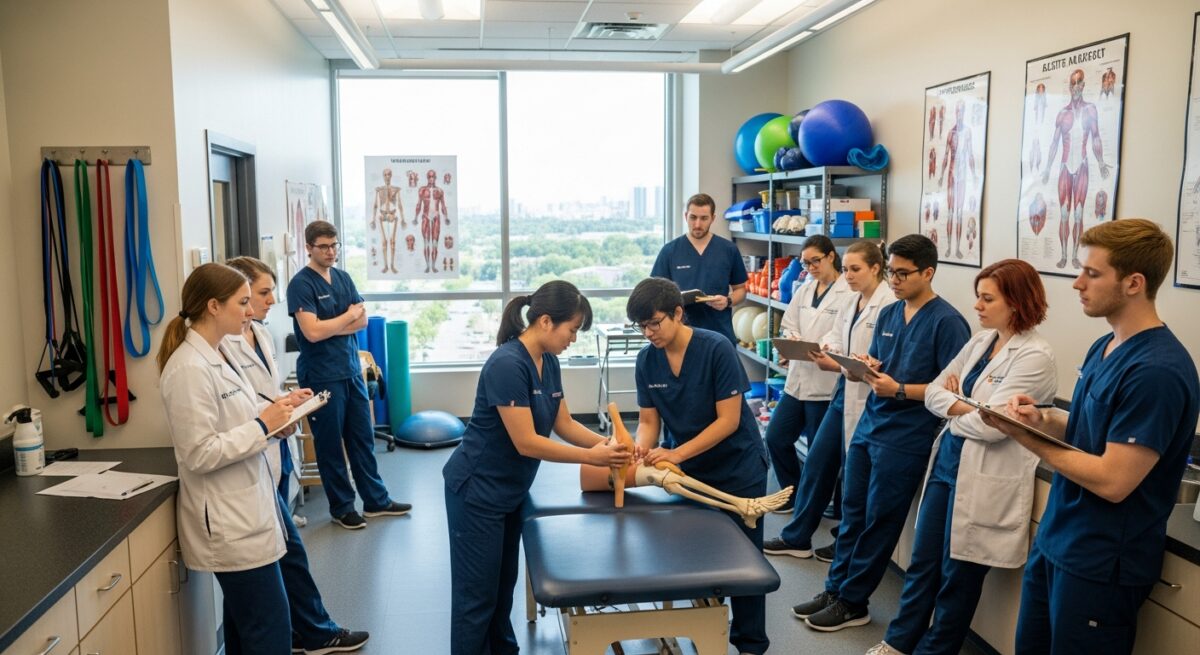
Modern physical therapy education relies heavily on technology. Top programs invest in high-fidelity simulation labs where students practice patient assessments, manual therapy techniques, and emergency response scenarios in a safe environment. Virtual reality systems, motion capture analysis, and telehealth training tools are becoming standard in leading programs. These technologies help bridge the gap between classroom theory and real-world clinical practice. When comparing physical therapy schools, ask about the simulation center’s capabilities and how often students use it. A program with outdated equipment may not prepare you for the technology you will encounter in modern clinics.
Frequently Asked Questions
How long does it take to complete a DPT program?
Most entry-level DPT programs require three years of full-time study after completing a bachelor’s degree. Some accelerated programs can be completed in 2.5 years, while part-time or hybrid options may take longer. The total time from undergraduate start to DPT completion is typically seven to eight years, though some combined BS/DPT programs reduce that timeline.
What undergraduate degree do I need for physical therapy school?
There is no single required major, but most programs require prerequisite courses in anatomy, physiology, biology, chemistry, physics, and psychology. Common undergraduate majors include exercise science, kinesiology, biology, and health sciences. The best physical therapy schools do not favor one major over another as long as prerequisites are completed with strong grades.
Can I work while attending a DPT program?
Working during a DPT program is challenging due to the demanding schedule of classes, labs, and clinical rotations. Many programs discourage or restrict outside employment. Hybrid or part-time programs may offer more flexibility, but students should plan to minimize work commitments during the most intensive semesters.
How much does a DPT program cost on average?
Tuition varies widely. Public in-state programs may cost $40,000 to $70,000 total, while private or out-of-state programs can exceed $120,000. The best physical therapy programs provide transparent cost data and financial counseling. Always factor in living expenses, health insurance, and licensure exam fees when calculating total cost.
Making Your Final Decision
Selecting from the best physical therapy programs is a deeply personal decision that should balance objective data with your individual circumstances. Start your search early, attend virtual open houses, and reach out to current students or alumni for honest feedback. Use the metrics discussed here to create a comparison grid, and do not be afraid to ask hard questions about outcomes, support services, and career placement. A well-chosen program will set you up for a rewarding career helping patients regain mobility and quality of life. For additional guidance on navigating higher education options, visit CollegeDegree.School for resources on degree programs, financial aid, and academic planning. Your investment in a DPT education is significant, but with careful research, you can find a program that fits your goals and sets you on the path to professional success.