Choosing the right school is one of the most critical decisions you will make as an aspiring aerospace engineer. The field demands a rigorous foundation in physics, mathematics, and materials science, and the institution you attend can shape your career trajectory for decades. Whether you dream of designing next-generation spacecraft, improving commercial aviation efficiency, or developing cutting-edge defense systems, the best colleges for aerospace engineering offer specialized labs, strong industry connections, and research opportunities that set you apart. This guide evaluates the top aerospace engineering schools based on academic reputation, research output, faculty expertise, and career placement rates. By understanding what each program offers, you can select a path that aligns with your goals and budget.
What Makes a Top Aerospace Engineering Program?
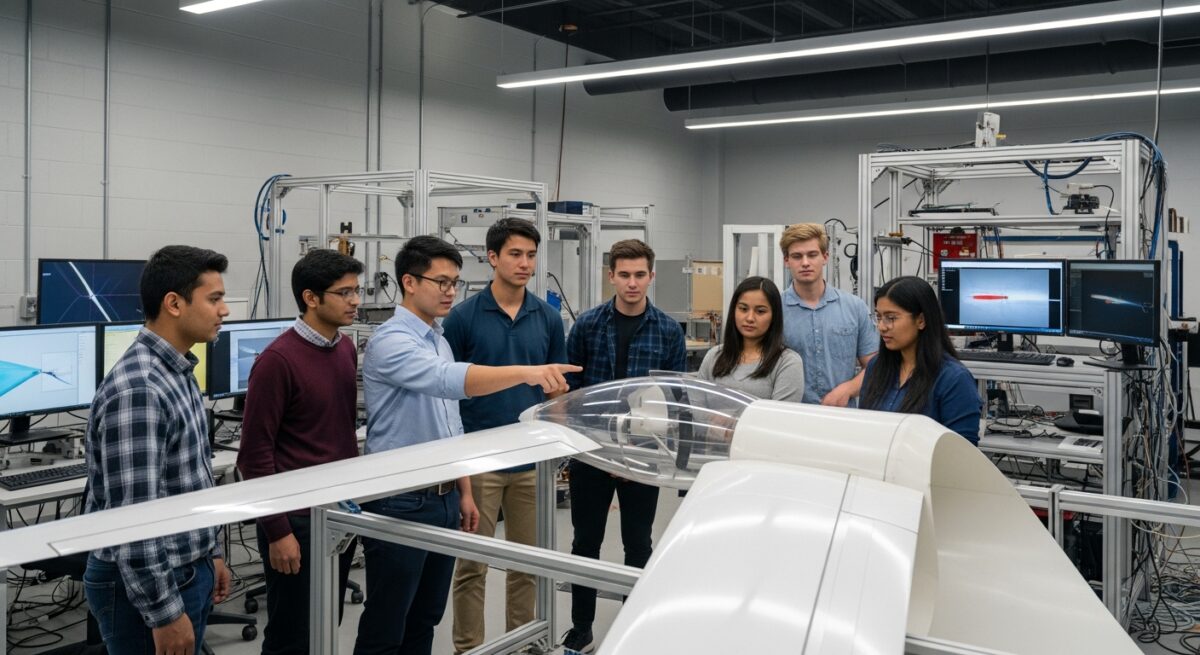
Not all engineering schools are created equal, and the best aerospace engineering programs share several defining characteristics. First, accreditation by the Accreditation Board for Engineering and Technology (ABET) is non-negotiable. ABET accreditation ensures the curriculum meets rigorous industry standards and that your degree will be recognized by employers and licensing boards. Second, research output matters. Top-tier programs operate dedicated wind tunnels, propulsion labs, and simulation centers where students work on real-world problems. Third, faculty expertise is critical. Professors with active research agendas in areas like aerodynamics, astrodynamics, and composites bring current industry challenges into the classroom. Finally, internship and co-op placement rates reveal how well a program connects students with employers like NASA, Boeing, Lockheed Martin, and SpaceX. When you compare the best colleges for aerospace engineering, prioritize schools that excel in all four areas.
Top Ranked Aerospace Engineering Schools
Massachusetts Institute of Technology (MIT)
MIT consistently ranks as the premier institution for aerospace engineering globally. Its Department of Aeronautics and Astronautics offers undergraduate and graduate programs that blend theoretical depth with hands-on projects. Students gain access to the Wright Brothers Wind Tunnel, the Gas Turbine Lab, and the Space Systems Laboratory. MIT’s location in Cambridge, Massachusetts, also provides proximity to defense contractors and research agencies. The curriculum emphasizes systems engineering, meaning graduates understand how to integrate complex components into functioning aircraft or spacecraft. For students seeking the absolute best colleges for aerospace engineering, MIT sets the gold standard.
Stanford University
Stanford’s Department of Aeronautics and Astronautics sits in the heart of Silicon Valley, offering unique advantages for students interested in the intersection of aerospace and technology. The program focuses on three core areas: aerospace structures and materials, guidance and control, and propulsion. Stanford’s proximity to companies like SpaceX, Joby Aviation, and NASA Ames Research Center creates abundant internship opportunities. The university also sponsors student-led projects such as the Stanford Student Space Initiative, which builds and launches satellites. If you value entrepreneurial spirit and interdisciplinary collaboration, Stanford ranks among the top aerospace engineering schools in the nation.
California Institute of Technology (Caltech)
Caltech’s aerospace program is small but mighty. The Graduate Aerospace Laboratories (GALCIT) are legendary for breakthroughs in supersonic flight, turbulence modeling, and space exploration. Undergraduate students can participate in research through the Summer Undergraduate Research Fellowship (SURF) program. Caltech also manages the Jet Propulsion Laboratory (JPL) for NASA, giving students direct exposure to interplanetary missions. The intense academic environment suits students who thrive on deep theoretical work and cutting-edge experimentation. For those who want to push the boundaries of aerospace science, Caltech is one of the best colleges for aerospace engineering.
University of Michigan, Ann Arbor
The University of Michigan’s Department of Aerospace Engineering is one of the oldest and largest in the United States. It offers students access to the M-Air Wind Tunnel, the Plasmadynamics and Electric Propulsion Laboratory, and the Autonomous Aerospace Systems Lab. Michigan’s strong alumni network includes leaders at Boeing, Northrop Grumman, and the U.S. Air Force. The school also emphasizes hands-on design through its student teams, including the Michigan Aeronautical Science Team and the M-HEAT rocket team. With a balance of research scale and undergraduate teaching, Michigan is a top choice among the best colleges for aerospace engineering for students who want a comprehensive experience.
Georgia Institute of Technology
Georgia Tech’s Daniel Guggenheim School of Aerospace Engineering is a powerhouse in both education and research. The school offers specialized tracks in aerodynamics, structures, propulsion, and flight mechanics. Students learn in state-of-the-art facilities like the John J. Harper Wind Tunnel and the Aerospace Systems Design Laboratory. Georgia Tech’s cooperative education program allows students to alternate semesters of study with paid work at partner companies. The school’s location in Atlanta also provides access to Delta Air Lines and the U.S. Army’s Aviation and Missile Command. For affordability and return on investment, Georgia Tech ranks among the top aerospace engineering schools.
Other Notable Programs Worth Your Attention
Beyond the top five, several other programs deliver exceptional value. Purdue University’s School of Aeronautics and Astronautics is renowned for its propulsion research and has produced more astronauts than any other non-military institution. The University of Texas at Austin offers strong ties to NASA’s Johnson Space Center and the aerospace industry in Texas. The University of Colorado Boulder excels in astrodynamics and remote sensing, with direct connections to the Laboratory for Atmospheric and Space Physics. Embry-Riddle Aeronautical University, with campuses in Florida and Arizona, focuses exclusively on aviation and aerospace, providing unmatched specialized coursework and flight training opportunities. Each of these schools represents some of the best colleges for aerospace engineering for students with specific interests or geographic preferences.

How to Choose the Right Aerospace Engineering School for You
Selecting from the best colleges for aerospace engineering requires careful self-assessment. Begin by identifying your career goals. If you want to work on spacecraft and satellites, prioritize schools with strong space systems programs like Caltech or CU Boulder. If you prefer aircraft design, look for programs with wind tunnel facilities and structures labs like MIT or Michigan. Next, consider location. Schools near major aerospace hubs offer better internship access. For example, students at the University of Washington benefit from Boeing’s headquarters, while those at Arizona State University connect with Raytheon and Honeywell. Finally, evaluate cost and financial aid. Public universities like Georgia Tech and Purdue provide world-class education at lower tuition rates than private institutions. Use net price calculators on each school’s website to estimate your actual cost.
Career Pathways and Earning Potential
Graduates from the best colleges for aerospace engineering enter a field with strong demand and competitive salaries. According to the Bureau of Labor Statistics, aerospace engineer employment is projected to grow 6 percent through 2033, driven by demand for new commercial aircraft and defense upgrades. Entry-level engineers typically earn between $75,000 and $95,000 annually, while experienced professionals at top companies can earn over $150,000. Common employers include SpaceX, Blue Origin, Boeing, Lockheed Martin, Northrop Grumman, and NASA. Many graduates also pursue advanced degrees in aerospace engineering or related fields like mechanical engineering or materials science. For a deeper look at how programs are evaluated and ranked, read our Best Aerospace Engineering Schools Ranking Guide for 2026.
Frequently Asked Questions
What are the hardest aerospace engineering schools to get into?
MIT, Stanford, and Caltech have the most selective aerospace programs, with acceptance rates below 10 percent. These schools require exceptional grades, strong test scores, and compelling extracurricular involvement. However, many excellent programs at Georgia Tech, Purdue, and Michigan admit a broader range of students while still providing top-tier education.
Can I study aerospace engineering online?
Yes, several accredited institutions offer online bachelor’s and master’s degrees in aerospace engineering. Programs from the University of Alabama, Embry-Riddle Aeronautical University, and the University of Texas at Arlington provide flexibility for working professionals. However, hands-on lab components may require on-campus attendance or virtual simulation tools. For those seeking flexible learning options, online degree programs can be a valuable resource for comparing accredited options.
Is aerospace engineering worth it financially?
Yes, for most graduates. The combination of high starting salaries, strong job placement rates, and career advancement opportunities makes aerospace engineering a financially rewarding field. However, students should consider the cost of tuition and potential student loan debt. Public universities with strong engineering programs often provide the best return on investment.
Do I need a master’s degree to work in aerospace?
Not always, but it helps. Many entry-level positions require only a bachelor’s degree. However, advanced roles in research, design, and management often prefer or require a master’s degree. Some schools offer combined bachelor’s-to-master’s programs that allow you to complete both in five years.
Final Thoughts on Selecting Your Aerospace Engineering School
Your choice of undergraduate institution sets the foundation for your entire career in aerospace engineering. The best colleges for aerospace engineering provide not only technical knowledge but also professional networks, research experience, and a pathway to meaningful work. Focus on finding a program that matches your academic strengths, career aspirations, and financial situation. Visit campuses when possible, talk to current students and faculty, and review placement statistics carefully. With the right preparation and a clear understanding of what each school offers, you can launch a successful and rewarding career in aerospace engineering.