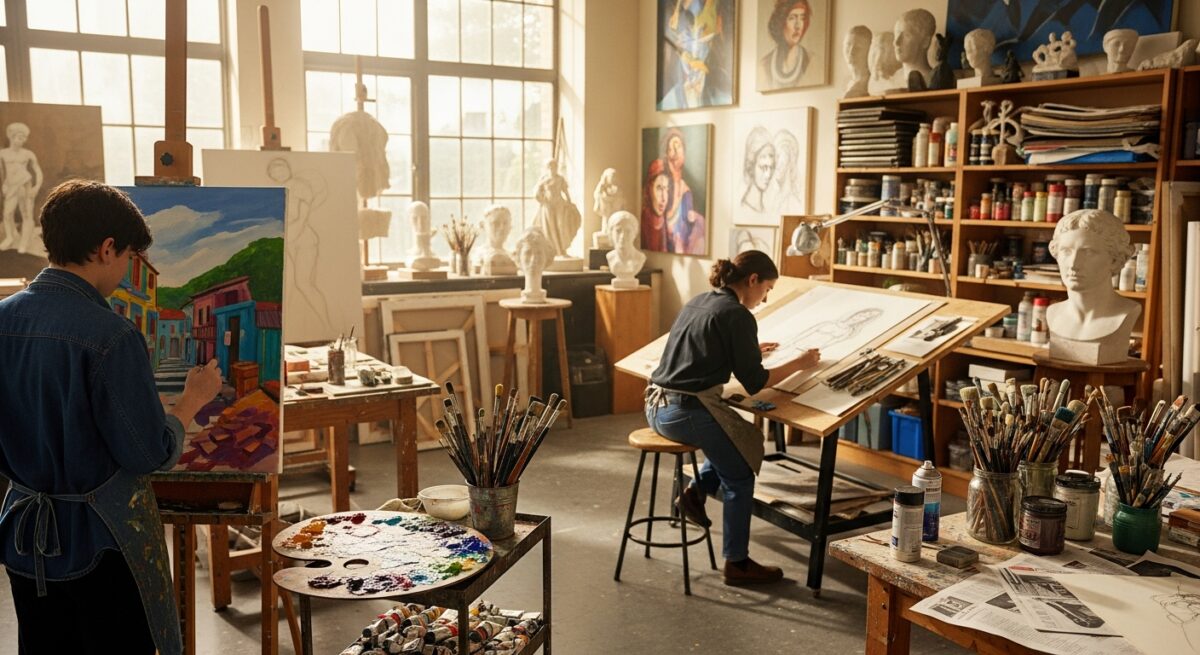
Choosing the right art school can feel like standing at a crossroads with endless possibilities. For creative students, the decision goes beyond rankings and tuition costs. It is about finding a place that nurtures your unique vision, connects you with mentors who challenge you, and provides the technical skills to bring your ideas to life. The best art schools do not just teach you how to draw or design. They teach you how to think, how to see the world differently, and how to turn passion into a sustainable career. Whether you dream of painting in a sunlit studio, designing the next iconic app interface, or directing award-winning films, the institution you choose will shape your creative journey for years to come.
This guide explores the top art schools that consistently produce successful graduates. We will look at what makes each program special, from curriculum philosophy to campus culture. We will also discuss how to evaluate schools based on your personal goals, budget, and preferred medium. By the end, you will have a clear roadmap for selecting the art college that fits your aspirations. Remember, the best art schools for creative students are not always the most famous ones. They are the ones that align with your specific artistic voice and career ambitions.
What Defines the Best Art Schools for Creative Students?
Before diving into specific institutions, it helps to understand what sets top-tier art programs apart. The most respected art colleges share several key characteristics. First, they offer rigorous technical training in both traditional and digital media. Second, they provide access to experienced faculty who are active professionals in their fields. Third, they foster a community of peers who push each other to grow. Fourth, they have strong industry connections that lead to internships and job placements after graduation.
When researching schools, look for programs that balance foundational skills with experimental freedom. A strong curriculum should include drawing, color theory, and composition alongside courses in contemporary art history and critical theory. The best schools also invest in state-of-the-art facilities: printing presses, ceramics kilns, digital labs, photography studios, and fabrication shops. These resources allow students to explore multiple mediums before specializing.
Key Factors to Consider
Location matters more than you might think. Urban schools offer access to galleries, museums, and creative industries. Rural campuses can provide focused studio time and lower living costs. Consider the cost of attendance carefully. Art school can be expensive, but many institutions offer merit-based scholarships, need-based aid, and work-study programs. You should also think about class sizes. Small class sizes mean more individual attention from professors. Large programs offer more networking opportunities and diverse course offerings.
Another critical factor is the school’s alumni network. Graduates from top art schools often help each other find jobs, exhibition opportunities, and collaborators. Look at where recent alumni are working and whether they are achieving the kind of success you envision for yourself. Finally, visit campuses if possible. Sit in on a class, talk to current students, and see the studio spaces. The feel of a place can tell you more than any brochure.
Top-Ranked Art Schools in the United States
The United States is home to some of the world’s most prestigious art schools. These institutions have shaped generations of artists, designers, and creative leaders. Below is a curated list of schools that consistently rank among the best art schools for creative students. Each offers a unique approach to arts education.
Rhode Island School of Design (RISD)
RISD is often considered the gold standard for art and design education. Located in Providence, Rhode Island, this school offers a rigorous studio-based curriculum. Students choose from 16 undergraduate majors and over 20 graduate programs. The school is known for its strong foundation year, which forces students to experiment across disciplines before declaring a major. RISD graduates are highly sought after in fields ranging from industrial design to illustration. The campus includes world-class museums, galleries, and workshops. The school also has a strong connection with Brown University, allowing cross-registration for certain courses.
School of the Art Institute of Chicago (SAIC)
SAIC is a powerhouse of contemporary art education. Located in the heart of Chicago, it offers students access to the Art Institute of Chicago, one of the greatest museums in the world. The curriculum is highly interdisciplinary. Students can combine painting, sculpture, video, performance, and digital media in ways that suit their personal vision. SAIC is known for its conceptual approach, encouraging students to ask big questions about art and society. The faculty includes internationally recognized artists, critics, and curators. For students who want to push boundaries and challenge conventions, SAIC is one of the best art schools available.
California Institute of the Arts (CalArts)
CalArts was founded by Walt Disney and is located in Valencia, California. It is famous for its programs in animation, film, music, theater, and visual arts. The school has a strong emphasis on experimentation and collaboration across disciplines. CalArts alumni have gone on to work at Pixar, Disney, DreamWorks, and many other major studios. The school’s location near Los Angeles provides access to the entertainment industry. If you are interested in character animation, experimental film, or multimedia performance, CalArts should be on your shortlist. It is consistently ranked among the best art schools for creative students pursuing careers in the entertainment arts.
Pratt Institute
Pratt Institute is based in Brooklyn, New York, with a second campus in Manhattan. It offers strong programs in fine arts, graphic design, architecture, and fashion. Pratt’s Brooklyn campus is a beautiful, tree-filled oasis in the middle of the city. The school emphasizes professional practice alongside creative development. Students have opportunities to intern with top design firms and art galleries. Pratt’s alumni network is particularly strong in architecture and interior design. The school also offers robust continuing education programs for working professionals. For students who want a balance of studio practice and career preparation, Pratt is an excellent choice.
Savannah College of Art and Design (SCAD)
SCAD is one of the largest private art schools in the world, with campuses in Savannah, Atlanta, Hong Kong, and Lacoste, France. It offers over 40 undergraduate and graduate programs. SCAD is known for its career-focused approach. The school has an impressive job placement rate, thanks to its strong relationships with companies like Google, Disney, and Apple. SCAD’s facilities are top-notch, including digital media centers, sound stages, and fabrication labs. The Savannah campus is particularly beautiful, with historic buildings and modern studios. SCAD is ideal for students who want a comprehensive, career-oriented education in a vibrant college town.
Specialized Art Programs and Alternative Paths
Not every creative student follows the traditional four-year art school route. Some thrive in specialized programs that focus on a single discipline. Others find that a liberal arts college with a strong art department offers a better fit. There are also online options for students who need flexibility. When exploring the best art schools for creative students, consider these alternatives.
Liberal Arts Colleges with Strong Art Programs
Schools like Williams College, Swarthmore College, and Wesleyan University offer excellent art education within a broader liberal arts context. These programs emphasize critical thinking, writing, and interdisciplinary study. Students take art classes alongside courses in history, literature, and science. This approach can produce well-rounded artists who are also strong communicators. Graduates from these programs often go on to prestigious graduate schools or careers in museum curation and art criticism. For students who want a more holistic education, a liberal arts college might be the right choice. In our guide on Best College Degrees for Creative Students and Careers, we explain how to match your artistic interests with academic programs that offer both depth and breadth.

Online Art Schools
Online education has opened doors for many creative students who cannot relocate or attend traditional classes. Accredited online programs in graphic design, digital art, and illustration are now widely available. Schools like the Academy of Art University offer fully online degrees with the same curriculum as their on-campus programs. Online learning requires strong self-discipline, but it offers flexibility to work at your own pace. Many online programs also provide access to digital tools and software that you might not have otherwise. For students balancing work, family, or other commitments, online art schools can be a practical and affordable option.
How to Finance Your Art Education
Art school can be expensive, but there are many ways to make it affordable. Start by filling out the Free Application for Federal Student Aid (FAFSA). This determines your eligibility for federal grants, loans, and work-study programs. Many art schools also offer institutional scholarships based on merit or financial need. Some schools have portfolio-based scholarships, where your application portfolio determines the award amount. Do not be afraid to apply for private scholarships from arts organizations and foundations. Organizations like the National Art Honor Society and the Scholastic Art and Writing Awards offer significant funding. Additionally, consider attending community college for your first two years, then transferring to a four-year art school. This can save you thousands of dollars while still earning a degree from a top institution.
Another strategy is to look for schools in lower-cost regions. An art school in the Midwest or South may have lower tuition and living expenses than one in New York or California. You can also explore schools that offer accelerated programs, allowing you to graduate in three years instead of four. Remember that the best art schools for creative students are not always the most expensive. A school that offers strong financial aid and a supportive community can be a better investment than a name-brand institution that leaves you with crushing debt.
Building a Strong Portfolio for Admission
Your portfolio is the most important part of your art school application. It shows admissions committees your technical skills, creative thinking, and artistic potential. Start building your portfolio early, ideally two years before you plan to apply. Include a mix of observational drawings (still life, figure drawing, landscapes) and original works that reflect your personal interests. Most schools want to see 12 to 20 pieces. Quality matters more than quantity. It is better to have 15 strong pieces than 30 mediocre ones.
Get feedback from teachers, mentors, and working artists. They can help you identify your strengths and areas for improvement. Some schools require a portfolio review, either in person or online. During these reviews, be prepared to talk about your creative process, the ideas behind your work, and the materials you used. Show that you can think critically about your own art. Many schools also require a written statement or artist’s statement. This is your chance to explain who you are as an artist and why you want to attend that specific school. Be honest, be specific, and let your passion show.
Career Paths After Art School
Graduating from one of the best art schools opens many doors. You can pursue careers in fine arts, graphic design, illustration, animation, fashion, architecture, interior design, and more. Many artists also work in adjacent fields such as art therapy, museum education, or arts administration. The skills you learn in art school are highly transferable. Creativity, problem-solving, visual communication, and project management are valuable in almost any industry. Some graduates start their own studios or freelance businesses. Others join design firms, advertising agencies, or tech companies. The key is to build a strong network during school and to take advantage of internship opportunities. Your school’s career services office can help with resume writing, interview preparation, and job placement.
For students interested in teaching, a master’s degree (MFA) is often required for university-level positions. Many art school graduates pursue an MFA to deepen their practice and qualify for academic jobs. Others find fulfilling careers in community arts organizations, teaching in public schools, or leading workshops. The creative economy is vast and growing. With a degree from a top art school, you have the foundation to succeed in many different directions. For more on aligning your degree with career outcomes, check out our resource on college degree planning.
Frequently Asked Questions
What is the difference between a BFA and a BA in art?
A Bachelor of Fine Arts (BFA) is a professional degree that focuses heavily on studio practice. It typically requires 60-70% of coursework in art and design. A Bachelor of Arts (BA) in art is a liberal arts degree with a major in art. It allows more flexibility to take courses in other subjects. If you are certain you want a career as a working artist or designer, a BFA is usually the better choice. If you want a broader education with the option to explore other fields, a BA may be a better fit.
Can I get a job with an art degree?
Yes. Art degrees lead to many career paths. Graduates work as graphic designers, art directors, illustrators, animators, UX/UI designers, fashion designers, and fine artists. The key is to choose a program with strong career services and industry connections. Internships during school are crucial for building experience and networking. Many top art schools report job placement rates above 90% within six months of graduation.
How important is accreditation for art schools?
Accreditation is very important. It ensures that the school meets certain quality standards. Regional accreditation is the gold standard. It allows credits to transfer more easily and qualifies students for federal financial aid. Some art schools also have specialized accreditation from organizations like the National Association of Schools of Art and Design (NASAD). Always check a school’s accreditation status before applying.
What should I look for in an art school’s facilities?
Look for well-equipped studios, digital labs, printing presses, ceramics kilns, photography darkrooms, and fabrication shops. The best schools have dedicated spaces for each medium. Also check the library and museum resources. A strong art library with a good collection of books, journals, and digital resources is essential. Access to a museum or gallery on campus can also enrich your education.
How do I choose between an art school and a university art program?
An art school immerses you completely in a creative environment. You are surrounded by artists and designers every day. A university art program is part of a larger institution with students studying many different subjects. Art schools tend to have more specialized resources and faculty. University programs offer more opportunities for interdisciplinary study. Think about which environment suits your personality and goals. Visit both types of schools to see which feels right.
Choosing the right art school is a deeply personal decision. The best art schools for creative students are those that challenge you, support you, and help you grow into the artist you want to become. Take your time researching, visit campuses, talk to current students and alumni, and trust your instincts. Your education is an investment in your future. With careful planning and a clear vision, you can find a program that sets you on the path to a fulfilling creative career.