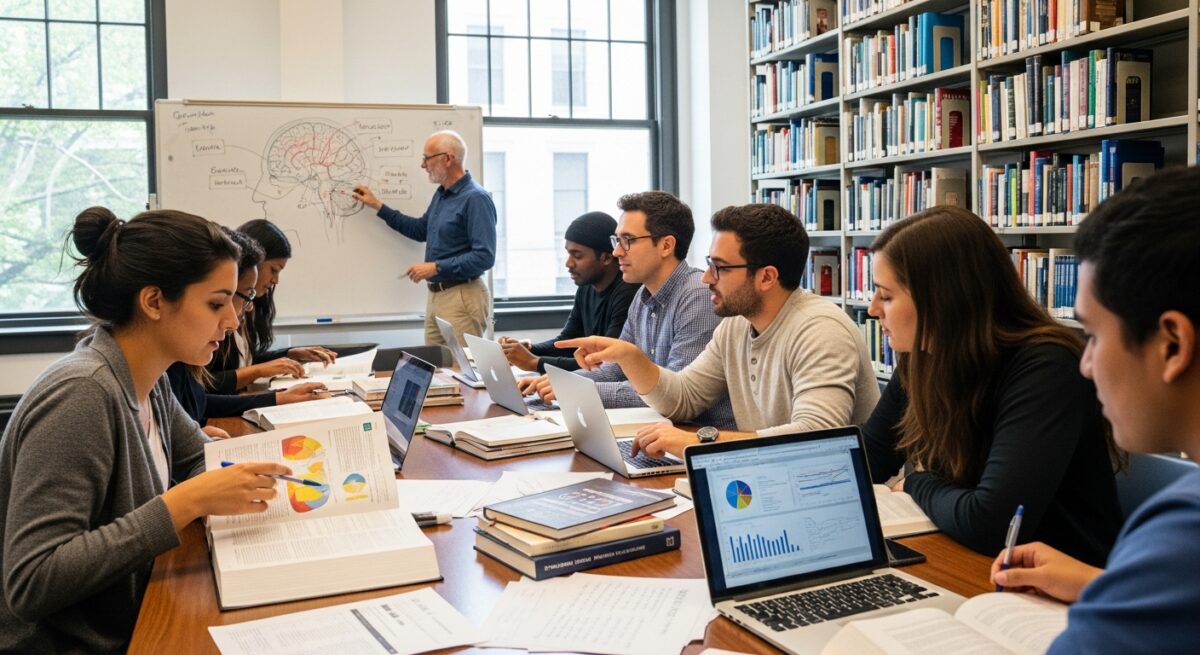
Choosing the right school for psychology is one of the most consequential decisions you will make in your academic career. Psychology is a field that blends scientific rigor with deep human understanding, and the university you select can shape your research opportunities, clinical training, and professional network for decades. With hundreds of programs across the United States, finding the best fit requires looking beyond overall rankings to consider faculty expertise, research output, clinical placements, and financial aid. Whether you are a high school student mapping out your future or a career changer seeking a graduate degree, understanding which institutions consistently produce top psychologists will give you a clear advantage. This guide examines the best universities for psychology programs, highlighting what makes each institution exceptional and how you can match your goals to the right program.
What Defines a Top Psychology Program
When evaluating the best universities for psychology programs, several factors separate elite institutions from the rest. Research output is critical, as top programs attract substantial funding from the National Institutes of Health and the National Science Foundation. Faculty mentorship matters enormously: the most successful psychology departments pair students with leading researchers who publish in high-impact journals. Clinical training opportunities, including in-house clinics and partnerships with hospitals, provide hands-on experience that employers and doctoral programs value. Additionally, student outcomes such as graduation rates, job placement in psychology fields, and admission to competitive graduate programs serve as tangible measures of program quality. Accreditation by the American Psychological Association (APA) for doctoral programs and the American Board of Professional Psychology for internships is non-negotiable for clinical tracks.
Top Undergraduate Psychology Programs
For undergraduate students, the best universities for psychology programs offer a strong foundation in research methods, statistics, and core content areas like cognitive, developmental, and social psychology. These programs also provide ample opportunities for independent research and internship placements.
Stanford University
Stanford University’s Department of Psychology is consistently ranked among the best in the world. The program emphasizes interdisciplinary collaboration with neuroscience, computer science, and economics. Undergraduates can join faculty-led labs as early as their freshman year, working on studies related to decision-making, emotion regulation, and social cognition. The department’s proximity to Silicon Valley also creates unique opportunities for studying human-computer interaction and organizational behavior. Stanford’s small class sizes and strong advising culture mean students receive personalized attention from world-renowned faculty.
University of California, Berkeley
UC Berkeley’s psychology program is a powerhouse in both research and teaching. The department is particularly strong in clinical science, cognitive neuroscience, and developmental psychology. Berkeley’s location in the San Francisco Bay Area provides access to diverse clinical populations and research hospitals. Students benefit from the university’s strong emphasis on public service and social justice, which permeates the psychology curriculum. The undergraduate psychology major is highly selective, ensuring that students learn alongside motivated peers in rigorous courses.
University of Michigan, Ann Arbor
The University of Michigan offers one of the largest and most comprehensive psychology departments in the country. Its undergraduate program covers all major subfields, including biopsychology, clinical psychology, cognition and cognitive neuroscience, developmental psychology, and social psychology. Michigan’s strong research infrastructure includes dedicated labs for fMRI, EEG, and behavioral testing. Students can pursue honors thesis projects that often lead to publication. The university’s Big Ten network also provides extensive alumni connections for internships and jobs after graduation.
Best Graduate Psychology Programs
Graduate programs in psychology are highly specialized, and the best universities for psychology programs at the master’s and doctoral levels offer distinct strengths in particular subfields. When considering graduate school, you should evaluate faculty research fit, funding packages, and licensure pathways.
Yale University (PhD in Psychology)
Yale’s doctoral program in psychology is renowned for its focus on clinical science and developmental psychopathology. The program follows the scientist-practitioner model, training students to conduct rigorous research while developing advanced clinical skills. Yale’s faculty includes pioneers in the study of attachment, emotion regulation, and childhood mental health. Doctoral students receive full funding, including tuition remission and a competitive stipend, which allows them to focus entirely on their studies. The university’s connection to the Yale Child Study Center provides unparalleled clinical training opportunities.
University of California, Los Angeles (UCLA)
UCLA’s psychology department excels in clinical psychology, cognitive neuroscience, and health psychology. The program is particularly strong in research on diversity and culture, reflecting Los Angeles’s multicultural population. UCLA faculty have secured major grants for studying post-traumatic stress disorder, addiction, and aging. The university’s location in one of the world’s most dynamic cities provides access to diverse clinical populations and research hospitals. Students in the PhD program typically complete their degree in five to six years and have strong publication records upon graduation.
University of Texas at Austin
UT Austin offers an outstanding doctoral program in psychology with particular strengths in clinical psychology, social and personality psychology, and behavioral neuroscience. The department’s faculty includes leading researchers in the study of anxiety disorders, depression, and resilience. UT Austin’s strong commitment to diversity and inclusion is reflected in its curriculum and training opportunities. The program provides generous funding packages and has a strong track record of placing graduates in academic and clinical positions.
Online Psychology Degree Options
For students who need flexibility, online psychology programs have grown significantly in quality and availability. Many of the best universities for psychology programs now offer fully online bachelor’s and master’s degrees that provide the same curriculum as their on-campus counterparts. These programs are ideal for working adults, parents, and military personnel who cannot relocate for school. When evaluating online programs, look for regional accreditation, APA accreditation for clinical tracks, and faculty who are active researchers and practitioners. Some top online options include Arizona State University, University of Florida, and Oregon State University. These programs offer interactive courses, virtual labs, and synchronous class sessions that create an engaging learning environment. Online degree programs can provide the same quality education as traditional formats when you choose an accredited institution.
Specialized Psychology Programs
Beyond general psychology degrees, many students pursue specialized training in subfields that align with specific career goals. The best universities for psychology programs in specialized areas offer targeted curricula and dedicated faculty expertise.
Clinical Psychology: Programs at the University of Washington, University of Pennsylvania, and University of Colorado Boulder are leaders in evidence-based treatment and clinical research. These programs emphasize cognitive-behavioral therapy, dialectical behavior therapy, and other empirically supported interventions.

Industrial-Organizational (I-O) Psychology: Michigan State University, University of Minnesota, and Bowling Green State University have top-ranked I-O programs that focus on workplace behavior, employee selection, and organizational development. Graduates work in human resources, consulting, and corporate training.
Forensic Psychology: John Jay College of Criminal Justice and University of Virginia offer strong programs that apply psychological principles to legal and criminal justice contexts. These programs cover criminal profiling, eyewitness testimony, and competency evaluations.
School Psychology: University of Wisconsin-Madison and University of California, Santa Barbara provide training for working in K-12 settings, addressing learning disabilities, behavioral issues, and mental health support for students.
How to Choose the Right Program for You
Selecting among the best universities for psychology programs requires careful self-assessment and research. Follow these steps to narrow your options:
- Define your career goals. Do you want to conduct research, provide therapy, work in business, or teach? Each path requires different training and program features.
- Evaluate faculty research interests. Read recent publications from professors in your areas of interest. Reach out to current graduate students to ask about mentorship quality and lab culture.
- Consider location and cost. Urban programs offer more clinical placements and internship opportunities, while rural programs may provide lower living costs and closer faculty relationships.
- Review licensure requirements. If you plan to become a licensed psychologist, ensure the program meets your state’s educational and internship requirements.
- Attend open houses or virtual information sessions. These events give you a sense of the program’s community and values.
In our guide on Best Universities for Psychology Programs in 2026, we explain how to evaluate program rankings and accreditation details. Taking the time to research thoroughly will pay dividends in your education and career satisfaction.
Frequently Asked Questions
What is the best undergraduate major for psychology?
The best undergraduate major for psychology is psychology itself for most students. However, some students major in neuroscience, sociology, or biology and then pursue psychology at the graduate level. The key is to complete prerequisite courses in statistics, research methods, and abnormal psychology.
How long does it take to become a psychologist?
Becoming a licensed psychologist typically takes eight to twelve years after high school. This includes four years for a bachelor’s degree, two to three years for a master’s degree (if pursued), and four to six years for a doctoral degree. After earning a doctorate, you must complete a one- to two-year supervised postdoctoral fellowship and pass licensure exams.
Can I get a psychology degree online?
Yes, many accredited universities offer online psychology degrees at the bachelor’s and master’s levels. Clinical doctoral programs are rarely fully online due to the need for in-person supervision, but some hybrid programs exist. Always verify accreditation before enrolling.
What careers can I pursue with a psychology degree?
A psychology degree opens doors to careers in mental health counseling, human resources, market research, social work, education, law enforcement, and business consulting. Many psychology graduates also pursue advanced degrees in medicine, law, or business.
Do I need a PhD to be a psychologist?
To be called a psychologist and practice independently, you typically need a doctoral degree (PhD or PsyD) plus licensure. A master’s degree allows you to work as a psychological associate, counselor, or therapist under supervision in many states.
Final Thoughts on Choosing a Psychology Program
Selecting from the best universities for psychology programs is a personal journey that depends on your academic interests, career aspirations, and life circumstances. The institutions highlighted in this article represent the gold standard in psychology education, but the right program for you is the one that matches your specific needs. Whether you choose a large research university or a small liberal arts college, an on-campus experience or an online degree, the key is to engage fully with the opportunities available. Seek out research experiences, build relationships with faculty mentors, and gain practical experience through internships or volunteer work. Psychology is a field that rewards curiosity, empathy, and rigorous thinking. With the right training from a strong program, you can build a fulfilling career that makes a meaningful difference in people’s lives.