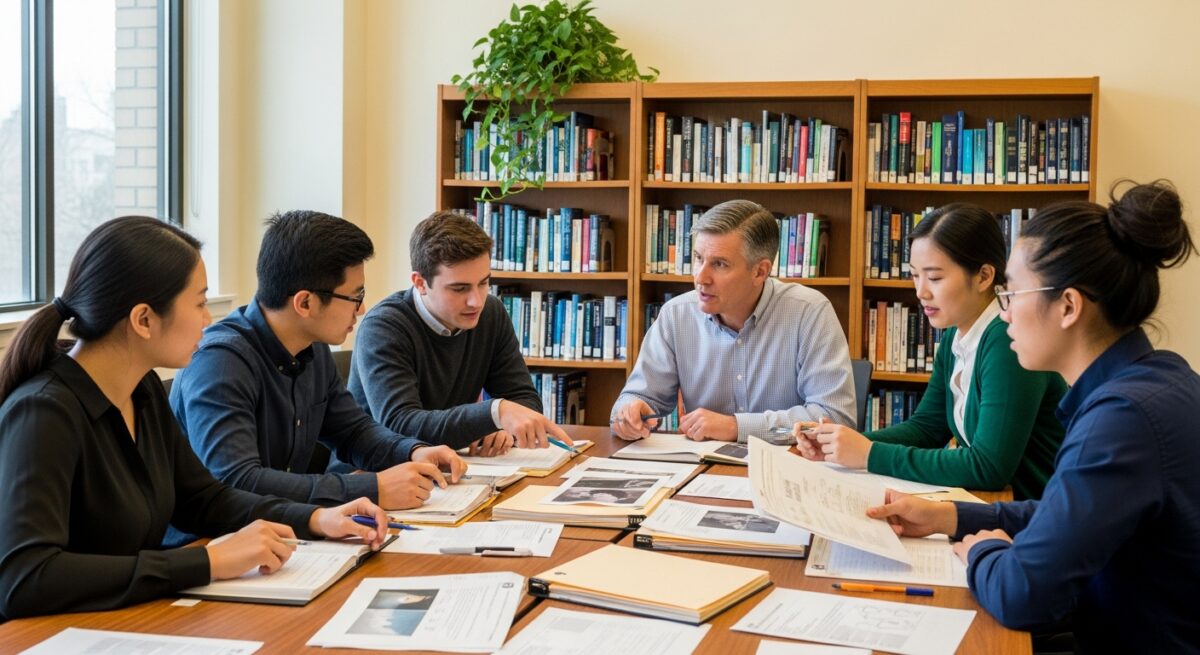
Choosing where to earn a psychology degree is one of the most important decisions you can make for your future career. Psychology is one of the most popular undergraduate majors in the United States, and for good reason. It opens doors to careers in mental health, human resources, marketing, education, and beyond. However, not all programs are created equal. The best colleges for psychology degrees offer strong research opportunities, experienced faculty, and clear pathways to graduate study or employment. In this guide, we break down what makes a psychology program stand out and highlight the top schools that consistently deliver exceptional education and outcomes.
What to Look for in a Psychology Program
Before diving into specific schools, it helps to understand the key features that separate an average psychology program from an excellent one. A top-tier program does more than just teach theories. It prepares you for real-world application. When researching options, consider these critical factors.
Faculty expertise and mentorship opportunities. The best schools for psychology attract professors who are active researchers in areas like cognitive neuroscience, developmental psychology, social psychology, and clinical practice. Small class sizes and undergraduate research programs allow you to work closely with these faculty members. This mentorship can lead to co-authored publications, conference presentations, and strong letters of recommendation. These experiences are invaluable if you plan to apply for graduate school.
Research facilities and lab access. Hands-on experience is essential in psychology. Look for programs with dedicated research labs, eye-tracking equipment, fMRI or EEG access, and behavioral testing suites. Schools that prioritize undergraduate research often have dedicated funding for student projects. This practical training helps you build a competitive resume.
Internship and applied learning options. Classroom knowledge is important, but applied experience is what employers and graduate programs value most. The best colleges for psychology degrees have partnerships with local hospitals, community mental health centers, schools, and corporate human resources departments. These partnerships create internship placements that give you real-world experience. Some programs even offer practicum courses where you earn credit while working in the field.
Graduate school placement rates. If your goal is to become a licensed psychologist or counselor, check the program’s track record for placing graduates into master’s and doctoral programs. Top psychology schools often have articulation agreements with graduate programs or strong advising systems that help students navigate the application process. Ask about acceptance rates into PhD and PsyD programs as a measure of program quality.
Top-Ranked Universities for Psychology
Several universities consistently earn top marks for their psychology departments. These institutions combine rigorous academics with extensive resources. Here are some of the most respected programs in the country.
Stanford University
Stanford’s Department of Psychology is frequently ranked number one in the nation. The program emphasizes a scientific approach to understanding behavior and mental processes. Students can specialize in areas like cognitive psychology, developmental psychology, social psychology, and affective science. Stanford’s location in Silicon Valley also offers unique opportunities to apply psychology to technology and user experience research. Undergraduate research is a cornerstone of the program, with many students working in faculty labs starting in their sophomore year. The faculty includes pioneers in fields like behavioral economics and social cognition. Stanford graduates often go on to top PhD programs or land research positions at major tech companies.
University of California, Berkeley
UC Berkeley’s psychology program is another powerhouse. The department is known for its strengths in clinical science, cognitive neuroscience, and developmental psychology. Berkeley offers a Bachelor of Arts in Psychology through the College of Letters and Science. Students benefit from access to the Helen Wills Neuroscience Institute and the Institute of Human Development. The campus culture emphasizes social justice and community engagement, which connects well with psychology’s focus on human welfare. Berkeley also has a strong track record of placing students into funded PhD programs. The diverse student body and vibrant Bay Area location provide a rich environment for studying human behavior.
University of Michigan, Ann Arbor
The University of Michigan’s Department of Psychology is one of the oldest and most respected in the country. It offers a comprehensive undergraduate curriculum with concentrations in biopsychology, cognition and cognitive neuroscience, developmental psychology, personality and social contexts, and clinical science. Michigan excels in providing undergraduate research experiences. The department runs a dedicated Undergraduate Research Opportunity Program that connects students with faculty mentors. The university’s massive alumni network also helps graduates find jobs in healthcare, education, and business. Michigan is particularly strong in social psychology and health psychology research.
Best Public Universities for Psychology
Public universities can offer excellent psychology programs at a lower cost, especially for in-state students. These schools often have large departments with diverse research areas. Here are some of the best public options.
University of California, Los Angeles (UCLA)
UCLA’s Department of Psychology is a top-ranked public program. It offers a Bachelor of Arts in Psychology with opportunities to specialize in areas like behavioral neuroscience, clinical psychology, cognitive psychology, developmental psychology, and social psychology. UCLA is known for its strong emphasis on research methodology and statistics. Students have access to state-of-the-art labs and can participate in ongoing studies at the Staglin Center for Cognitive Neuroscience. The campus location in Los Angeles also provides internship opportunities at hospitals, clinics, and entertainment industry research firms. UCLA’s psychology graduates have high acceptance rates into graduate programs.
University of Texas at Austin
UT Austin’s Department of Psychology is one of the largest in the nation. The program offers a Bachelor of Science in Psychology for students interested in the biological and quantitative aspects of the field. There is also a Bachelor of Arts option for those focusing on social and clinical areas. The department is particularly strong in clinical psychology, social psychology, and behavioral neuroscience. UT Austin runs several research centers, including the Center for Behavioral and Cognitive Sciences and the Institute for Mental Health Research. The school’s location in a major metropolitan area provides numerous internship and job opportunities. In-state tuition makes this one of the best schools for psychology for Texas residents.
University of Washington
The University of Washington’s Department of Psychology is a leader in research on child development, clinical science, and social psychology. The program emphasizes a scientific approach and requires students to complete a research project or thesis. UW has strong ties to the local healthcare community, including Seattle Children’s Hospital and Harborview Medical Center. These connections create excellent internship and volunteer opportunities. The department also offers a popular minor in psychology that complements majors in neuroscience, public health, and education. UW graduates are well prepared for both graduate school and careers in counseling, social work, and human services.
Best Liberal Arts Colleges for Psychology
Small liberal arts colleges often provide a more personalized psychology education. With smaller class sizes and a focus on teaching, these schools can be ideal for students who want close mentorship. Here are some top choices.
Swarthmore College
Swarthmore’s Department of Psychology is renowned for its undergraduate focus. The program emphasizes hands-on research from the very first year. Every psychology major completes a senior thesis based on original research. Swarthmore’s faculty are active researchers who involve students in their work. The college has excellent lab facilities, including a cognitive neuroscience lab with EEG equipment. Swarthmore students often present at national conferences and publish in peer-reviewed journals. Graduates have an exceptional track record of admission to top PhD programs. The close-knit community and individualized attention make Swarthmore one of the best colleges for psychology degrees for students who thrive in a small setting.
Williams College
Williams College offers a rigorous psychology program within a liberal arts framework. The department focuses on four core areas: cognitive science, developmental psychology, social psychology, and clinical psychology. Students take small seminar-style courses and complete a year-long research project. Williams has a strong culture of undergraduate research, with many students receiving funding for summer projects. The college’s location in the Berkshires provides a peaceful environment for study. Williams graduates are well prepared for graduate school and often receive fellowships and scholarships for advanced study. The program is ideal for students who want a broad education combined with deep specialization.

Amherst College
Amherst College’s Department of Psychology is known for its collaborative and interdisciplinary approach. The program encourages students to combine psychology with other fields like neuroscience, economics, or anthropology. Amherst offers extensive research opportunities, including access to the college’s fMRI research center (one of the few at an undergraduate institution). Students work closely with faculty on projects ranging from visual perception to social justice. The open curriculum allows students to design their own course of study. Amherst graduates are highly sought after by graduate programs and employers. The college’s small size ensures that every student receives individual attention from professors.
Specialized Programs and Concentrations
Many of the best colleges for psychology degrees offer specialized tracks that allow you to focus on a specific area. If you already know your career interests, choosing a program with a relevant concentration can give you a head start. Here are some popular specializations and the schools that excel in them.
Clinical and counseling psychology. For students interested in therapy and mental health treatment, look for programs with strong clinical training components. Schools like the University of Illinois at Urbana-Champaign, the University of Minnesota, and the University of Pennsylvania have excellent clinical psychology programs at the undergraduate level. These programs often include practicum experiences and coursework in assessment and intervention techniques.
Cognitive neuroscience. If you are fascinated by the brain and its relationship to behavior, cognitive neuroscience programs are a great fit. Top schools for this specialization include Carnegie Mellon University, the University of California, San Diego, and Washington University in St. Louis. These programs offer coursework in neuroanatomy, brain imaging methods, and computational modeling. They also provide access to fMRI and EEG labs for hands-on learning.
Industrial-organizational psychology. This specialization applies psychological principles to the workplace. Students learn about employee motivation, leadership, organizational culture, and human resources. Top programs for I-O psychology include the University of South Florida, Michigan State University, and Bowling Green State University. These schools have strong connections with businesses and offer internship opportunities in corporate settings.
Developmental psychology. For those interested in how people change across the lifespan, developmental psychology programs focus on childhood, adolescence, and aging. The University of Virginia, University of Michigan, and University of California, Berkeley are leaders in this area. These programs often involve research with children and families, and they prepare students for graduate work in developmental science or school psychology.
When evaluating specialized programs, ask about the specific courses offered, the research interests of faculty, and the availability of internships in your area of interest. A program that aligns with your career goals will provide more relevant training and connections.
Affordable Online Psychology Degree Options
Not every student can relocate to attend a top-ranked university. Fortunately, many accredited institutions offer high-quality psychology degrees online. These programs provide flexibility for working adults, parents, and students who need a more affordable path. For a broader look at how to fund your education, you can explore resources for scholarships and financial aid opportunities that can help reduce the cost of your degree. When choosing an online program, ensure it is regionally accredited and offers the same curriculum as the on-campus version.
Some of the best online psychology programs include Arizona State University (offers a BS in Psychology with concentrations in forensics and mental health), Oregon State University (known for its rigorous BS in Psychology), and the University of Florida (offers a BA in Psychology fully online). These programs provide access to virtual labs, online discussion forums, and dedicated academic advisors. They also offer the same degree as on-campus students, which is important for graduate school applications.
Online programs are particularly valuable for students who plan to pursue graduate studies in psychology. Many online bachelor’s programs include research methods courses and statistics training that prepare you for the GRE and graduate-level work. Some programs also help arrange local internships so you can gain applied experience. If cost and flexibility are your primary concerns, online programs from accredited public universities are among the best schools for psychology degrees available.
Frequently Asked Questions
What is the difference between a BA and a BS in psychology?
A BA (Bachelor of Arts) in psychology typically requires more foreign language and humanities courses. It is a good fit for students interested in social work, counseling, or law. A BS (Bachelor of Science) in psychology requires more math and science courses, including statistics and biology. It is better suited for students planning to pursue research or clinical neuroscience. Both degrees can lead to graduate school, but a BS may be more competitive for science-focused PhD programs.
Can I become a psychologist with only a bachelor’s degree?
No. To become a licensed psychologist (clinical, counseling, or school psychologist), you need a doctoral degree (PhD or PsyD). A bachelor’s degree qualifies you for entry-level positions in mental health support, human resources, or research assisting. Many students use their bachelor’s in psychology as a stepping stone to a master’s or doctoral program. Some states also license master’s-level therapists (LPC or LMFT), which requires a graduate degree.
How important is the college’s reputation for psychology graduate school admissions?
Graduate school admissions committees consider the whole application, not just the school name. However, attending a well-known program with strong research opportunities can provide advantages. These schools often have faculty who are well connected in the field, and they offer more research experiences. That said, a student from a less prestigious school who has strong grades, research experience, and solid letters of recommendation can be equally competitive. The key is to take advantage of every opportunity at your chosen school.
Are there psychology programs that offer direct admission for high school students?
Most universities admit students to the college or university first, not directly to the psychology major. However, some programs (like those at University of Michigan and UCLA) have a pre-psychology or direct-admit track for incoming freshmen who declare psychology as their intended major. These tracks guarantee a spot in the major if you meet GPA requirements in introductory courses. Check each school’s admission policies carefully.
Making Your Final Decision
Choosing from the best colleges for psychology degrees requires balancing several factors. Start by listing your priorities. Do you value research opportunities above all else? Is affordability your main concern? Do you want a small liberal arts environment or a large research university? Once you have your priorities, research each school’s specific offerings. Visit campus if possible, or attend virtual information sessions. Talk to current students and faculty. Ask about class sizes, advising support, and career outcomes.
Remember that the best school for psychology is the one that fits your personal goals, learning style, and financial situation. A top-ranked university can provide excellent resources, but a less famous program with strong mentorship and hands-on experience can be just as valuable. Use this guide as a starting point, but trust your own research and instincts. With the right program, you can build a solid foundation for a rewarding career in psychology.